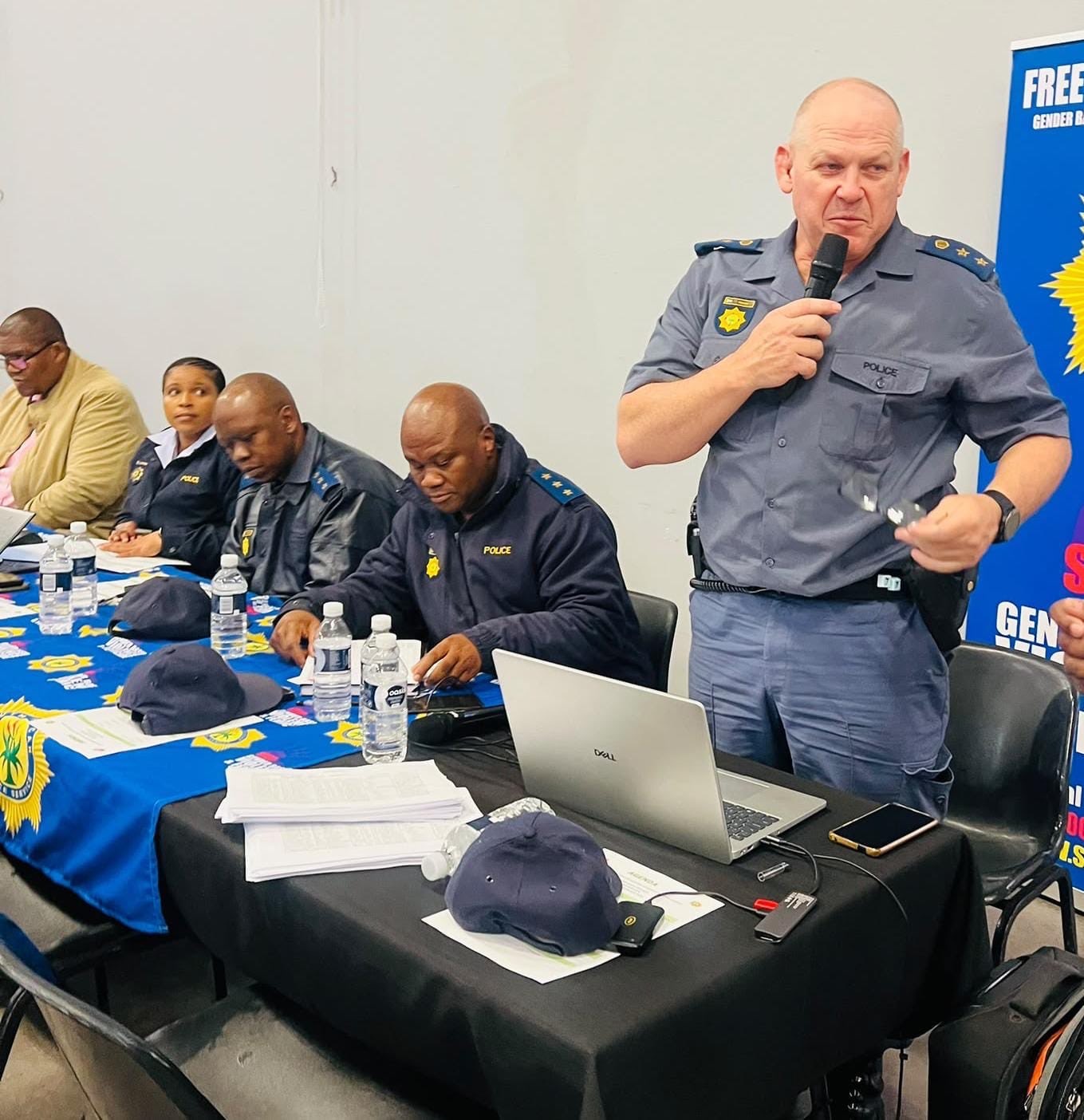
Police task team probes eight Gauteng killings as profiler says a serial killer is active
A former SAPS investigative psychologist says the pattern of women found dead across Gauteng points to a serial killer and warns he will strike again.
Eight women have been found dead across Gauteng, several of them in and around Kempton Park, and police are investigating whether the cases are connected.
The South African Police Service has cautioned against rushing to conclusions about a single perpetrator. Investigators must first establish links through forensic, behavioural and investigative evidence, the service has said.
Micki Pistorius, a former profiler with the SAPS and one of the country’s best known investigative psychologists, told Moneyweb that the pattern now points to a serial killer. She said she was reluctant to say so a day or two ago, but with a body count of about eight, the threshold has been crossed.
“He will kill again, there’s no doubt that he’s not going to stop,” she said.
What the police have set up
Pistorius said she was impressed that the police have established a task team, understood to be under the command of Major General Mbuso Khumalo, and that the investigative psychology unit is involved.
She founded that unit 30 years ago. She said a profiler is needed on a case like this.
The unit’s task is to work out motive. Pistorius drew the distinction between a mass murderer and a serial killer. Robbers, hostage takers and assassins can all kill people at different times and in the same place, with cooling off periods in between. The difference is the motive. A serial killer has a deep intrinsic psychological motive, she said, one that is idiosyncratic and not about money.
That motive is deciphered from the crime scene. Pistorius described a psychological signature at the scene that a profiler reads. DNA is the first prize, she said, but it is not always available, because bodies decompose or are found in rivers.
The pattern investigators are looking for
Pistorius said serial killers act out fantasies, and that they repeat the act because reality never matches the fantasy. The questions at the scene are whether the killing shows rage or sadism, which she said are different things, and reading that difference takes experience.
She said a profiler should be brought in after a second similar killing, and definitely by the third. She also said the victims should be listed by the time they were killed, not by the order in which they were found. In the Moses Sithole case, arranging victims by the time of death revealed a progression in the fantasy.
She noted that the victims are being dumped, which raises the question of where they were held. She said the killer is moving around and therefore has a vehicle.
What police should say, and what they should not
Pistorius raised a communications problem that sits with the police. A good profile includes an interrogation strategy for a specific person. Not all crime scene evidence can be released.
She said crime scene photographs circulating on social media concern her, and warned that releasing such material can hand a future accused a defence. “Don’t take the chances of a conviction away by what I call synthetic sensationalism,” she said.
She said she appreciates that the police have warned the public, and that she understands communities that say they are not protected. Her practical advice to people is to avoid being the last person out of a taxi, to keep phone tracking active, and not to walk alone.
She also said the responsibility does not sit only with the state. “It is true that the government should protect you, but should also take responsibility,” she said.
Pistorius said she does not blame the victims. Serial killers do not froth at the mouth, she said. The killer could be anybody, including a neighbour.
The pressure on the investigation
Pistorius said she has been involved in about 30 serial killer cases and knows the pressure investigators are under. The work is against time.
The difficulty in this case is that it is stranger upon stranger. The victims did not know the killer.
She said the release of crime scene locations and maps could influence the killer’s movements. He could stay in the same area or move, and that depends on him.
The police have not said the cases are linked, and have not named a suspect. No arrest has been announced in the killings.
Source: Moneyweb, ‘He will kill again’: Micki Pistorius on the Gauteng killings
- Police find fifth woman's body near Kempton Park as search for missing jogger continues 2026-09-14
- Sixth woman found in Ekurhuleni as ex-SAPS profiler calls for serial killer investigation 2026-09-15
- Gauteng police confirm six women found dead in Ekurhuleni as Kekana appeals for information 2026-09-15
- Police task team probes five Kempton Park deaths as family identifies runner Elizabeth Moselakgomo 2026-09-15
- Seven women found dead in Ekurhuleni as top police and ministers meet in Parktown 2026-09-15
- Police confirm eighth body in Ekurhuleni and offer R400 000 for information 2026-09-15
- Police put R400 000 on the table in Kempton Park murders probe 2026-09-15
- Police form high-level team as eighth body found in Ekurhuleni 2026-09-15
- Seven women found dead in Gauteng in two months as safety audit is demanded 2026-09-15
- Police raise Ekurhuleni toll to seven women as task team hunts suspects 2026-09-16