Parliament hears 6 000 abandoned mines as communities demand cleanup fund
A coalition of mining-affected communities has asked the portfolio committee on mineral and petroleum resources to open a formal accountability process into who pays when mining companies exit.
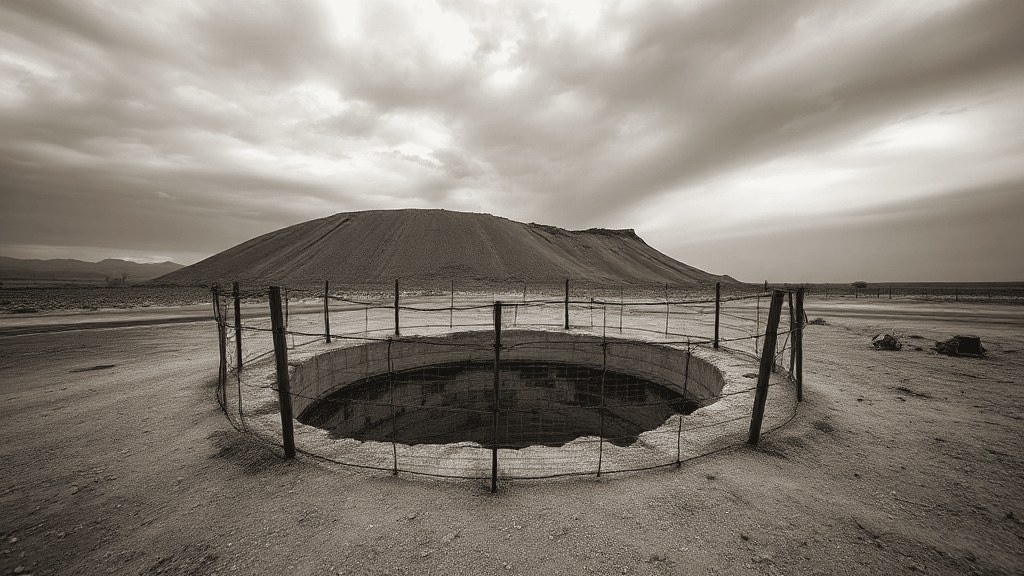
Six thousand derelict and ownerless mines sit across South Africa, with 1 700 unsafe mine openings and roughly 270 tailings facilities covering close to 400 square kilometres of surface. That figure was put to the portfolio committee on mineral and petroleum resources on 25 August 2026 by the Benchmark Foundation, presenting alongside community organisations under the banner of the 100 Year Debt campaign.
The committee heard that an estimated six million people are directly affected by mining, with ripple effects reaching up to 20 million, about 30 percent of the population. The submission was not a request for sympathy. It was a request for a parliamentary accountability process.
What the committee was asked to do
The coalition wants Parliament to establish a formal process capable of investigating the full chain of mining accountability, hearing from mining companies, the Department of Mineral and Petroleum Resources and other regulators, the Competition Commission, the Public Investment Corporation, workers, economists, environmental specialists and legal experts. Above all, it wants the committee to hear from the communities that live with the consequences.
The submission was made as the department reviews the Mineral and Petroleum Resources Development Act. The coalition told the committee that the review is the moment to close the gaps, and that current drafts do not yet do so.
The environmental liability question
An attorney from the Centre for Environmental Rights put the central question plainly: who carries the costs when mining harms the environment? Those costs include preventing harm, managing it when it occurs, and repairing the damage. The coalition’s position is that a company which caused environmental harm must remain responsible for cleaning it up, and that a sale or restructuring must not become an escape route.
Three things must be secured before any mine transfer, the committee heard. The full cost of rehabilitation and closure must be identified. Enough money must be set aside or secured to meet that cost. And it must be clear which companies remain responsible for the work.
The risk the coalition named is specific. When an older mine is transferred to a smaller company without the financial capacity to meet its obligations, a corporate transaction turns an environmental liability into a public liability. The Kappa mine, formerly an Anglo asset, is now in liquidation and was cited as the live example.
What the communities said
Residents of Jagersfontein told the committee that a century of mineral extraction has left the town with poverty, unemployment and environmental degradation. They raised the 11 September 2022 disaster, when a tailings dam collapse damaged property, affected lives and livelihoods and left ongoing water and environmental concerns. Years later, they said, the community is still waiting for proper rehabilitation and accountability.
The Jagersfontein delegation also raised the historical mine tunnels, which they argue could be preserved as a tourism, heritage and educational attraction but are instead being treated as a destination for tailings. They asked what mining rights or authorisations are currently in place, who monitors them, what rehabilitation conditions apply, what inspections have been conducted and what enforcement has followed. A 2007 judgment, they said, cannot answer questions arising from today’s circumstances.
On air quality, the community said there are no continuous public air quality monitoring stations in the directly affected residential areas, no transparent independent testing and public disclosure of arsenic and heavy metals in air, dust, soil and water, and no comprehensive health risk assessment shared with residents. They asked for independent continuous monitors with real-time public access, independent testing funded by the polluter, and full disclosure of results.
From Kriel, the committee heard about 57 families evicted from Byti, an ex-Anglo mine sold to Seriti. The eviction order required the municipality to provide housing. When the coalition met the mayor of Emalahleni two months ago, they said the municipality indicated it has no funds to house the families. The families remain homeless while responsibility is disputed between the original owner, the current owner and the municipality.
The abandoned mine and the person underground
The coalition drew a distinction the committee was asked to hold onto: artisanal mining and organised criminal mining are not the same phenomenon. Criminal syndicates operate in parts of the sector, with violence, extortion, exploitation of vulnerable miners and illicit mineral trading, and the coalition said those activities require an effective state response. But a regulatory system that cannot tell the two apart will punish people whose principal offence is trying to survive alongside mineral resources from which they have historically been excluded.
The coalition raised a concern about the department’s proposed approach, which it said leans towards small-scale mining rather than a workable artisanal pathway, and about moves towards harsher criminalisation through the justice cluster without consultation. Its argument to the committee was that if government strengthens punishment for operating outside the formal system while failing to create a realistic way inside it, formalisation becomes nominal and criminalisation becomes the actual policy.
The submission placed Stilfontein in that frame. The town was once part of a great gold mining region. Thousands of workers laboured there. By the time of the Stilfontein events, the wealth had already left and the abandoned community remained.
Where the law is being asked to change
A legal representative from Kels told the committee that the Mineral and Petroleum Resources Development Act and its regulations do not adequately address the range of impacts raised, from procedural participation rights to environmental health, socio-economic effects and artisanal mining. The Anglo exit, the demerger and the relocation to Canada were described as a teachable moment that should open a conversation about whether South African law sufficiently regulates major corporate restructurings, demergers, liability transfers and exits that fall outside the conventional transfer process in section 11 of the Act.
The coalition also flagged the failure of social and labour plans to build economies that survive mine closure, and the ghost town effects of unemployment and crime that follow.
What happens next
The submission asks the portfolio committee to use its oversight powers to open an inquiry into these questions, with the Anglo footprint as a starting point, and to hear directly from the communities before the review of the Act advances.
Source: Parliament of South Africa (YouTube), Portfolio Committee on Mineral and Petroleum Resources, 25 August 2026, https://www.youtube.com/watch?v=XFiJxO-Bl8I