No, marching for South African women is not 'xenophobic.' It is what a broken state forced on us.
A journalist who reports on immigration says you cannot march against gender-based violence and against illegal immigration at the same time. South Africans answered him. Their argument deserves to be heard.
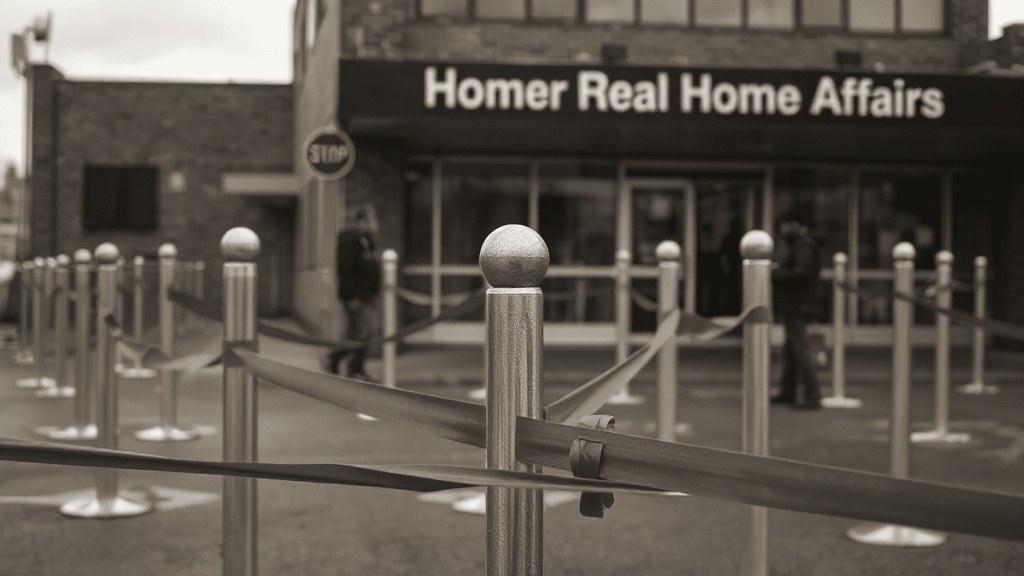
They want you to believe that marching for South African women makes you xenophobic.
That is the smear. And it is a lie.
Xenophobia means hatred of foreigners. It means hostility toward people because they are foreign. It does not mean demanding that Home Affairs process asylum claims. It does not mean demanding that people who are here unlawfully be removed. It does not mean demanding that a sovereign country control its own borders. That is not hatred. That is governance. If that is xenophobia, then the word means nothing.
The latest attempt to blur that line came from Thabiso Goba, a journalist at EWN. On 17 September 2026, he argued that you cannot march against gender-based violence and also march against illegal immigration. He suggested that the marchers’ actions left foreign women and children sleeping on the streets.
That is not just wrong. It is a category error, and a dangerous one.
A murderer is not a border policy. A dead woman is not a paperwork problem. A department that cannot process a file is not the same thing as a man who chooses to kill. When you run those two things together, you let the men who kill stand behind a border argument. You let Home Affairs hide behind a gender argument. And you blame South Africans for a failure that belongs to the state.
Nine women have been found dead across Ekurhuleni. Police have not established that all nine killings are connected, and speculation should not be treated as fact. But that uncertainty changes nothing about the horror. Nine women are dead. Families have gone to mortuaries and identified daughters, sisters and relatives. Communities are frightened. The actor is a person who chose to kill. The remedy is policing, prosecution, and a country that stops treating women as available.
The women and children sleeping on the streets of Durban are there because Home Affairs did not process asylum claims, did not house people while it processed them, and did not remove people it had found to be here unlawfully. The actor there is a department that cannot process a file. The remedy there is administrative.
Different actors. Different causes. Different remedies. Every hour spent arguing about immigration is an hour not spent on the men, unless you are the one using immigration to avoid talking about the men at all.
That leads to three questions Goba’s post does not answer.
How does a working journalist with direct knowledge of what unchecked immigration does to this country arrive at that opinion?
A working reporter knows what a broken asylum system produces. He has stood in the queues. He has read the files. He knows that when Home Affairs fails, the poorest South Africans carry the cost. Knowing that, he wrote a post that put the blame on the people marching against femicide. That is not journalism. That is activism with a byline.
Can a journalist who holds that position publicly be trusted to shape the reporting on the subject?
His opinion cuts against a view held strongly by many South Africans. A newsroom’s job is to report the subject fairly enough that readers can trust the journalist’s judgment even when his personal views are known. He has published his. When a journalist has already framed the people marching as bigots and paid agitators, how do we trust his reporting on the march? When he has already decided that the marchers are the problem, how do we trust his coverage of the marchers?
And what does it mean for the outlet he works for?
A byline carries a reputation. When the position is public and the subject is this one, readers may ask who decides what the story is. EWN may say his views are personal. But the public does not separate the man from the masthead so easily. A journalist who calls South Africans bigots on his personal account is still the same journalist who files the story.
South Africans saw the move immediately. Six replies under his controversial post show it, and each one does something different.
@MelziPeters drew the line between a policy and a prejudice.
“Opposing immigration mismanagement is not xenophobia. Xenophobia means hostility toward people because they are foreign. Demanding competent borders, lawful migration and state enforcement targets GOVERNANCE, not ethnicity. Conflating the two is an argument by smear.”
That is not merely an angry social-media reply. It is the whole argument in one tweet. It is the same one this writer is making. And it deserves an answer. If opposition to immigration mismanagement and hostility toward foreigners are different things, journalism should be capable of distinguishing them. If they are not different things, then explain why. But the distinction cannot simply disappear because a politically useful word has been attached to one side.
@MandisaSkhosana did not argue with him. She relocated the responsibility.
“If you go into someone’s house illegally and they chase you out, and instead of going to your house, you sleep in the street.... that’s on you. That’s not on the person who chased you out.”
A country is not literally a private home, and the analogy cannot settle questions of asylum law or refugee status. But that is not really the point she is making. Her point is about responsibility. When government acts, who owns the consequences? If Home Affairs cannot process a case properly, that failure belongs first to Home Affairs. If government has verified somebody’s lawful status but cannot arrange an orderly administrative solution, that is a government problem. If an individual commits violence against somebody because they are foreign, that individual owns that conduct. Responsibility has to attach to actual actions. Otherwise it becomes endlessly transferable. And once it becomes transferable enough, almost anybody can be blamed for almost anything. The person demanding immigration enforcement somehow ends up carrying the moral burden for failures committed by the state implementing immigration policy. That leap requires an argument. It cannot simply be assumed.
@amukelani47354 refused the frame outright.
“I’m xenophobic and I’m marching for South African women, South African women.”
That reply declines to argue inside a category it rejects. It is the objection, made faster.
@MalomeTsibinki turned the framing back on him and tested it for consistency.
“Does your morality extend to missing South African children? Does it extend trafficked young women in SA.”
That is not a deflection. It is a test. And his framing fails it, because a morality that activates for one group of women and not another is not a morality about women. The obvious response is that concern for one group does not disprove concern for another. True. But that cuts both ways. If somebody marching for South African women is required to prove concern for every other group of vulnerable women before her cause becomes legitimate, why should that standard apply only to her? A campaign against farm murders does not logically imply indifference to township murders. A march for South African women does not become suspect because it is specifically about South African women.
@Enhle answered with the record.
“Just last month, a Zimbabwean man who had killed his entire family in the UK was able to enter South Africa, bypass the other countries he could have gone to, come here and BUY A GUN. A GUN. Who’s to say he wasn’t planning to go on another killing spree?”
That is the concern he says does not exist, stated by somebody who lives with it.
@Sjekula_S named what he was doing with the deaths.
“What you are NOT going to do is take the very real pain, fear and outrage of South African women over femicide and hijack it to peddle your Pan-Africanist rhetoric. Not today.”
That is the whole charge, in one sentence from a reader. The language is confrontational. The underlying complaint is straightforward: do not use one group’s grief as leverage in another political argument.
The pattern, in his own words
This was not one post. It is a position held publicly for two years, and he has said it in his own words.
The first cluster is the language of moral indictment.
On 3 June 2026: “I’m not acknowledging any ‘legitimate concerns’ raised by bigots. Ninganya.”
That is not a policy disagreement. That is a verdict on the people.
On 22 May 2026: “A former broadcaster turned professional right wing agitator who now spends their time planning curiously well-funded, well-attended xenophobic marches and disguising it as patriotism. Ah it could never happen here eMzansi.”
The phrase “professional right wing agitator” is doing specific work. It recasts a political movement as a paid operation. It suggests the people marching are not citizens with concerns but actors with sponsors. That is a serious charge.
The second cluster is the language of suspicion about money and coordination.
On 17 July 2026: “Who is paying you guys, sihlebeleni phela.”
On 24 July 2026: “We took Israel to the ICC for committing a genocide. Well funded agitators rise up from nowhere and use the existing economic anxieties to stoke xenophobic tensions. Invariably some foreigners get killed, harassed, displaced etc. Now, we are being taken to the ICC.”
On 1 August 2026: “It’s interesting how countries who have criticised Israel’s genocide of Palestinians are experiencing spontaneous bouts of immigration violence with Israeli officials taking glee from it. Obviously, just a sheer coincidence.”
Read those three together. The implication is unmistakable: the activity is presented not as organic political mobilisation but as something funded, coordinated and connected to outside interests. Those are serious suggestions, and they deserve evidence proportionate to the charge.
The third cluster is moral absolutism.
On 27 August 2026, on school placement, he wrote: “No balance must be struck, school comes first.”
That sentence tells you something about how he sees political questions. There is a right answer. There is a wrong answer. And anyone who suggests complexity is probably on the wrong side. That is the same instinct that produced the 17 September post. There is no tension between fighting gender-based violence and demanding border enforcement. There is only the correct position, and the people who fail to hold it.
The Chidimma episode
On 21 July 2026 he wrote his most-shared post of the whole period, 786 likes, 162 retweets and 1,175 replies:
“Chidimma was born, raised, studied and has lived her entire life in South Africa, I think it would be grossly inhumane to deport her to Nigeria, a country she doesn’t know. Yes, if she broke the law or did something wrong, he must be sanctioned accordingly but not deported.”
When challenged he added: “Chidimma is South Africa’s responsibility. Her ‘home country’ is SA.”
And then: “she’s also had some questionable behaviour but I still don’t believe they reach the threshold of her deserving to be deported to a country she doesn’t know.”
Fine. He has compassion for Chidimma. But the public record shows where his sympathy is expressed most forcefully, and where it is not. Readers are entitled to notice that asymmetry.
The Jacinta exchange
On 1 September 2026, two weeks before the post about the marchers, Jacinta Ngobese-Zuma of March and March challenged him directly on how he could hold his position as a working journalist.
His answer: “Between 9-5 on weekdays, I work as a journalist and publish stories on EWN. I don’t practise journalism on my personal Twitter account, like any other person in this wonderful country of ours, I use my free speech to comment / tweet on anything I want to.”
She pushed again. His answer: “Lol My stories are published on the EWN website not on Twitter. Also, if you think just because I work as a journalist that means I can’t share my personal views on anything on my Twitter account then I honestly don’t know what to tell you.”
Two weeks later the post about the marchers went up.
That is not how public trust works. A byline carries a reputation. If you spend your personal time calling people bigots, then your reporting on those people is not neutral. Readers are entitled to ask whether those judgments affect how you frame them when you are back on the clock. You cannot spend all day telling South Africans they are hateful, then expect them to believe you when you report on their concerns.
The “9-5” defence does not survive contact with how journalism actually works. The judgment he exercises on Twitter does not disappear when he enters a newsroom. Readers are entitled to ask whether the same instincts and assumptions shape the framing of his reporting. The only difference is the platform.
What should change
Home Affairs must process asylum claims within a lawful time and must make lawful arrangements for people while it does. That is the actual cause of people sleeping in Durban, and the department owns it.
The police must treat the killing of every woman in this country as a killing, and must say publicly what it has done about each one.
And the march should stay a march for women.
But do not let anyone tell you that marching for South African women is xenophobic.
Do not let anyone tell you that demanding a border is hatred.
Do not let anyone tell you that you must choose between protecting women and protecting your country.
You can do both. You should do both. And no journalist, no newsroom, and no political party has the right to smear you for it.
The moral permission question
South African women do not need to pass an immigration test before they are allowed to mourn, organise or march.
South Africans do not need to accept somebody else’s definition of their politics before they are allowed to demand a functioning border.
And journalists do not get to settle either argument simply because their microphone is louder.
The job of journalism is to describe the country clearly enough that its citizens can argue about it.
Not to tell them which concerns make them morally unfit to speak.
This piece will be updated if Thabiso Goba or EWN responds.
- Police find fifth woman's body near Kempton Park as search for missing jogger continues 2026-09-14
- Sixth woman found in Ekurhuleni as ex-SAPS profiler calls for serial killer investigation 2026-09-15
- Gauteng police confirm six women found dead in Ekurhuleni as Kekana appeals for information 2026-09-15
- Police task team probes five Kempton Park deaths as family identifies runner Elizabeth Moselakgomo 2026-09-15
- Seven women found dead in Ekurhuleni as top police and ministers meet in Parktown 2026-09-15
- Police confirm eighth body in Ekurhuleni and offer R400 000 for information 2026-09-15
- Police put R400 000 on the table in Kempton Park murders probe 2026-09-15
- Police form high-level team as eighth body found in Ekurhuleni 2026-09-15
- Seven women found dead in Gauteng in two months as safety audit is demanded 2026-09-15
- Police raise Ekurhuleni toll to seven women as task team hunts suspects 2026-09-16