London enamel startup Eterna raises $4m from Deliveroo's backer
The King's College spinout says a material derived from keratin can regrow tooth enamel, and it plans to enter a $43 billion oral care market by the end of the year.
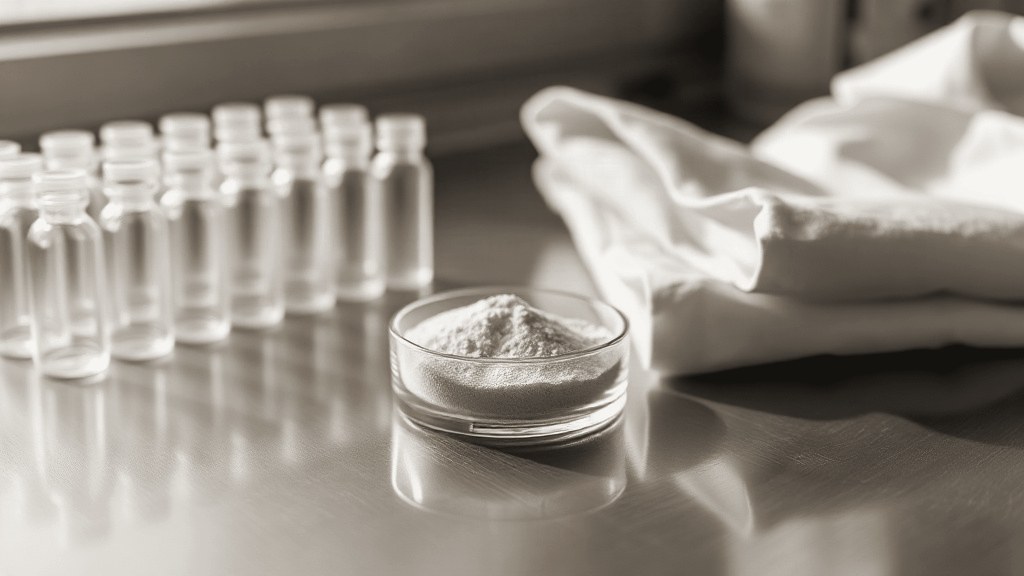
A London biomaterials company has raised £3 million, about $4 million, to scale a platform it says can regrow damaged human tooth enamel, the hard outer layer that the body cannot rebuild on its own once it is worn away.
As Ventureburn reported on 16 September, the seed round for Eterna was jointly led by Hoxton Ventures, an early backer of Deliveroo and Darktrace, with participation from The Venture Collective. The company was founded in 2024 as a spinout from King’s College London.
The material at the centre of the raise is a patented form of keratin, the protein found in human hair and sheep’s wool. Eterna says it can actively regrow damaged enamel, offering a permanent alternative to the surface strengthening that standard fluoride provides.
From the lab bench towards a market
Co-founder Sherif Elsharkawy said the fresh capital will accelerate the company’s move from laboratory proof of concept towards commercialisation. Eterna is targeting an initial entry into the global oral care market, which it values at $43 billion, as early as the end of the year.
Hussein Kanji, a partner at Hoxton Ventures, said the company fits the profile his firm prefers at an early stage. “Eterna is the kind of company we like to back early: powerful, defensible science with a capital-efficient route to market,” he said, adding that he sees exploratory uses in broader tissue and bone regeneration.
The logic behind the bet is straightforward. Investors are putting money into deep-tech ventures that aim to repair biological damage rather than manage its symptoms, and enamel loss is a large, unglamorous problem with no restorative fix on the shelf.
That is the part a South African reader should weigh carefully. The science is promising and the commercial ambition is real, but the company has not yet registered a product with any regulator, and no launch date has been confirmed. A seed round is the beginning of a long, expensive path, not the end of one.
What the numbers mean here
A £3 million seed round is a modest raise by global standards. It is enough to fund a small team, a laboratory programme and early regulatory work. It is not enough to build a factory, run multi-country clinical trials and take a consumer product to scale, which means further rounds lie ahead if the platform works.
The $43 billion figure is the company’s own estimate of the market it wants to enter. It describes the size of the prize, not the size of the company. Eterna’s share of that market today is zero.
For South Africa, the more useful question is what the underlying science does for a country with a heavy burden of oral disease and a thin public dental service. Tooth decay remains one of the most common chronic conditions among South African children, and treatment is often out of reach for households without medical aid. A product that repairs enamel rather than filling a cavity would matter enormously here, if it reaches an affordable price point and a public health supply chain.
That is a large if. Regenerative dental products, when they arrive, tend to enter private markets first, priced for patients who can pay. The history of medical innovation is that the science travels faster than access does.
The South African angle is not the funding round
South Africa has its own small but serious biomaterials and dental research community, working out of universities and science councils on bone substitutes, tissue scaffolds and low-cost restorative materials. The country also has a deep base of clinical need, which is exactly the environment that produces practical innovation.
The gap is rarely the idea. It is the capital to carry a laboratory result through the long, unglamorous middle, where patents are filed, trials are run and regulators are satisfied. A £3 million round in London is a reminder of how that middle is financed elsewhere, and how rarely it is financed here at the same stage.
There is a version of this story in which a South African team, working with the same keratin chemistry or a different one, gets the same patient, early-stage money. That is the outcome worth watching for, and it is a policy question about early-stage science funding as much as it is a market question.
Eterna’s own next step is to convert its laboratory result into a product that regulators will accept. The company has said it could reach the market as early as the end of the year, and that timeline will be the first real test of whether the science is as defensible as its investors believe.
Source: Ventureburn, Deliveroo Backer Joins $4M Seed Round for Tooth Enamel Startup Eterna.