KwaThema women say they cannot report abuse in a police station with no privacy
Residents told a ministerial visit this week that temporary structures and a single working van are failing survivors of gender-based violence in the Ekurhuleni township.
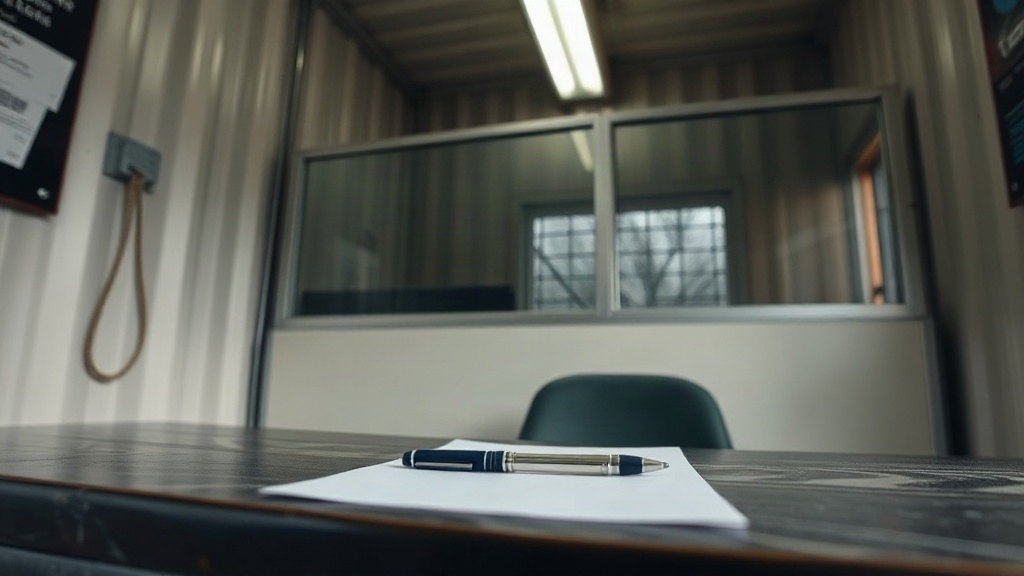
Residents of KwaThema in Ekurhuleni have told the Minister in the Presidency, Khumbudzo Ntshavheni, that their police station is not fit for the purpose of reporting gender-based violence. Their complaint, raised during a Love Your Street programme visit to the township, is that the temporary structures standing in for a station offer no privacy, and that women who want to open a GBV case are being asked to do so where others can hear them.
As SABC News reported on 22 September, residents also allege that only one police van is functioning in the area.
Those two complaints are worth separating, because they describe different failures. The first is about the building. A survivor of rape or assault who reports at a counter with no door, no separate room and no way to speak without being overheard is being asked to disclose the most intimate detail of her life in public. That is not a comfort issue. It is a reporting barrier, and it is one of the reasons cases that should reach a docket never do.
The second complaint is about response time. A single working vehicle in a township the size of KwaThema shapes how quickly police can reach a scene, how quickly a suspect can be arrested, and how quickly a survivor can be moved to a clinic for the examination and medication that the law says she is entitled to. A case that begins with a long wait is a case with a weaker evidence trail.
KwaThema is not a small place. It sits on the East Rand within the City of Ekurhuleni, one of the country’s largest metros, and it has the density and the distances that come with that. The township has been in the national conversation about violence against women before, and residents have long experience of what a thin police presence feels like.
The Love Your Street programme is a government initiative that takes ministers into communities to hear complaints directly. It is a legitimate way for a resident to bypass a queue at a desk. What it does not do on its own is rebuild a police station, buy a vehicle or staff a shift.
That work belongs to the South African Police Service and to the national and provincial departments that fund it. The condition of police facilities is a budgeted, planned, inspectable matter. So is the fleet. Where a station is operating out of temporary structures, the questions that follow are administrative and answerable: what is the status of the permanent building, what has been allocated for it, and when was the last time the station’s vehicle complement was assessed against the demand it actually faces.
The Enquirer has put those questions to the South African Police Service and to the office of the Minister in the Presidency. Their responses will be added to this report when they are received.
What residents have done here is not unusual and it is not cynical. They have used a ministerial visit to say, on the record, what they need. The value of that is that it converts a daily frustration into a specific, checkable demand: a fully functional police station, and enough vehicles to answer a call.
Gender-based violence reporting in South Africa depends on a chain that runs from the first person a survivor tells, to the room she is taken into, to the officer who takes her statement, to the vehicle that gets her to a clinic, to the docket that reaches court. Break any link and the case usually ends. KwaThema residents have identified two links they say are broken. The test now is whether the visit produces a plan with dates attached, or another set of promises that outlast the news cycle.
Source: SABC News, KwaThema residents want a fully functional police station after surge of GBV cases. #sabcnews