Commodities under pressure as the rand and the JSE stay in the frame
Moneyweb's SAFM Market Update carries the market call, and the same edition looks at Eskom's next chapter under reappointed chair Mteto Nyati.

Commodities are under pressure, and South African markets are watching the rand, the JSE and the oil price while that pressure works through.
That is the market call carried by Moneyweb in its SAFM Market Update for 28 September 2026. The same edition of that market update also carries a conversation with Mteto Nyati, who has been reappointed as chair of Eskom, on where the utility stands.
For an ordinary reader, the link between a commodity price and a household budget is not abstract. Commodity prices feed into what mines earn, what the state collects, what the currency does against the dollar, and what a litre of fuel costs at the pump. When those prices come under pressure, the rand usually carries the first visible strain, and the JSE’s resource counters carry the next.
The update’s own framing is straightforward. Commodities are under pressure. The rand is the number South African readers watch. The JSE is the board where that pressure shows up.
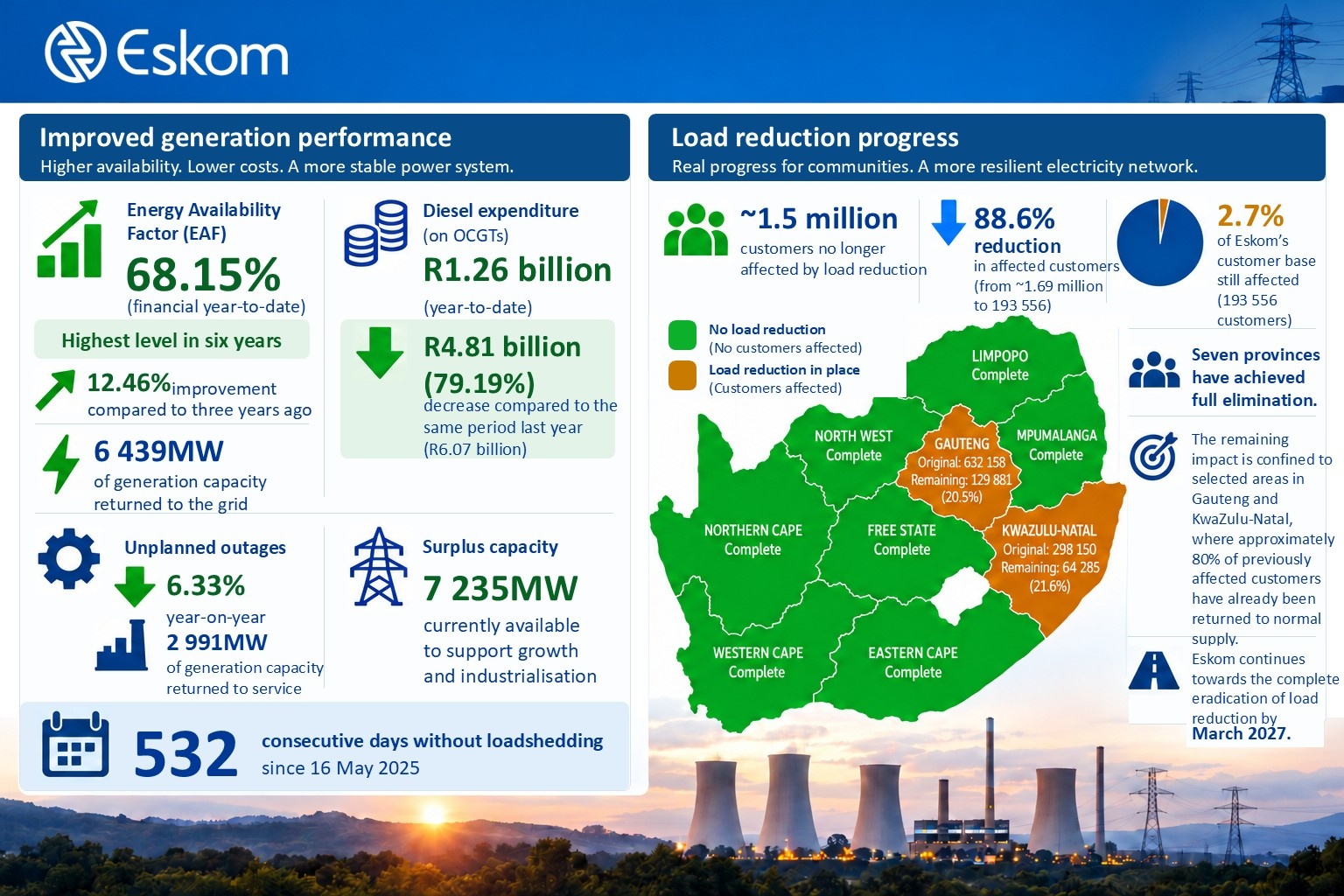
Alongside the market call, the same edition turns to Eskom. The utility’s chair, Mteto Nyati, was reappointed to that role, and the interview covers the utility’s financial recovery, the debt owed to it by municipalities, and the process of unbundling. Those three items are the ones the conversation is built around.
The utility’s financial position matters to every reader who pays a monthly electricity bill, because it is the number that sits behind every tariff decision. Municipal debt matters to anyone living in a town where the lights go out because the local authority has not paid its account. Unbundling matters because it decides who owns what in the electricity system, and who is allowed to sell power into it.
That is the frame of the conversation as it stands. The headline the interview was published under carries the chair’s own stated goal, that tariff increases should be aligned with CPI. That is a target expressed by the chair, and it is reported here as such.
The same edition also points readers to a separate piece of analysis by Ernst van Biljon of Efficient Wealth, on stablecoins and the shift in attention away from bitcoin speculation. That is a different subject, but it belongs on the same page for the same reason. South African savers and investors are being offered new instruments, and the question of where the money is going is a live one.
What the market update does not do is tell a reader what to do next. It reports the pressure and it reports the conversation. The rest is the reader’s call.
There is a case for reading the two items together. A utility that is working through a financial recovery, a municipal debt book and an unbundling process is a utility whose numbers land on the same national balance sheet as the commodity prices and the currency. When commodity prices come under pressure, the revenue side of that balance sheet gets thinner. When the rand moves, the cost of imported fuel and imported equipment moves with it. Those are not separate stories. They are the same story told from two ends.
For a reader in Gauteng watching a prepaid meter, or a reader in Limpopo watching a diesel price, the practical question is the same one the market update is asking. Where is the pressure coming from, and how long does it last.
On the evidence carried in the update, the pressure is on commodities, and the rand is the number to watch. On Eskom, the conversation is about the recovery, the municipal debt and the unbundling, and those three items are the ones the chair addressed.
This paper will keep following the Eskom numbers as they are published, because the tariff question and the municipal debt question are the two that reach a household fastest. The commodity and currency story will be tracked against the JSE and the fuel price as the next data points arrive.
Source: Moneyweb, Commodities under pressure