Eskom's plants hold 68% of capacity as diesel bill drops R4.81 billion
The government says the Generation Recovery Plan has lifted the Energy Availability Factor to 68.15% and cut year-on-year diesel spending, without saying which period the comparison covers.
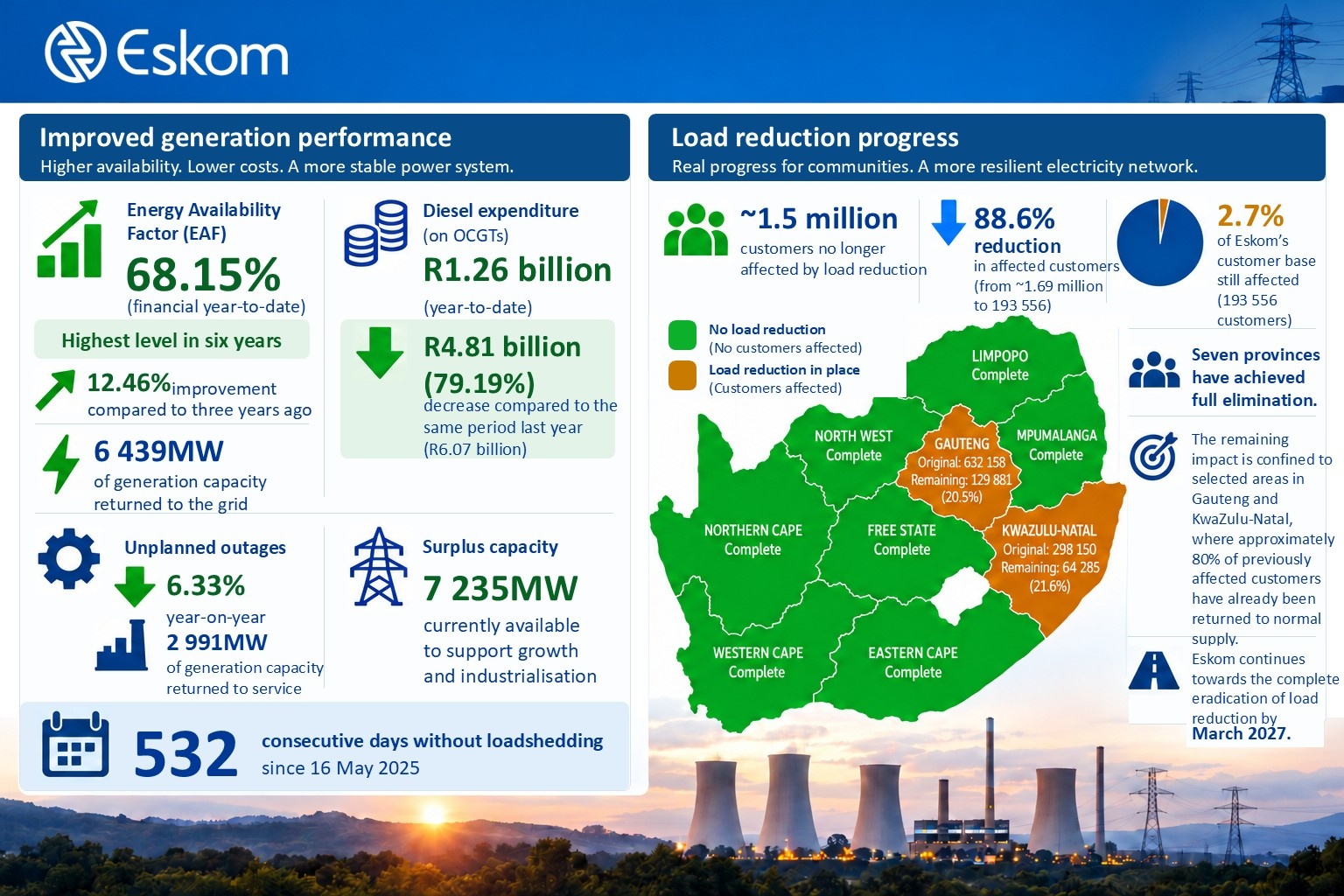
Eskom’s generating fleet is running at an Energy Availability Factor of 68.15%, and the utility has spent R4.81 billion less on diesel year on year, according to a government update on the Generation Recovery Plan issued on Monday.
The Energy Availability Factor is the share of installed generating capacity that is actually available to produce power. It is the number that decides whether South African households and businesses keep their lights on through the evening peak, and it is the number the recovery plan is judged against.
Diesel spending is the other half of the ledger. Eskom burns diesel at its open-cycle gas turbines to keep the system steady when units fail or demand climbs, and that fuel is bought at cost. A fall of R4.81 billion year on year is money not spent on emergency generation.
The update did not state which period the year-on-year comparison covers, what the diesel figure was before the fall, or what EAF stood at a year ago. It also did not say whether the improvement has been sustained across the fleet or reflects a particular stretch of the year.
EAF at 68.15% still leaves close to a third of Eskom’s installed capacity unavailable. The gap between that figure and full availability is the margin the country has to manage through maintenance, breakdowns and demand swings, and it is the reason the diesel turbines remain part of the plan rather than a reserve.
For households and businesses, the practical question is what the number means for the supply they receive. The government’s update presents the EAF and the diesel saving as evidence that the recovery plan is working. It does not set out a target EAF, a date by which it expects to reach one, or how much of the improvement comes from units returning to service against how much comes from demand shifting.