Citrus export forecast cut by 11,5 million cartons as packhouses fill up in Sundays River Valley
The Citrus Growers' Association has lowered its 2026 estimate to 197,9 million 15-kilogram cartons, below last year's 204 million, as growers in the Eastern Cape hope to get through the season with as little waste as possible.
South Africa’s 2026 citrus export estimate has been cut to 197,9 million 15-kilogram cartons, down from an earlier forecast of 209,4 million, the Citrus Growers’ Association has said. The revision removes 11,5 million cartons from the season, a fall of about 5,5 percent, and puts this year below the 204 million cartons exported in 2025.
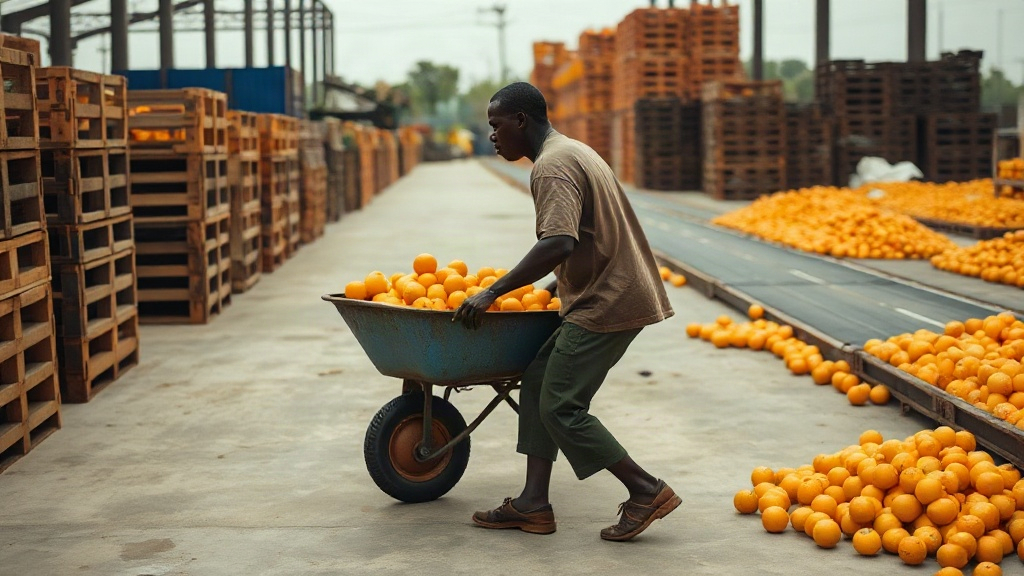
As SABC News reported on 23 September, the lower figure is visible on the ground in the Sundays River Valley in the Eastern Cape, where packhouses are holding more fruit than they can move. Farmers there described a punishing season and said their aim now is to get through it with as little wastage as possible.
For a reader who follows the industry, the arithmetic is the story. A carton holds 15 kilograms of fruit, so the 11,5 million cartons taken out of the forecast represent roughly 172,5 million kilograms of citrus that was expected to leave South African packhouses this year and now is not. That is fruit that has to be sold elsewhere, processed, or lost.
Citrus is one of the country’s largest agricultural export earners and the sector’s seasons run on narrow margins. Growers carry the cost of irrigation, labour, picking, packing and cold storage before a single carton is loaded, and the price they receive is set in markets far from the orchards. When a forecast is revised down after the fruit is already on the trees, the adjustment lands on the farm, not on the spreadsheet.
The Citrus Growers’ Association is the industry body that represents growers and compiles the export estimates. Its numbers are the reference point that packhouses, exporters, transporters and the cold chain plan around, which is why a revision of this size matters beyond the orchards. Volumes determine how many seasonal workers are taken on, how much packing capacity is used and how much space is booked on the ships that carry South African fruit to Europe, the Middle East, Asia and North America.
The reasons given for the revision are trade and weather challenges, and both are familiar pressures on this industry. Weather affects yield, fruit size and the timing of the harvest, and timing matters because a crop that arrives late can miss the window a market pays best for. Trade conditions affect whether the fruit can be sold at all, and at what price, once it reaches the port.
What the lower forecast does not change is the position of the Sundays River Valley as one of the country’s concentrated citrus areas, and the fact that the fruit already in those packhouses still has to be handled. That is where the season is being felt. Growers who spoke to SABC News were clear that the priority now is minimal wastage rather than a strong return.
The revised estimate is a forecast, not a final count, and it can move again before the season closes. For now it records a season running below last year, and an industry adjusting its expectations downwards while the fruit waits.
Source: SABC News, Citrus growers revise exports downwards amid trade, weather challenges (published 23 September 2026).