Biochar Industrial Group raises $1,5m to put waste-to-charcoal units inside food factories
The pre-seed round funds biochar production units at food processing plants across Sub-Saharan Africa, turning agricultural waste into durable carbon removal credits.
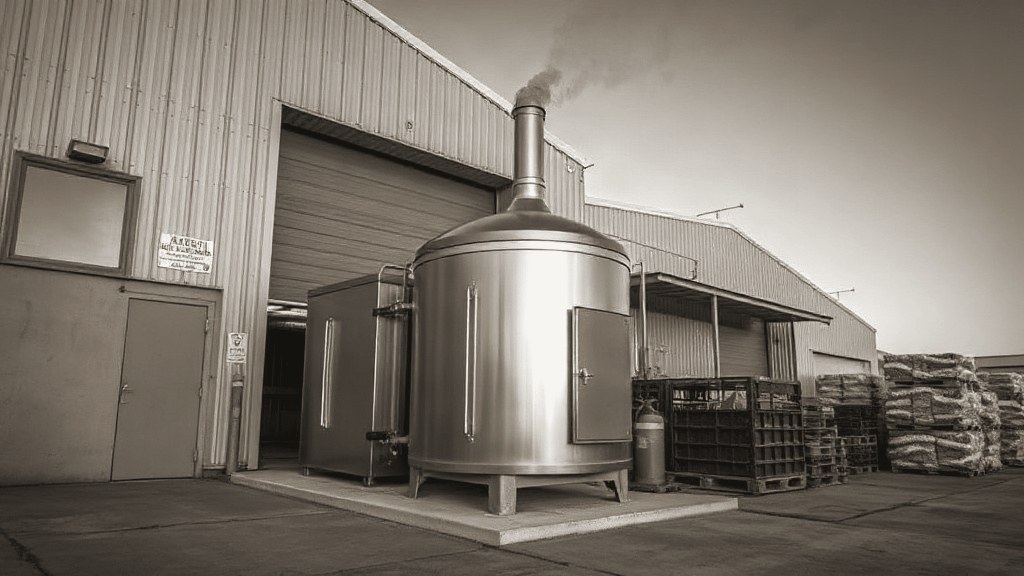
Biochar Industrial Group has raised $1,5 million in pre-seed funding to install biochar production units inside food processing facilities across Sub-Saharan Africa, the company’s model for turning agricultural waste into durable carbon removal credits.
As Ventureburn reported on 18 September 2026, the Africa-based developer secured the capital to expand what it describes as a decentralised climate technology model. The fresh funding will pay for biochar production units to be deployed directly at food processing sites.
Biochar is a charcoal-like material made from organic waste. It locks carbon away for long periods, which is what makes it valuable in the market for durable carbon removal credits. By embedding production units inside existing industrial sites, the company secures a steady supply of agricultural waste feedstock at no cost.
The model, and why it matters here
The logic is straightforward. Food processing plants in Sub-Saharan Africa already produce large volumes of agricultural waste. Instead of paying to transport that waste to a central facility, the company installs its units on site and converts the waste where it is generated. That cuts feedstock costs and removes a logistical bottleneck that has slowed similar ventures.
For South African readers, the relevance is not abstract. The country’s food processing sector generates significant organic waste streams, from sugar mills in KwaZulu-Natal to fruit packhouses in the Western Cape and grain handlers in the Free State. A model that turns that waste into a saleable carbon product, without a separate collection network, addresses one of the practical barriers that has kept biochar production small-scale in this market.
The pre-seed round also signals something about investor appetite. Ventureburn reported that the funding highlights surging interest in durable carbon removal solutions within emerging markets. Pairing cheap agricultural feedstock with established industrial waste streams slashes operational costs and accelerates supply scaling, according to the outlet’s account.
That is a fair reading of the trend. Carbon removal credits have attracted growing attention globally as buyers look for offsets that can be verified and that store carbon for the long term, rather than avoiding emissions in the first place. Biochar qualifies on both counts, and the feedstock cost advantage in agricultural economies is real.
What the funding does not settle
The $1,5 million is pre-seed capital, which means it funds early deployment rather than full commercial scale. The company has not disclosed how many units it will install, at which facilities, or on what timeline. Those are the details that will determine whether the model works outside a pilot setting.
There is also the question of certification. Carbon removal credits only carry value if a recognised registry verifies the removal. The company has not named a certification pathway in the information available, and that is the step that turns production into revenue.
South Africa has its own carbon market infrastructure taking shape under the Carbon Tax Act, and the Department of Forestry, Fisheries and the Environment has been working on the regulatory framework for carbon offsets. A developer that can produce verifiable removal credits inside the country would be selling into a market that is still being built, which is both an opportunity and a risk.
The wider picture
The funding is modest by global standards, but the model is worth watching. Decentralised production, where the processing happens at the waste source rather than at a distant plant, is the same approach that has worked in other agricultural value chains on the continent. If it works for biochar, it lowers the capital barrier for smaller operators.
Ventureburn’s report is accurate on the facts it carries. What a South African reader needs on top of it is the local context: the waste streams that exist here, the carbon market that is forming, and the certification question that will decide whether the credits this company produces can be sold.
Biochar Industrial Group has not responded to questions from The Enquirer about the number of units planned, the facilities selected or the certification pathway. The company’s next public step will be the first installation, and that is the point at which the model moves from a funding announcement to a working operation.
Source: Ventureburn, African Biochar Startup Raises $1.5M to Scale Factory-Based Carbon Removal, 18 September 2026.