Beneva's first school turns 100 with the man who built it
Veerasamy Appiah Rama, born to indentured parents on a South Coast sugar estate, helped put up six classrooms in 1942 and spent 42 years in KwaZulu-Natal classrooms.
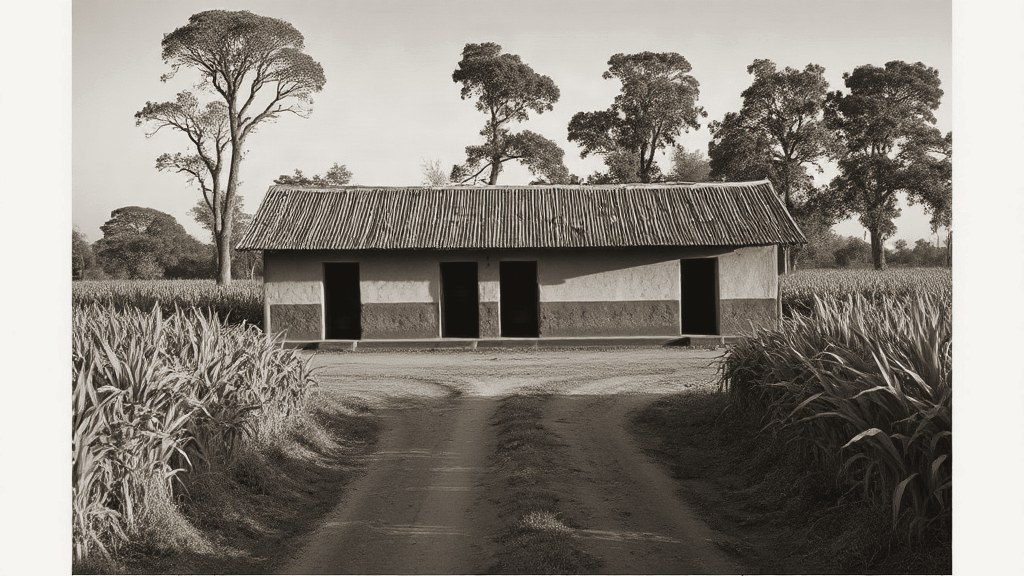
Veerasamy Appiah Rama turned 100 on August 17, and the number that matters most in his story is not the century. It is six, the number of classrooms he helped build on a KwaZulu-Natal sugar estate in 1942, when he was about 17 years old and still a volunteer teacher himself.
Rama, who lives in the Bluff, marked the birthday with family and friends at a party at the Bluff Eco Park. He was born in 1926 to indentured parents and grew up on a sugar estate in Beneva, on the South Coast, the fourth of seven children. His father, Rama Appiah, worked as a labourer before being made a sirdar, a foreman. His mother, Muniamma, ran the home.
There was no school in Beneva. Children walked to the Esperanza Government-Aided Indian School, a round trip of 14 kilometres. Rama made that walk, and when his mother died he was nine, leaving him and a 12-year-old sister to raise siblings aged six, three and six months while their father worked long hours.
A school built on Sundays
He completed Standard 6 and went on to Sastri College in Durban, living with a cousin’s family in Clairwood and travelling by train to Berea Station before walking to the college in Musgrave. After Standard 8 he returned to Beneva and taught as a volunteer at Esperanza. A vacancy opened within months and he was appointed a teacher on one pound a month.
The distance children still had to walk stayed with him. He put it to his father that Beneva needed its own school. The two approached the sugar estate owners, who gave them a plot of land and permission to build. Rama headed the building committee alongside community members, and they worked on Sundays, the only day they were not in the fields, making the bricks themselves. The Beneva Government-Aided Indian School opened in 1942 with six classrooms.
He went on to serve as a teacher, vice principal and principal at schools on the South Coast, among them Umzinto High School, Port Shepstone Primary and High School and Engar Memorial Primary School. In Port Shepstone he negotiated with a local businessman for money to build a school for the children of Indian farming families who were walking several kilometres to Port Shepstone Primary, where he was vice principal. Engar Memorial Primary opened in the 1960s and later became a high school.
Chatsworth, and a name chosen for two suburbs
Rama moved to Durban as principal of Junagarth Primary School in Merebank, then took charge of a new school known only as Chatsworth 40, which was opening as the Group Areas Act pushed more people into Chatsworth. He was in India when his wife wrote to tell him of the appointment. On his return he opened the school and, with the education department’s approval, renamed it Montarena, for the communities of Montford and Arena Park it served.
He finished his career as principal of Protea Secondary School, retiring in 1987 after 42 years in education. Along the way he completed matric, a teacher’s diploma, and part-time Bachelor of Arts and Bachelor of Education degrees through the University of South Africa. He ran extra Saturday classes to prepare pupils for examinations, and counts the careers his former pupils went on to as the return on that work.
He married Parvathee in July 1952. She has since died. They lived in Beneva, then Port Shepstone, then Merebank, and had two children, Don Rama, 72, a retired principal and author, and Kumarie Naidoo, 66, a retired teacher. There are six grandchildren and seven great-grandchildren.
Rama travelled widely, visiting 52 cities around the world in 1982 with his friend Poobie Naicker, a teacher, and later the Okavango Swamps and the Amazon Forest with his family, as well as Japan, China and Fiji. The trip he remembers best was to India, to the village his parents left. He wrote memoirs that appear in his son’s books, Beneath the Straw Roof and Children of the Straw Roof.
He puts his longevity down to a full life rather than anything specific, about five kilometres of walking a day, and learning to swim at 65. He has no chronic illness, with slight hearing and sight impairment.
His record is a South African one, and it is worth naming plainly. A boy who lost his mother at nine and walked 14 kilometres to school spent his working life making sure the next child did not have to.
Source: IOL, KZN teacher who helped establish rural schools turns 100
- Police find fifth woman's body near Kempton Park as search for missing jogger continues 2026-09-14
- Sixth woman found in Ekurhuleni as ex-SAPS profiler calls for serial killer investigation 2026-09-15
- Gauteng police confirm six women found dead in Ekurhuleni as Kekana appeals for information 2026-09-15
- Police task team probes five Kempton Park deaths as family identifies runner Elizabeth Moselakgomo 2026-09-15
- Seven women found dead in Ekurhuleni as top police and ministers meet in Parktown 2026-09-15
- Police confirm eighth body in Ekurhuleni and offer R400 000 for information 2026-09-15
- Police put R400 000 on the table in Kempton Park murders probe 2026-09-15
- Police form high-level team as eighth body found in Ekurhuleni 2026-09-15
- Seven women found dead in Gauteng in two months as safety audit is demanded 2026-09-15
- Police raise Ekurhuleni toll to seven women as task team hunts suspects 2026-09-16