Absa's 2,56 million finance applications show SUVs at 67,6% as bakkies slip to 28,9%
Three years of Absa Vehicle and Asset Finance data show South Africans buying smaller, cheaper and increasingly Chinese-badged SUVs as bakkie prices climb.
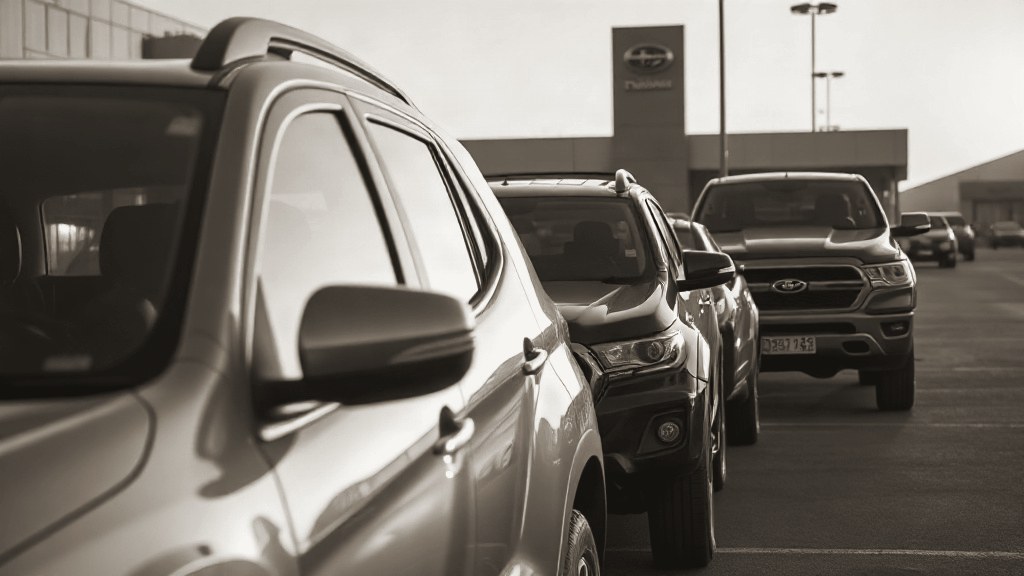
SUVs now account for 67,6% of the combined SUV, bakkie and body-on-frame SUV finance market, up from 60,2% in the second quarter of 2023, according to an Absa Group analysis of 2,56 million new and used vehicle finance applications processed by Absa Vehicle and Asset Finance between January 2023 and June 2026.
The shift is being driven by price. The average SUV finance application value rose 0,6% over the period, from roughly R350 000 to R353 000. Over the same three years the average bakkie application value climbed almost 20%, from about R375 000 to R448 000, and body-on-frame SUVs rose 14% to approximately R564 000.
SUV application volumes grew 38% between 2023 and 2025. Bakkie and body-on-frame SUV volumes stayed relatively stable.
By the second quarter of 2026 bakkies made up 28,9% of the three segments Absa analysed, down from 36,3% three years earlier. Body-on-frame SUVs were 3,6%, down from 5,0%.
Chinese brands take 40% of SUV applications
Chinese vehicle brands lifted their share of SUV finance applications from 19% in 2023 to 40% in 2026. The same brands more than doubled their share of bakkie applications, from 4,4% to 11,2%, though established manufacturers still lead that segment.
“South African consumers are increasingly assessing the overall value offered by a vehicle, including price, features and suitability for their lifestyle,” said Charl Potgieter, Managing Executive of Absa Vehicle and Asset Finance. “Greater competition in the SUV segment is giving customers more choice at accessible price points and is changing the composition of the market.”
Absa’s figures show the bakkie segment changing shape even where its total volume held steady. Double cabs now make up 65% of bakkie finance applications, up from 58% in 2023. Half-ton bakkies fell from about 15% to 7%.
The half-ton buyer did not simply trade up. Customer transition data shows 49% of former half-ton owners moved outside the bakkie and SUV categories altogether, with hatchbacks the most common next purchase.
“The decline of the half-ton segment has created a clear affordability gap for customers who need practical, entry-level mobility,” Potgieter said. “Many of these buyers are choosing hatchbacks, sedans and panel vans rather than moving into more expensive bakkies.”
SUV owners stay with SUVs
SUVs held their customers best. Of existing SUV owners, 55% bought another SUV. Bakkie retention was 45%. Body-on-frame SUV owners split more evenly, between another body-on-frame SUV, a bakkie or a move to an SUV.
“The traditional boundaries between vehicle categories are becoming less rigid,” Potgieter said. “A customer who arrives in one segment may leave in another, depending on what they can afford, the capability they need and the value available to them. Understanding what somebody currently drives is therefore only part of understanding what they may buy next.”
For buyers, the practical effect Absa describes is more choice at the lower end of the SUV category, and a thinner field of new half-ton bakkies. For dealers, the finding points to stock and pricing decisions that follow what customers can actually finance rather than what they drove last time.
Absa published the analysis on 17 September 2026 and points readers to its 2026 industry report for the full data.
Source: Absa Group, Affordability and greater choice reshapes South Africa’s vehicle market