142 072 names on the ballot, 29 million on the roll: South Africa votes on 4 November
CoGTA Minister Velenkosini Hlabisa has urged South Africans to turn out peacefully for the Local Government Elections, with Home Affairs keeping its doors open until 9pm on election day for ID collections.
South Africans go to the polls on 4 November 2026 to elect their municipal councils, and the committee coordinating government’s support for the exercise has put its numbers on the record: 142 072 candidate nominations for 10 526 council seats, and a voters’ roll that has passed 29 million.
Cooperative Governance and Traditional Affairs Minister Velenkosini Hlabisa, speaking as chairperson of the Inter-Ministerial Committee on Local Government Elections, called on South Africans to protect democracy and contribute to peaceful, free, fair and incident-free elections. The committee brings together Home Affairs, Justice and Constitutional Development, Finance, Defence and Military Veterans, Police, the Presidency responsible for State Security, Communications and Digital Technologies, the Electoral Commission, the Municipal Demarcation Board and the South African Local Government Association.
The nomination figure, which the committee says closed on 28 August 2026, covers ward, proportional representation and independent candidates and represents higher participation than in the 2021 Local Government Elections. The roll growth follows almost 4.7 million voter interactions during the registration weekends held in June and August, with more than 750 000 new voters added. People under the age of 29 accounted for 46% of new registrations during the final registration weekend.
Hlabisa put the case for voting in plain terms. “Voting gives communities the opportunity to influence municipal leadership, shape local priorities and hold elected representatives accountable for service delivery,” he said. The committee urged registered voters to bring family members, friends, neighbours and fellow community members along, warning against letting apathy or frustration undermine participation. “Your vote matters. Your voice matters. Your participation matters. Let us stand together to protect and defend our hard-won democracy, strengthen local government and build communities that respond to the needs and aspirations of our people,” Hlabisa said.
The committee reaffirmed its confidence in the Electoral Commission and stressed that government’s role is to facilitate coordination, support logistical arrangements within its mandate and contribute to a safe electoral environment, while the Commission remains solely responsible for administering the elections independently under the Constitution and electoral legislation.
On readiness, the IEC has declared its Results System fit for purpose following independent testing and auditing, with all identified findings addressed. It has launched its National Results Operations Centre at the Gallagher Convention Centre in Midrand, which will coordinate the capture and release of results from 23 696 voting stations nationwide and give political parties, independent candidates and the media oversight of the process.
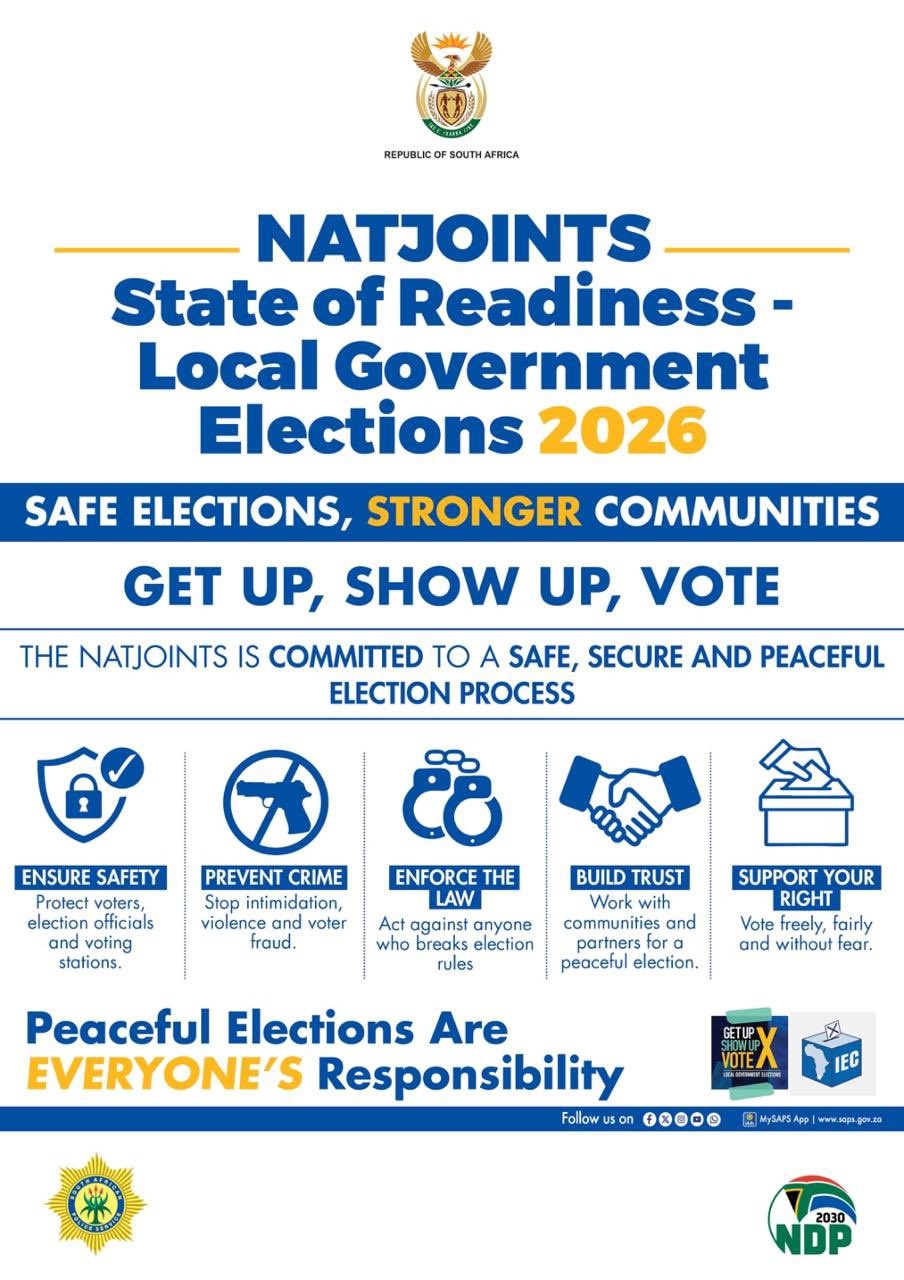
Security has been prioritised, including monitoring of cybersecurity threats, interference with electoral systems, misinformation and disinformation, electoral fraud and incidents that could disrupt voting or undermine public confidence. A Priority Committee within the National Joint Operational and Intelligence Structure brings together security and law enforcement structures to monitor risks and coordinate responses. Political parties, candidates and supporters have been urged to reject violence and intimidation, respect differing political views and report incidents through the appropriate channels. Members of the public have been asked to verify election-related information through the IEC, government departments and other credible sources before sharing it, particularly on social media.
The South African Weather Service has indicated that current forecasts do not point to significant adverse weather on election day, though monitoring and preparedness continue. Because the elections fall in the early part of the summer rainfall season and coincide with the El Niño phenomenon, communities have been urged to stay hydrated, guard against heat exposure, conserve water and follow official weather advisories.
Home Affairs will extend operating hours at its front offices so citizens can collect or apply for identity documents and obtain Temporary Identity Certificates where applicable. Offices will run from 8am to 6pm on 2 and 3 November, and from 7am to 9pm on election day, in line with the IEC’s operational hours. Citizens who have applied for identity documents have been urged to collect them in time to vote. Eligible voters who qualify for special voting have been encouraged to use the opportunity on 2 and 3 November.
Hlabisa closed on the same note he opened. “The power is yours to make the difference you wish to see. Let us protect our democracy, participate peacefully and ensure that these elections are free, fair and incidentless,” he said.
This report is drawn from the government’s own summary of the committee’s briefing, published by SAnews (South African Government News Agency) at https://www.sanews.gov.za/south-africa/lge-2026-call-peaceful-free-elections on 1 November 2026, rather than from the committee’s full record.