Your town owes Eskom R122.5bn. The new council inherits the bill
Municipalities went into Wednesday's local government elections owing Eskom about R122.5bn in overdue debt, and residents who pay on time are the ones most exposed.
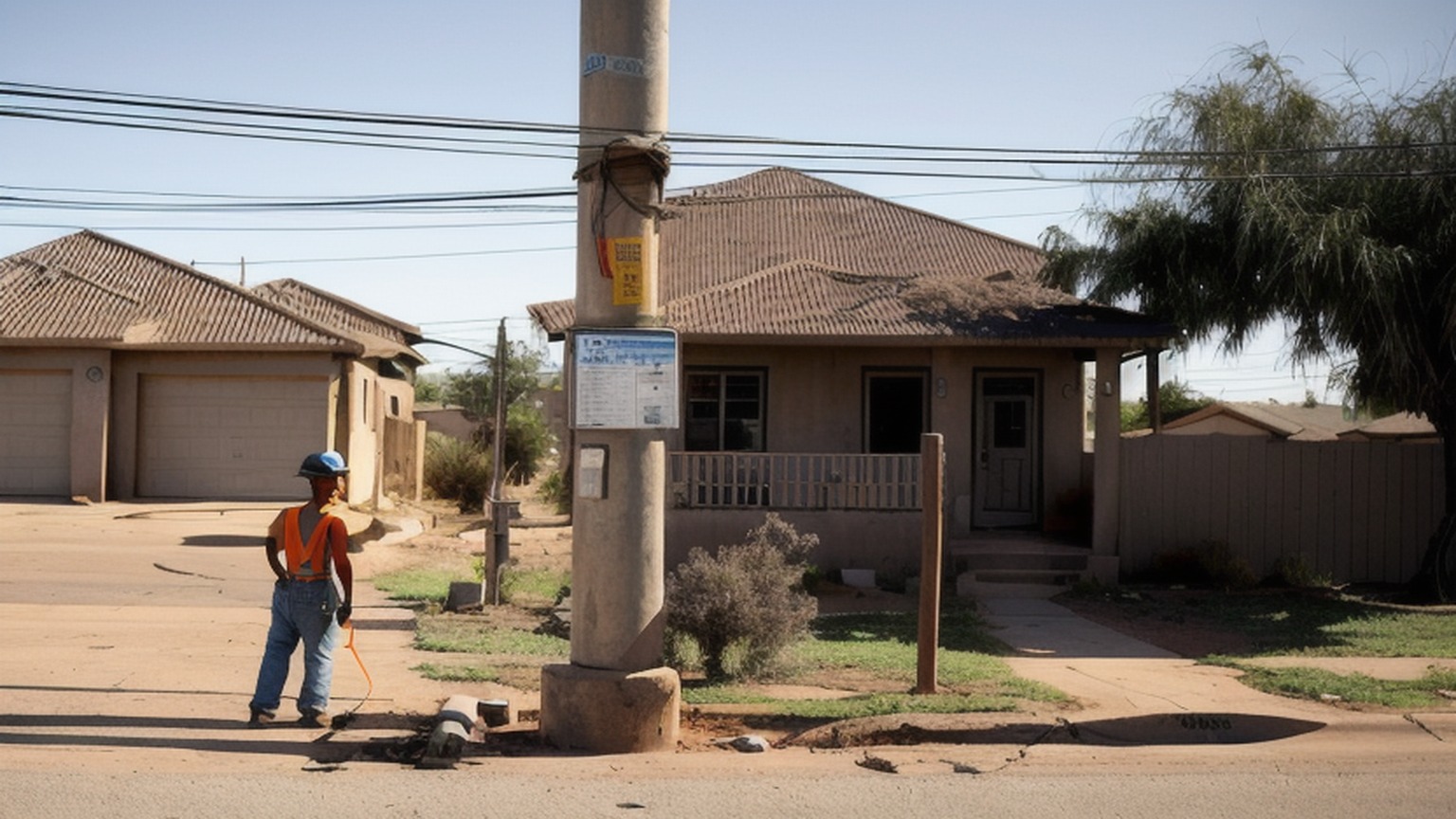
Municipalities entered Wednesday’s local government elections owing Eskom about R122.5bn in overdue debt, money the utility says the incoming councils now have to collect, arrest and pay over.
The figure is Eskom’s own, given to IOL by spokesperson Daphne Mokwena and dated to August 2026. It is the number that sits underneath every new council sworn in this week, and it is the reason residents who pay their electricity bills on time have something to worry about.
Eskom sells electricity in bulk to municipalities. Billing residents and collecting their money is the municipality’s job, and so is paying over what it collects for electricity. When that last step does not happen, the debt lands on Eskom’s books, and the utility carries the shortfall.
“Municipal debt remains a significant risk to Eskom’s financial sustainability and requires coordinated action across all spheres of government,” Mokwena said.
She said supply interruption is a measure of last resort, taken only after intergovernmental engagements and a public process under the Promotion of Administrative Justice Act, in which residents and businesses can make representations before any decision is made. That is the protection a household has if its council stops paying.
Eskom’s answer to the problem is partly technical. Mokwena said the utility’s nationwide smart meter rollout lets it switch off or limit supply to a single non-paying account from a central system, so that paying neighbours stay connected. The same principle applies in municipalities that have rolled out smart meters.
She also pointed to distribution agency agreements, under which a municipality keeps its electricity licence while Eskom takes over billing and collection, so that residents’ payments go directly to their electricity supply. For a household that pays, she said, that is the best protection on offer.
National Treasury has its own lever. It withheld the July equitable share from 69 municipalities over unpaid debts to Eskom and water boards, unfunded budgets and wasteful expenditure, before releasing the remaining R7.1bn later that month. Mokwena said that power would not on its own solve the debt.
“Treasury’s enforcement measures are important, but a sustainable resolution requires municipalities to pay current accounts in full and on time, prevent new arrears, address historical debt and tackle the structural causes of non-payment,” she said.
The debt is not spread evenly. Electricity and energy minister Kgosientsho Ramokgopa told Parliament in a written reply last month that 110 municipalities each owed Eskom more than R1m in overdue debt as at August 31. In a separate reply he named eMalahleni Local Municipality in Mpumalanga, which includes the town formerly known as Witbank, as the biggest debtor at R13.6bn.
Ramokgopa has also told Parliament that Eskom projects municipal debt could reach R358bn by 2031 without decisive intervention. That projection is the minister’s account of Eskom’s own modelling, and it is the measure of what the new councils are being asked to turn around.
Prof Hartmut Winkler, a physics professor at the University of Johannesburg, told IOL that municipalities had to ring-fence the money residents pay for electricity and pay it over to the supplier, which is City Power in Johannesburg and Eskom in many smaller towns. Municipalities that have not yet done so should start immediately, he said.
Winkler said councils should not punish residents who have installed solar panels, but should formalise and simplify the way they sell their unused power back to the municipality, as is the norm in many countries. That would cut the need to buy more expensive power and help cover shortfalls.
He also had a warning for anyone expecting the lights to behave better soon. Fixing old equipment that keeps breaking down will take many years, he said.
Wednesday’s vote itself ran alongside Eskom’s own preparations. Mokwena said group chief executive Dan Marokane led a delegation of the utility’s leaders to the Electoral Commission’s election hub in Midrand, where he briefed chairperson Mosotho Moepya on support plans that had taken months to prepare and on round-the-clock monitoring of the power system. She said 43,000 Eskom employees, whom the utility calls Guardians, were on standby across the country to support the IEC.
She also said load-shedding is over, with South Africa having gone more than 17 months without it since May 16 last year.
What the new councils do with the money they collect for electricity is now the question their residents will ask first. Eskom’s position is that current accounts must be paid in full and on time, new arrears prevented, historical debt addressed and the structural causes of non-payment tackled. The utility says it will continue to work with government on short, medium and long-term solutions.
The Enquirer reported the debt figures as Eskom and the minister gave them. We will keep asking the new councils what they have paid over.