Vavi calls Parliament's police inquiry a waste of money as Diko defends Masemola suspension
The Saftu general secretary says the ad hoc committee that heard General Nhlanhla Mkhwanazi's allegations was compromised from the start, and that Saftu is waiting for the Madlanga commission instead.
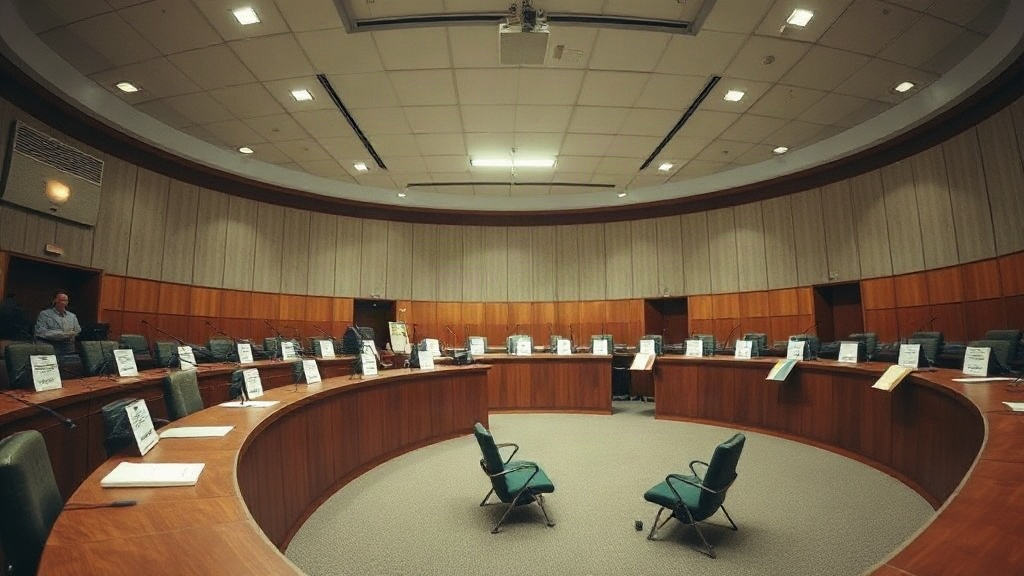
The general secretary of the South African Federation of Trade Unions has described Parliament’s ad hoc committee on the criminal justice system as a waste of money, saying Saftu never took the process seriously because some of the MPs hearing the evidence were themselves compromised.
Zwelinzima Vavi made the remarks in an interview with the SABC, as reported by The Citizen on 26 September. Saftu, he said, made its position clear from the beginning. “[Saftu] felt from the beginning that the people who were nominated to listen to the evidence were themselves so compromised, as is now being demonstrated by the Madlanga commission,” he said.
He described the committee as “irrelevant” and said it had been assembled only after public pressure, and hurriedly, by people who had ignored Lieutenant General Nhlanhla Mkhwanazi when the KwaZulu-Natal police commissioner first raised his alarm. “We think that [the ad hoc committee] was a total waste of money,” Vavi said. Saftu, he added, is waiting for “the real deal, for the recommendations that will be made by the Madlanga commission.”
The ad hoc committee was set up to investigate Mkhwanazi’s allegations of political interference, corruption and maladministration in the criminal justice system. Its draft report was deliberated on in July, and several members said at the time that it had been watered down and was not tough enough on certain individuals, including suspended police minister Senzo Mchunu.
Vavi’s criticism followed public comments by ANC MP Khusela Diko defending the way National Police Commissioner Fannie Masemola was suspended. Diko was also accused by the Activists and Citizens Forum of allowing Masemola to be charged in order to protect Mchunu. The charges against Masemola were dropped this week.
Diko rejected that reading, saying on social media that the ANC did not refer Masemola’s matter for further investigation. “While the ANC submitted a finding on Gen Masemola, we have made no recommendation for further action,” she said. “We did not refer Gen Masemola’s matter for further investigation as we did to Min Mchunu and many others.” She added that the ANC noted “the lapse on his side” but made no recommendation for further action, and that its submission did not say he must not return to work.
Vavi dismissed that explanation. “We don’t take seriously what Comrade Khusela Diko is saying or any of the members of that committee,” he said.
For a reader following the machinery rather than the personalities, the two processes are separate and they carry different powers. The ad hoc committee is a parliamentary structure, made up of MPs drawn from the parties represented in the National Assembly, and its output is a report and recommendations. The Madlanga commission is a judicial commission of inquiry, chaired by a sitting judge, which hears evidence under oath and reports to the president. Its findings carry weight that a committee of MPs cannot, which is precisely the distinction Vavi is leaning on.
That distinction matters for what happens next. A parliamentary report can recommend that a person be investigated or disciplined, but the decision to prosecute, to suspend or to reinstate rests with the police service, the National Prosecuting Authority and the executive. A commission’s recommendations carry the authority of the judge who makes them and the president who receives them.
President Cyril Ramaphosa has extended the deadline for the Madlanga commission’s final report. The commission has spent a year hearing evidence, and its hearings have already produced testimony about the justice system that has been widely reported.
What ordinary South Africans will notice is the same thing the institutions are arguing about. When a police commissioner is suspended and then has charges against him dropped, the public question is not which forum was more important. It is whether anyone is held to account at all, and by whom. Vavi’s answer is that the commission is the only forum that can do it. Diko’s answer is that her party’s submission to the committee treated Masemola differently from Mchunu, and that this was deliberate.
Neither claim has been tested in a final report. The ad hoc committee’s draft was contested by its own members before it was finalised, and the commission’s final findings are still outstanding. Until both land, the argument between Saftu and the ANC over which process was worth the money will remain a dispute about records that have not yet been published.
Source: The Citizen, ‘Some of those members are compromised’: Parliament’s ad hoc committee called ‘irrelevant’