Same unrest, two lenses: how Al Jazeera and DW report South Africa and their own backyards
A new analysis finds both broadcasters apply a harsher frame to anti-illegal-immigration hostility in South Africa than to comparable tensions in Qatar and Germany, and the question for readers is what that gap means.
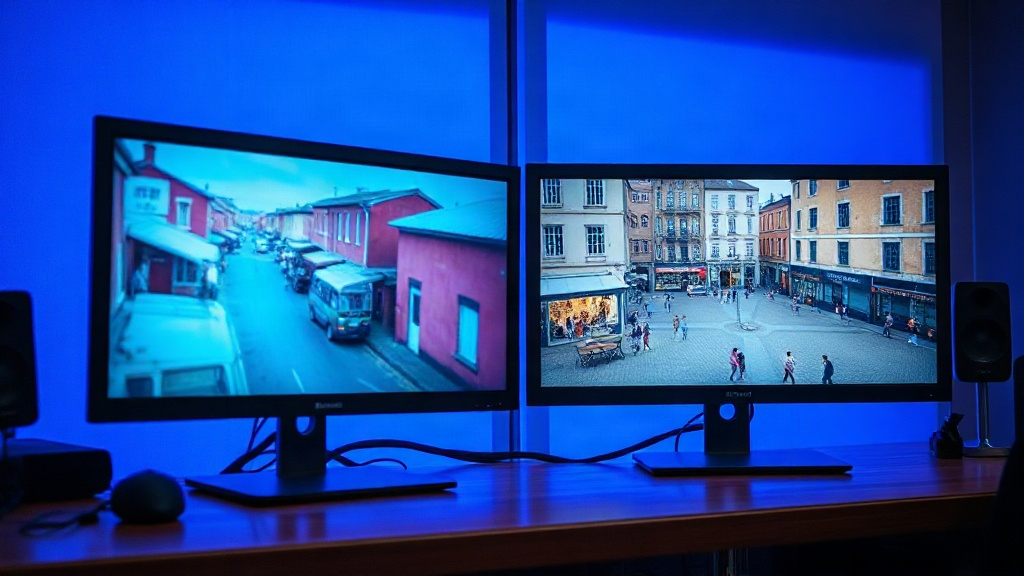
Two of the world’s most watched international broadcasters cover anti-illegal-immigration hostility in South Africa in a harder register than they apply to comparable tensions in their own sponsoring states. That is the central finding of a comparative analysis of Al Jazeera and Deutsche Welle coverage, and it is worth the attention of every South African who has ever watched this country described to the world.
The analysis finds that when the two networks report on anti-illegal-immigration sentiment and violence in South Africa, they use what it describes as an essentialist and pathological framework. When they cover similar dynamics in Qatar and Germany, the same networks shift their editorial tone to protect domestic institutions. The finding is the news here, not the document that carries it.
For a South African reader, the practical value is a reading habit. When a foreign outlet reports on this country, ask what the same outlet says about the same problem at home.
The comparison, side by side
The analysis looked at how each network handles hostility toward migrants in two settings. The first is South Africa. The second is the broadcaster’s own sponsoring state, Qatar in the case of Al Jazeera and Germany in the case of Deutsche Welle.
On Qatar, the analysis finds that Al Jazeera’s coverage of migrant labour issues avoids the term anti-illegal-immigration sentiment entirely. Instead, the broadcaster foregrounds state reform announcements. It focuses heavily on government initiatives such as the introduction of a minimum wage, regulations limiting work during extreme heat, and the formal abolition of exit visas. The analysis also cites a figure for foreign workers as a share of Qatar’s total population, which it puts at approximately 85 to 90 percent. That number is a claim that requires independent verification against Qatari or United Nations data before it is treated as settled, and this masthead has not independently confirmed it.
On Germany, the analysis finds that Deutsche Welle does not characterise German society as fundamentally racist or hostile to foreigners. Instead it frames domestic anti-illegal-immigration sentiment as an external threat to an otherwise functional democratic system. The coverage discusses the AfD, arson attacks on refugee facilities and physical assaults, but the analysis finds these are presented as fringe problems within a resilient constitutional order rather than as structural features of the society.
The analysis describes a pattern in which the same broadcaster can be exacting about a developing country and forgiving about its own.
The analysis summarises the asymmetry in its conclusion. It finds that major international broadcasters can project critical human rights narratives onto developing nations while shielding their own domestic institutions from identical standards of scrutiny.
Why the mandates matter
The analysis points to institutional funding and mission as the driver of the pattern, and it is careful to present this as its own reading of editorial output rather than as evidence of direct instruction.
Deutsche Welle’s editorial perspective is guided by its statutory mission under the Deutsche Welle Act and funded through the German federal budget. Al Jazeera’s reporting is shaped by its position as a state funded foreign policy instrument for Qatar. Those are structural facts about how each broadcaster is constituted and paid for. They do not prove that anyone dictates coverage. They do explain why an outlet might handle its own state’s record with more care than it handles another country’s.
This is not a uniquely foreign problem. South African readers know that domestic outlets have their own blind spots, and that the SABC’s funding and mandate have been debated for years. The point of the comparison is not to single out two networks. It is to make the machinery visible.
What it means for ordinary South Africans
South Africa’s problems with anti-illegal-immigration hostility are real and documented. Nothing in this analysis changes that, and nothing in it should be read as a defence of violence or of the prejudice that drives it. The finding is about proportion and consistency in how the story is told, not about whether the story exists.
That distinction matters because foreign coverage shapes how investors, tourists, diplomats and the diaspora see this country. A frame that treats South African hostility as permanent, rather than as a social problem that South Africans are actively contesting, does real economic and reputational damage. It also flattens the work of the many South Africans who run shelters, legal clinics and community mediation efforts.
There is a second reason to care. The same broadcasters produce strong, valuable journalism on migration. Al Jazeera’s reporting on migrant labour conditions in the Gulf has, over many years, put working conditions in that region on the global agenda in a way few other outlets have matched. Deutsche Welle has produced sustained reporting on the far right, on asylum policy and on the pressures facing German municipalities. The analysis does not dispute that record. It argues that the same rigour is not applied evenly.
What happens next
The analysis invites a specific response from readers rather than from regulators. It suggests a simple comparative test. When a foreign report on South Africa lands, look for the same outlet’s coverage of the equivalent problem in its own country. If the language is softer, the causes are described as fringe rather than structural, and the state’s reform announcements are given more weight than the harm being reported, the reader has learned something about the frame.
That test cuts both ways. South African outlets covering the rest of the continent should expect the same question to be asked of them. The standard the analysis applies to Al Jazeera and Deutsche Welle is a standard any newsroom can be measured against, including this one.
What remains open is whether the pattern the analysis identifies is changing. Both broadcasters operate in a crowded global market where audiences can compare coverage across borders in seconds. That scrutiny is the strongest pressure for consistency, and it is now available to anyone with a phone.