Standard Bank report puts township economy at R900bn as most firms stay unregistered
A bank survey finds nearly 80% of township businesses are unregistered and fewer than 9% have bank loans, with the bank's enterprise head arguing formalisation is the route to scale.
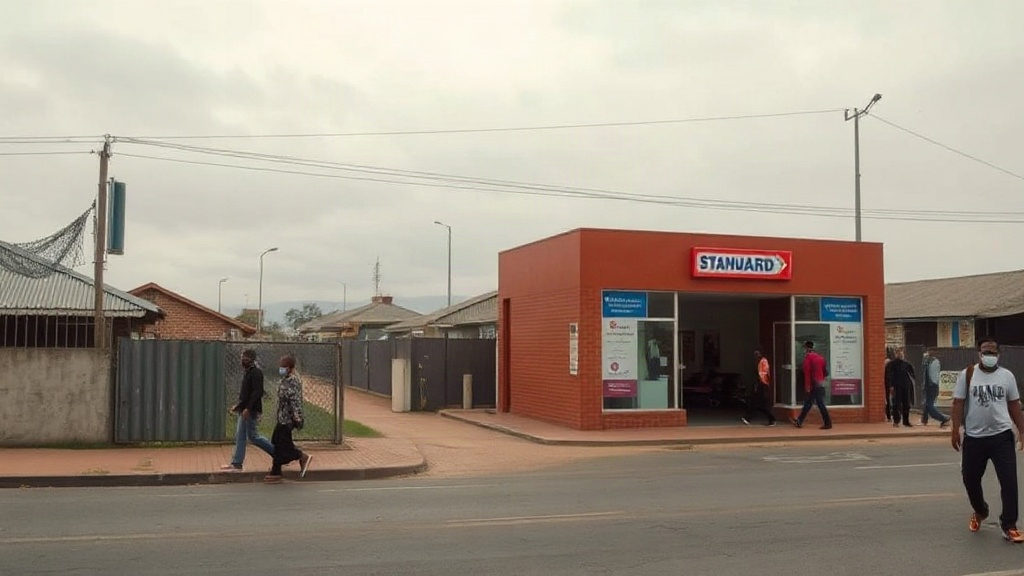
The township economy is worth around R900 billion a year, according to Standard Bank’s 2025 Township Informal Economy Insights Report, and some estimates put the figure above R1 trillion. The same report found that nearly 80% of the businesses it surveyed were unregistered, fewer than 9% had access to bank loans, more than half relied on personal savings to keep going, and almost half operated from homes or garages against just 11% working from commercial premises.
As Moneyweb reported on 21 September, Naledzani Mosomane, head of enterprise and supplier development for business and commercial banking at Standard Bank, discussed the findings on the outlet’s Mzansi Business podcast. Moneyweb’s report is the origin of the figures and the commentary below.
The numbers describe a market that is already large and already trading, but is financed almost entirely outside the banking system. That is the gap the report points to. A business that cannot show registration papers, bank statements and a formal trading record is difficult for a bank to assess, which is why fewer than one in ten of those surveyed had a loan.
Mosomane said the report was commissioned to put data behind a sector usually discussed through unemployment and poverty rather than through what it produces. She said the survey was intended to establish what the market looks like and how support for the small and medium enterprises inside it can be organised.
She identified four things as the keys to unlocking the sector’s potential: access to markets, funding, infrastructure and knowledge.
Why registration is the sticking point
Formalisation is the pivot on which most of the rest turns. Registration opens the door to finance, to procurement opportunities and to corporate supply chains, but Mosomane acknowledged it can look costly, complicated or disconnected from the daily reality of running a small business.
Her argument is blunt. A business that wants to scale cannot do it informally, she said, because informality closes off opportunities for the owner. It can work for an owner who is comfortable with the current level of income and the current way of operating. It stops working when that owner approaches a normal finance channel, because the lender needs a formal business to lend to.
That is a familiar bind for South African small businesses. The Companies and Intellectual Property Commission registers companies, and the South African Revenue Service handles tax registration, but the paperwork and the cost of compliance fall hardest on a business with one employee and no bookkeeper. The survey’s finding that more than half of the businesses surveyed fund themselves from personal savings is consistent with owners who have no other option.
What the sector actually contains
The township economy is not one industry. It includes retailers, manufacturers, service providers, professional firms, food producers, healthcare providers and logistics operators. What many of them share is proximity to a dense consumer market, and an understanding of local spending patterns that an outside competitor does not have.
The same proximity produces the sector’s hardest competitive problem. Similar businesses chase the same buyers in the same streets. Mosomane’s observation is that ambition is what separates the businesses that grow from those that do not.
What it means for the rest of the economy
The report’s case is that township businesses should be counted as entrepreneurs, employers and suppliers rather than only as informal traders. If more of them moved from survival to scale, they would be able to bid for corporate and public procurement, supply larger firms, and employ more people.
The R900 billion figure measures what exists now. The open question, and the one the bank’s own data frames, is what the sector becomes if more of its businesses can get registered, banked and into larger value chains.
Source: Moneyweb, South Africa’s next big growth story sits in the township economy