Rise Mzansi sets out Johannesburg safety plan centred on JMPD staffing and city-owned surveillance
The party argues the metro can act on visible policing, lighting and street maintenance even while wider causes of crime remain unaddressed.
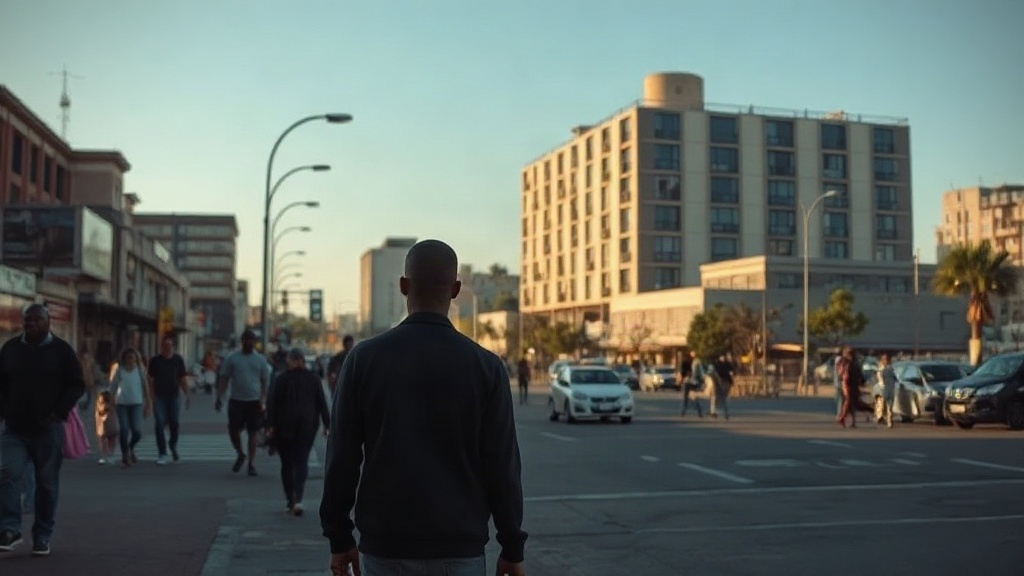
Rise Mzansi has set out a plan for improving safety in Johannesburg that leans on municipal powers rather than only on the deeper social causes of crime, in remarks carried in a broadcast published by eNCA (YouTube).
The party acknowledged that root causes such as patriarchy, the political and economic system, high poverty and unemployment must be tackled. But it argued that the city can still do specific things to keep streets safe.
Its first target is how Johannesburg Metro Police Department officers are deployed. The party said it does not expect to see 16 JMPD officers running a roadblock, checking expired licence discs and talking among themselves, when they could be in communities doing what it called smart policing.
It also wants body cameras on police and dashboard cameras in vehicles, along with more technology and data points. The party said the city lacks enough intelligence about the movement of people and criminality, and that much of that information sits in private hands because a large share of CCTV is owned by private security companies rather than the city. It said that arrangement needs to end.
Rise Mzansi called for more personnel at the JMPD and for the city to move away from private security companies so that the rule of law is clear on Johannesburg streets. Its stated aim is that residents who see an officer should not see someone they can negotiate with over a cold drink, but someone they would fear to commit wrongdoing in front of.
The plan also covers the physical condition of the city. Streets must be lit, grass must be cut and visibility must be increased as far as possible. The party said the burden of safety cannot be placed on residents and on women.
On employment, it said the city must be made investable. It cited the city’s economic outlook report for 2026 and said Johannesburg has lost 10,000 manufacturing jobs within nine years in one area, City Deep. It called for reindustrialisation and job creation, and for sports, entertainment and the arts to be used not merely to keep young people off the streets and away from drugs, but to put money in their hands and make the creative economy work for them.
- Police find fifth woman's body near Kempton Park as search for missing jogger continues 2026-09-14
- Sixth woman found in Ekurhuleni as ex-SAPS profiler calls for serial killer investigation 2026-09-15
- Gauteng police confirm six women found dead in Ekurhuleni as Kekana appeals for information 2026-09-15
- Police task team probes five Kempton Park deaths as family identifies runner Elizabeth Moselakgomo 2026-09-15
- Seven women found dead in Ekurhuleni as top police and ministers meet in Parktown 2026-09-15
- Police confirm eighth body in Ekurhuleni and offer R400 000 for information 2026-09-15
- Police put R400 000 on the table in Kempton Park murders probe 2026-09-15
- Police form high-level team as eighth body found in Ekurhuleni 2026-09-15
- Seven women found dead in Gauteng in two months as safety audit is demanded 2026-09-15
- Police raise Ekurhuleni toll to seven women as task team hunts suspects 2026-09-16