Red tide kills West Coast shellfish, department warns against eating them
A colourless algal bloom has paralysed and washed up white mussel and whelks at St Helena Bay and Elandsbaai, and the shellfish carry a neurotoxin dangerous to humans.
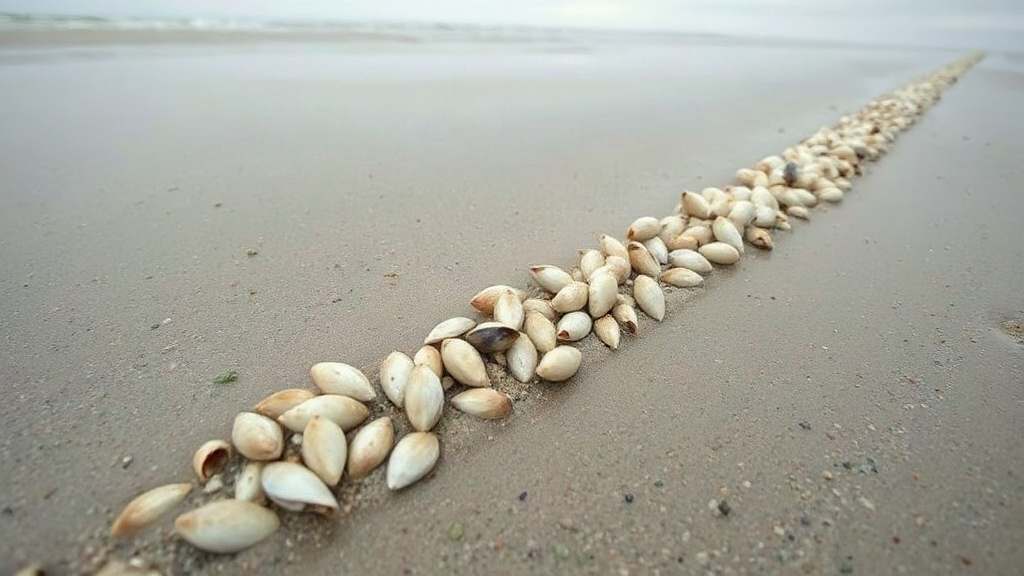
Large numbers of dead white mussel, whelks and other shellfish have washed out at St Helena Bay and Elandsbaai on the West Coast over the past 48 hours, and the Department of Forestry, Fisheries and the Environment has warned the public not to eat them.
The deaths point to a harmful algal bloom, commonly known as a red tide. According to the department, the shellfish were paralysed, could not burrow, and were then washed up.
Red tides are accumulations of large amounts of phytoplankton, single-cell algae that are common along the West Coast in summer and autumn. This particular bloom is colourless and cannot be seen with the human eye, which means there is no visible sign on the water to warn people away.
The health risk
The danger is not the algae itself but the neurotoxins that cause paralytic shellfish poisoning. The department says these toxins are extremely toxic to humans.
Its advice is broad and leaves no room for judgement calls. All shellfish should be avoided, whether they have washed out or been collected from the shore or from subtidal waters. The department cautioned members of the public to refrain from eating the washed out marine animals, saying they carry significant health risks and are unsuitable for consumption.
That warning covers the shellfish people may assume are safe because they look fresh, and it covers those gathered by hand from the shore as well as those taken from deeper water.
Why it matters
Shellfish are a food source and a livelihood along the West Coast, and mussels in particular are gathered by hand by people who may not see a departmental notice before they head to the shore.
A colourless bloom is harder to communicate than a visible one. There is nothing on the water for a casual visitor to recognise, so the warning has to travel by word of mouth, by radio and by the department’s own channels.
The shellfish deaths themselves are also a signal about the state of the coastal ecosystem. Mass mortalities of this kind are a known feature of red tides on this coastline, and they affect more than the species that wash up.
What happens next
The department says it will continue to monitor the situation, tracking both the extent of the red tide and the mass mortalities it is causing on the West Coast.
Its media queries line is open through Zolile Nqayi. The immediate question for anyone on that coastline is simple. If shellfish have washed out at St Helena Bay or Elandsbaai, or are being gathered anywhere along the West Coast, they should not be eaten.
The full statement is published by the South African Government at under the Department of Forestry, Fisheries and the Environment.