Ramaphosa's Ankole heifer Queen Arusha sells for R6.4 million
The Ntaba Nyoni sale puts elite cattle genetics, and the President's private farming interests, back in the same frame.
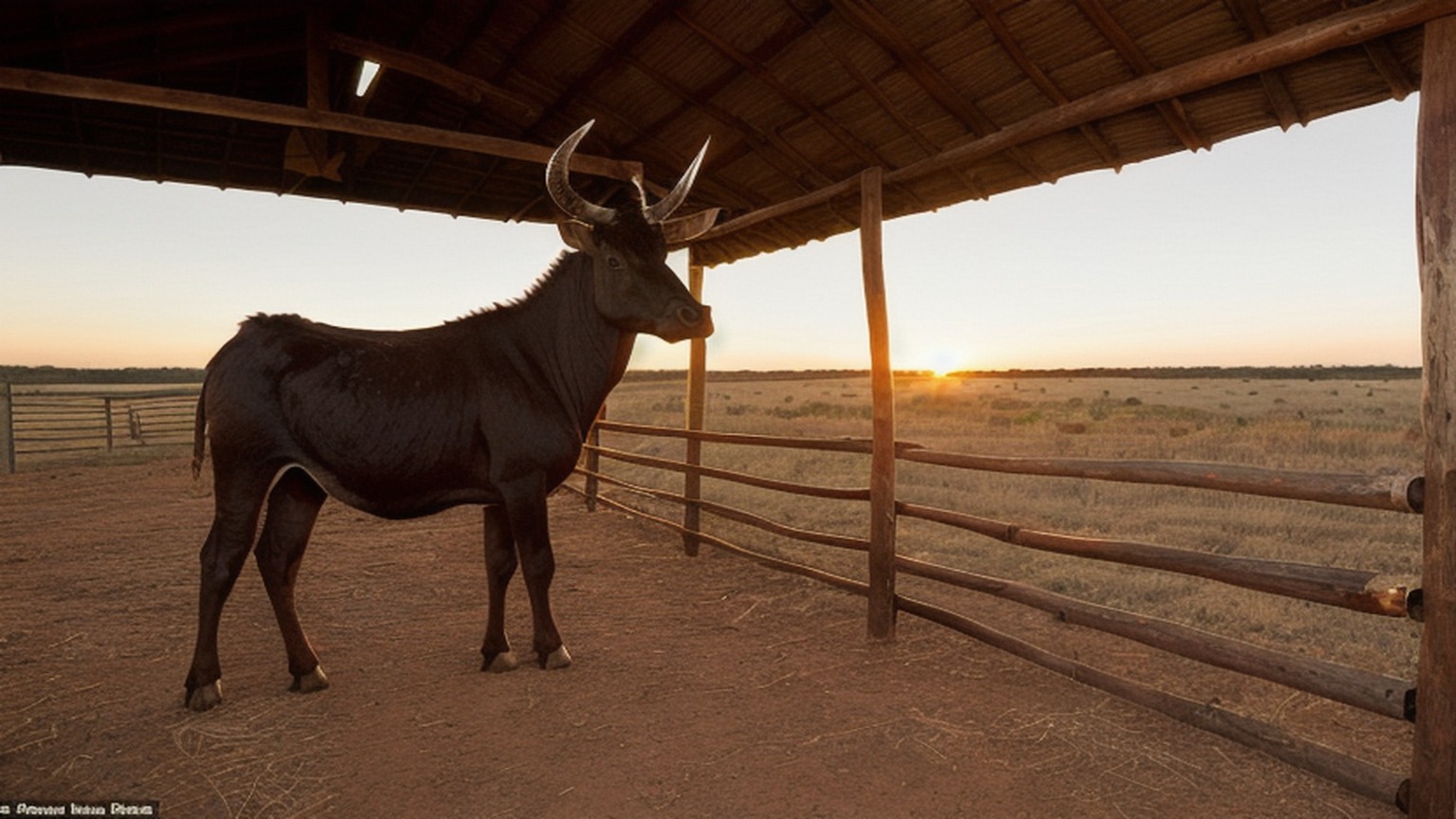
A heifer from President Cyril Ramaphosa’s Ntaba Nyoni cattle operation has sold for R6.4 million, putting elite Ankole genetics and the President’s private farming interests in the same frame.
As eNCA reported on 6 October, the animal is Queen Arusha, an Ankole heifer. The R6.4 million figure was the outlet’s number of the day, discussed on its Number of the Day podcast by Gareth Edwards and Francis Herd.
The price is the part that travels. The reason for it is the part worth understanding.
For a commercial cattle farmer, an animal is usually worth what it produces: meat, milk, calves, weight gain, the efficiency with which it turns feed into something sellable. Elite breeding adds a second commodity on top of that, which is genetics. A buyer at this level is not only paying for the cow in the ring. They are paying for what she can pass on, and for the right to be inside a bloodline.
Queen Arusha’s family shows how that market is priced. Her brother, the Ankole bull Optimus Prime, also came up in the podcast discussion. Sexed semen from him reportedly sold for R250,000 a straw. A straw is a single dose of semen used in artificial insemination, so that figure is the price of one attempt at a calf, not the price of an animal.
Edwards compared the market to thoroughbred horse breeding, where lineage can be worth far more than the immediate productive value of the animal standing in front of you. Buyers, he said, are purchasing the lineage, the genetics and future generations. Herd pointed to the cattle equivalent of assisted reproduction. Embryos allow valuable genetics to be reproduced at a rate a cow’s natural calving cycle cannot match, which is how a single female can influence a herd far larger than her own body would suggest.
That is the wager inside the R6.4 million. It is also a wager with risk attached. A record auction price does not guarantee a record return. Breeding outcomes are uncertain, reproductive programmes cost money, and the future value of offspring depends on buyers continuing to prize that particular lineage and breed. Scarcity does part of the work. When desirable genetics are hard to get, buyers pay a premium to enter the bloodline. As those genetics spread through more herds, the premium can soften. Elite cattle breeding therefore behaves like a mix of farming, inheritance and asset valuation, where the market’s belief about tomorrow’s calves is priced into today’s sale.
The second dimension is who owns the operation that sold her. Ntaba Nyoni belongs to South Africa’s sitting president, and that fact returns attention to Phala Phala, where the theft of foreign currency linked to a buffalo transaction triggered years of political and legal controversy. On the podcast, Edwards raised the question that follows: how much involvement may a sitting president have in private business interests?
The distinction matters, and it is worth keeping clean. Owning an economic interest is not the same thing as personally performing paid work for that business. Herd described the position advanced by Ramaphosa’s lawyers as being that his farming interests are business interests rather than prohibited paid work. Nor does an auction price equal personal income. R6.4 million is business revenue, not automatically the owner’s profit, and ownership on its own does not establish that the President manages the operation day to day.
What the sale does establish is that the President retains an interest in an agricultural operation that deals in assets capable of fetching prices in the millions. That is why the transaction attracts attention beyond the agricultural pages. Two questions sit side by side here. One is how a cow becomes worth R6.4 million. The other is how a country should manage significant private economic interests when their ultimate owner holds its most powerful public office.
For ordinary South Africans, the practical read is narrower. This is a specialist market at the top end of the national herd, and it does not set the price of beef on a shelf or the price of a weaner at a country auction. What it does show is that South Africa has a breeding sector capable of producing animals and genetics that buyers will pay international-level money for, which is a real piece of agricultural capability. It also shows how much of that value sits with a small number of well-known herds.
Source: eNCA, Number Of The Day | R6.4 million | 06 October 2026