Ramaphosa moves to strip failing municipalities of powers as R120bn Eskom debt piles up
The Revised White Paper on Local Government proposes tying municipal powers to capacity, compulsory licensing for water and electricity providers, and ring-fenced service revenue, with a phased transition body to drive it.
President Cyril Ramaphosa has proposed letting municipalities be given only the powers they can actually carry, in a revised local government policy that also puts compulsory licensing on water and electricity providers and ring-fences the revenue those services raise.
The Revised White Paper on Local Government was launched at the Birchwood Hotel and Conference Centre in Ekurhuleni on Thursday, under the theme “Every Municipality Must Work: From Policy to Collective Action”. It sets out a reassessment of how municipalities are structured, financed, managed and held accountable, and it builds on the 2022 Presidential Local Government Summit, stakeholder consultations and Operation Vulindlela.
At the centre of the proposal is a break from assigning the same duties to every municipality. Under the differentiated model, responsibilities would be matched to a municipality’s size, revenue, institutional capacity and performance. Some functions could be moved to other spheres of government or delivered at regional level, and partnerships and concession arrangements could be considered where appropriate. The document calls for constitutional and legislative amendments to be considered where necessary.
“The White Paper outlines a clear path towards a differentiated model that would link powers and functions to a municipality’s size, capability and performance,” Ramaphosa said.
He framed the change as unavoidable. “This revised White Paper lays the foundation for far-reaching legislative, institutional and financial reform of the entire local government system. It is not simply about changing legislation or rearranging institutions. It is about changing the lived experience of our people.”
On water and electricity, the White Paper proposes separating the role of service authority from that of service provider and introducing compulsory licensing for all providers. Ramaphosa said stronger regulation combined with support to municipalities would help transform basic service delivery. National and provincial government, he said, could not distance themselves from municipal failures. “When mandates overlap, when investment is poorly coordinated or when support arrives only after a crisis, the entire system has failed the community.”
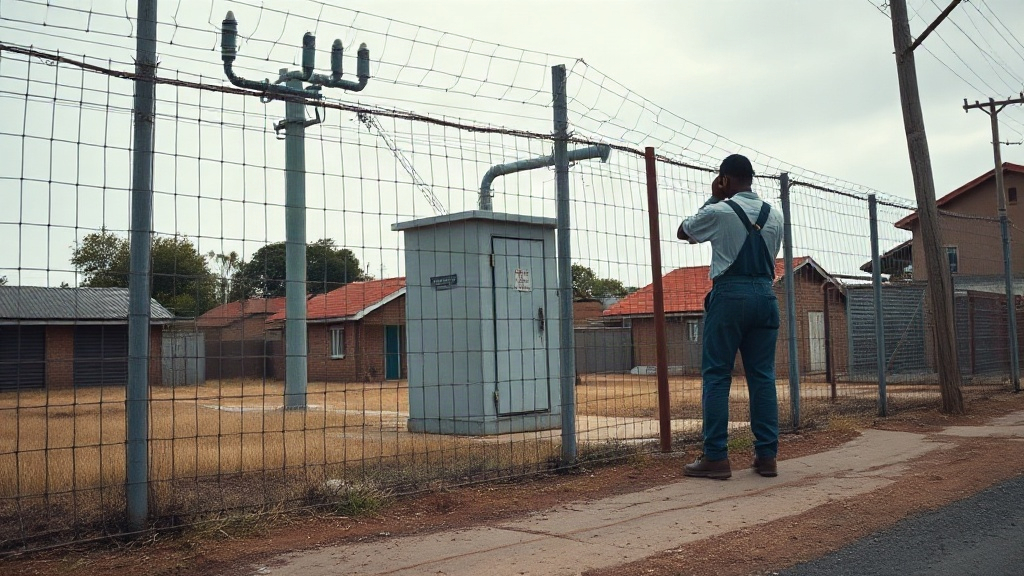
The financial picture in the document is stark. Municipalities owe Eskom more than R120 billion, and many are also in arrears to water boards. The White Paper proposes stronger financial management, improved revenue collection, reduced losses and more effective spending. Revenue from the sale of water and electricity would be ring-fenced for infrastructure maintenance ahead of anything else.
“We cannot build our way out of failure if we do not maintain what we have already built,” Ramaphosa said, adding that maintenance must become a planned, funded and monitored obligation rather than an afterthought once infrastructure has broken down.
He said metros, growing secondary cities and rural municipalities with limited revenue bases do not face the same conditions, and that responsibilities, resources and support must be organised accordingly so that every municipality has a credible path to success. Residents who can afford to pay for services should contribute, he said, while municipalities must earn public confidence through reliable services, transparent decisions and responsible management of public funds.
Cabinet has endorsed a phased approach supported by a time-bound Local Government Transition Management Body, with coordinated leadership from the Department of Cooperative Governance and Traditional Affairs, The Presidency and National Treasury. According to the document, the body will ensure reforms are coordinated, difficult decisions are taken and commitments are implemented, and it will not take over the lawful responsibilities of Ministers, provincial governments, municipal councils or municipal administrations. A single Local Government Transition Plan will set out the reforms, name the institutions responsible, establish the sequence of actions and provide a framework for monitoring progress. Some measures will require legislation, new financing arrangements, additional institutional capacity and potentially constitutional amendments.
Ramaphosa tied functioning municipalities directly to the economy. “A growing economy needs towns and cities that work. Investors need certainty. Entrepreneurs need predictable municipal decisions. Workers need reliable and affordable access to opportunity,” he said. “When they fail, they deepen poverty and exclusion.”
The policy follows nearly three decades of democratic local government established through the 1998 White Paper. Ramaphosa acknowledged progress since 1994, citing more than 90% of households with access to electricity and more than 87% with access to piped water. The number of households with municipal piped water rose from 9.2 million in 2004 to just under 16 million in 2025, two-thirds of households have access to flush toilets, and the free basic services programme continues to assist millions of indigent households. He said these gains sit alongside communities without adequate basic amenities, households experiencing unreliable services and municipalities unable to finance essential infrastructure repairs.
“The 1998 White Paper helped us establish democratic local government. The task before us now is to make developmental local government work as it was intended,” he said.
The launch comes ahead of the Local Government Elections scheduled for 4 November. Ramaphosa urged registered voters to participate and political leaders to prioritise the functioning of municipalities once elected. “A disagreement in council must never become an excuse for an unapproved budget, an abandoned project or the collapse of an essential service. Our people must never be held hostage by political instability,” he said.
He called for the reforms to outlast the political cycle. “This is a national undertaking that must outlast any election cycle, municipal term or administration.”
This report is drawn from SAnews (South African Government News Agency), which published a summary of the launch rather than the full White Paper text. The document itself has not been independently reviewed here. Source: https://www.sanews.gov.za/south-africa/president-unveils-sweeping-reforms-fix-local-government
- Ramaphosa moves to strip politicians out of municipal hiring as R120 billion Eskom bill mounts 2026-10-23
- Municipal services promised within 18 months as Ramaphosa unveils new local government White Paper 2026-10-25
- Jacinta Ngobese-Zuma calls Ramaphosa a would-be dictator as Ekurhuleni murders go unanswered 2026-10-27