Nvidia puts $3bn into Meta share sale as its AI bets draw bubble warnings
The chipmaker has become the biggest company in the world by market value on AI demand, and its stakes, backstops and guarantees now shape the customers that buy its processors.
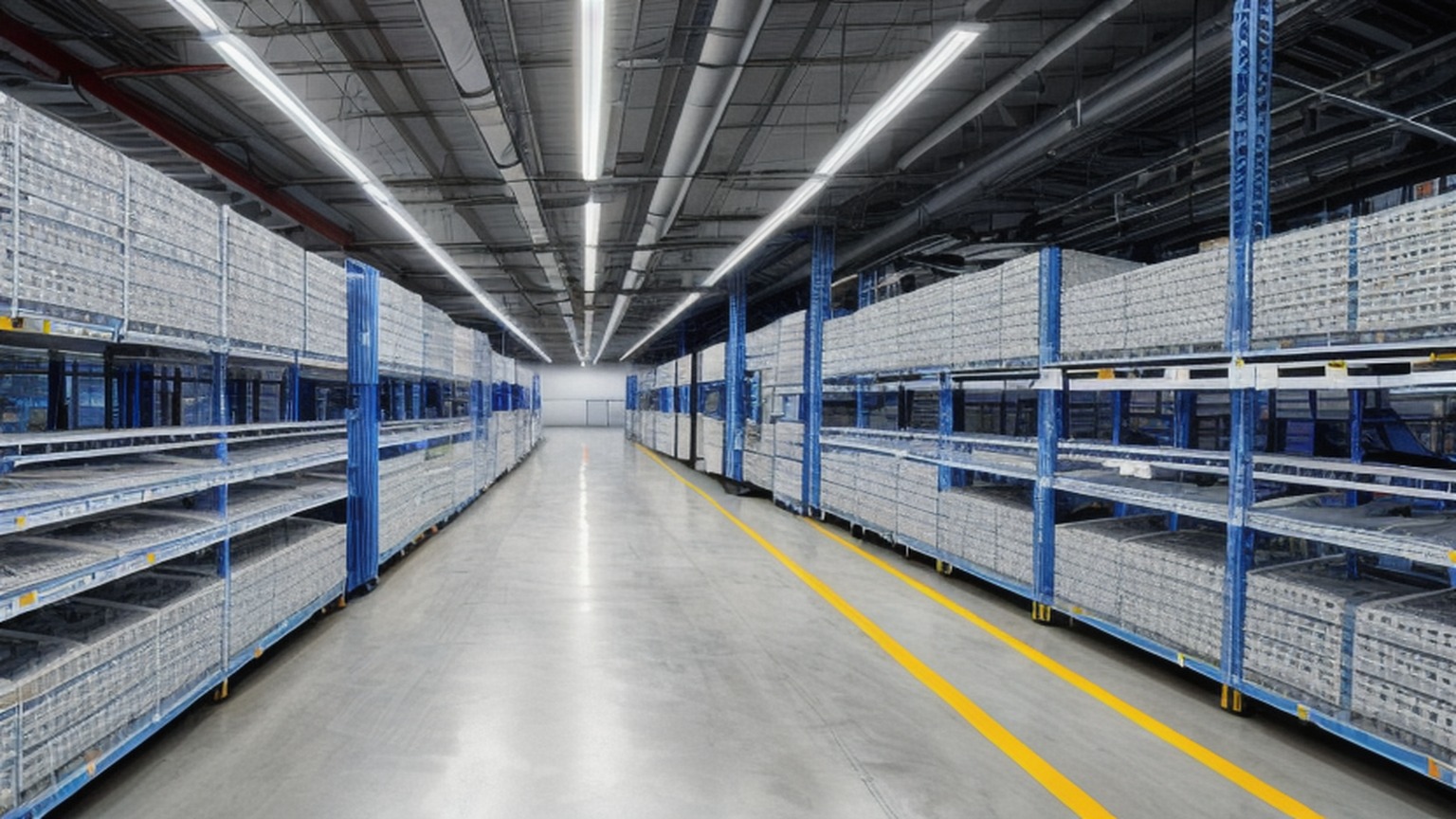
Nvidia has put $3 billion into Meta’s share sale, the latest addition to a portfolio of stakes, loans and guarantees that has made the chipmaker what some analysts describe as the central bank of the artificial intelligence boom.
As eNCA reported on 30 October, the deals have helped keep demand running high for Nvidia’s processors, which power data centres around the world. That demand has made Nvidia the world’s most valuable company by market capitalisation and turned chief executive Jensen Huang into what the report calls AI’s kingmaker.
The same deals have raised a question among doubters on Wall Street: is Nvidia helping to inflate an AI bubble?
Nvidia has taken stakes in AI developers including OpenAI, Anthropic and Elon Musk’s xAI, now part of SpaceX. It has invested in “neocloud” companies such as CoreWeave and Nebius, which rent out computing power built on Nvidia chips. In Europe it has backed French developer Mistral and British self-driving startup Wayve, and in Asia it has teamed up with South Korea’s SK Group to build data centres.
Beyond equity, the company has offered financial backstops, acting as a customer of last resort. For CoreWeave it committed to buy up to $6.3 billion of unused computing capacity if no other customer takes it. It also carries around $36 billion in cloud backstops and a guarantee of up to $105 billion linked to an OpenAI data centre, according to US media cited in the report.
Michael Cusumano, a professor at the MIT Sloan School of Management, said Nvidia’s profits leave it few better options. “They’re essentially becoming a bank,” he said, adding that channelling the money back into infrastructure tied to purchases of Nvidia equipment is a smart move. Running its own data centres would put Nvidia in competition with its biggest customers and could draw antitrust complaints, he said.
Gil Luria, head of technology research at D.A. Davidson, said Nvidia identifies parts of the AI ecosystem that are not investing enough and fills the gaps. “It’s unprecedented, but it appears to be working,” he said.
Huang has defended the approach, arguing that frontier AI labs are the first generation of startups needing tens of billions of dollars to get started rather than millions, and that Nvidia’s investments give them more time to succeed.
Critics have compared the deals to the dot-com era, when companies inflated their growth by investing in startups that then bought their products. Paulo Carvão, a senior fellow at the Harvard Kennedy School, said there is nothing intrinsically wrong with Nvidia helping its clients, but that the closer those relationships are, the harder it becomes to assess true sustainable demand.
Luria said not all demand is equal. Money that goes from Nvidia to CoreWeave and back as a chip order is not the same as a Microsoft purchase, he said, because Microsoft has a customer in OpenAI that in turn has a customer in enterprise technology willing to pay.
The main concern is concentration. Two direct customers accounted for 22 percent and 14 percent of Nvidia’s revenue in its 2026 fiscal year, according to the company’s annual report. Carvão said overlapping investments raise the risk of contagion if a weaker company such as CoreWeave runs into trouble. “If AI demand disappoints, spending cuts could hit chipmakers, data-centre builders and their financiers at once,” he said.
Those concerns have grown this month. Shares of several Nvidia-linked neocloud companies, including CoreWeave, Nebius and IREN, fell at least 30 percent in October amid worries about tighter credit for AI projects. Carvão estimated demand for AI chips would keep growing for another 12 to 18 months before levelling off, while Cusumano expected high demand to continue for three to five years.
For South Africa the question is less about Nvidia’s balance sheet than about access. The country’s AI ambitions run through data centres, and data centres run on electricity and imported chips. Nvidia’s top-end accelerators are allocated to the largest buyers first, and the backstops described in the report tie capacity to companies that have already signed with Nvidia. A smaller market that is still working through grid constraints and the cost of power competes for the same hardware from further back in the queue.
That makes the bubble argument a local one too. If AI spending slows, the first projects to be deferred are usually the ones furthest from the customer, which is where new capacity in emerging markets tends to sit. If it holds, the cost of compute stays high and South African firms rent it from abroad rather than building here.
Either way, the concentration figures are the ones to watch. When two customers account for more than a third of a supplier’s revenue, the supplier’s health and its customers’ plans become the same story, and everyone buying chips downstream is exposed to both.