Mashatile sends Lesufi to Soweto synod with a prayer for the elections
The Deputy President's delegation asks the United Reformed Church to pray for peaceful local government elections and to help carry the fight against gender-based violence and youth substance abuse.
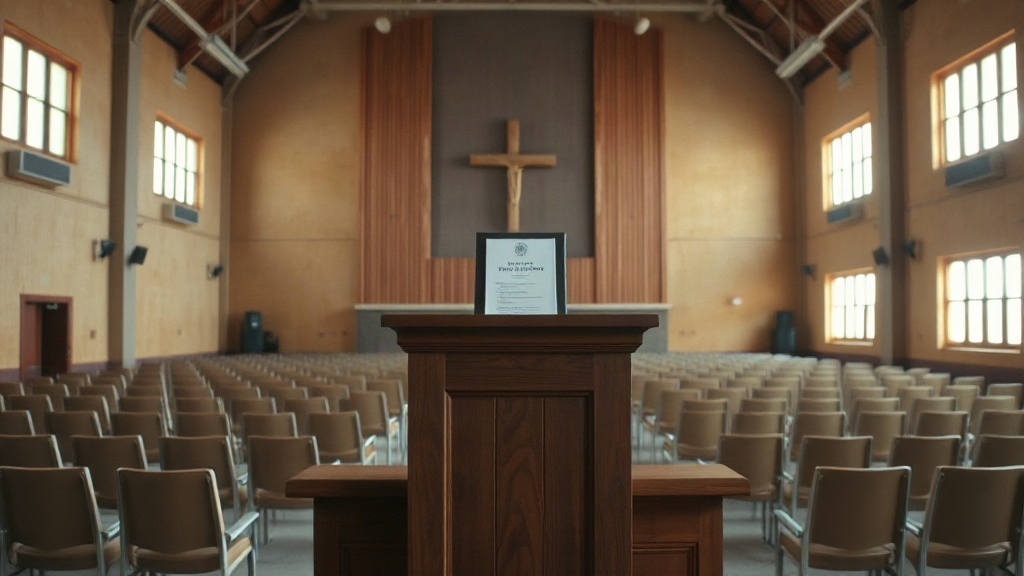
Gauteng Premier Panyaza Lesufi stood in for Deputy President Paul Mashatile at the United Reformed Church in South Africa Southern Synod Day 2026, held at the University of Johannesburg’s Soweto campus, and used the platform to ask the church to pray for peaceful local government elections.
The address was delivered in Imbibe Hall on behalf of the Deputy President, who the Premier said was unable to attend in person. The delegation, Lesufi told the gathering, reflected the importance the Deputy President places on engagement with faith communities and on the contribution churches make to the country’s development.
South African Government published the keynote text at https://www.gov.za/news/speeches/premier-panyaza-lesufi-behalf-deputy-president-paul-mashatile-united-reformed-church. This report is based on that published text.
A call for prayer ahead of the polls
With local government elections approaching, the Premier put the request plainly. “We need your prayer. I need your prayer. Our leaders need your prayer. Our nation needs your prayer,” he said.
The prayer he asked for was specific. Leaders should be granted integrity and ethical leadership, so that they serve with conscience and courage. Elections should be peaceful, free and safe, with voters, candidates and election officials protected, and the democratic process carried out with respect and fairness.
He also asked the church to pray against political killings and violence, describing these as wounds that tear at the soul of the democracy, and asking God to replace fear with hope, division with unity and hatred with compassion.
The landmarks the theme sets
The theme of the gathering, “Remove not the ancient landmark which thy fathers have set”, framed much of the address. Lesufi told the congregation that every generation inherits both the sacrifices and values of those before it, and the duty to hand on a society that is stronger, more just, more ethical and more united.
The landmarks worth preserving, he said, are not stones or boundaries but living principles. He named human dignity, Ubuntu, justice, compassion, integrity, unity, respect, ethical leadership and a commitment to the common good, and described them as the compass points of the country’s journey.
Against that, he listed the burdens the country still carries: poverty, unemployment, inequality, crime and gender-based violence. These, he said, must be removed from society entirely, and cannot be overcome in isolation. They require unity of purpose.
What the church is asked to do
The address set out a working role for congregations rather than a ceremonial one. On gender-based violence, the Premier called on the church to be resolute in its opposition to abuse, discrimination and other forms of injustice, to break the culture of silence by providing secure havens for survivors, and to challenge harmful patriarchal norms from the pulpit.
On youth, he said the church must rise as both a protective and corrective force against substance abuse and teenage pregnancy. It is trusted in villages and cities, he said, and draws on moral authority, social networks and pastoral care, but trust alone is not enough. Congregations should mentor, guide, create safe spaces and stand against the forces that threaten young people’s futures.
With millions of young South Africans seeking economic inclusion, he said faith-based organisations can turn places of worship into hubs for skills training, digital literacy and entrepreneurship mentorship.
Accountability in both directions
The Premier said government continues to work closely with faith-based organisations so that community voices are heard through them, and that a sustainable relationship requires uncompromising mutual accountability. Both government and faith-based organisations, he said, must operate transparently so that public and social resources go strictly to community upliftment and the protection of the vulnerable.
He pointed to the church’s own record as evidence that the partnership works. The URCSA Southern Synod’s commitment to sustainable outreach and poverty alleviation, he said, illustrates the principle that faith should be paired with action, and its work in transforming lives and aiding vulnerable communities enhances the country’s overall development.
He also recalled the role church leaders played in the transition to democracy, when churches and faith-based organisations came together with community structures and political leaders to promote reconciliation, peace-building and nation-building, and facilitated conversation, healing and social cohesion at a pivotal moment.
The Premier closed the call to action by placing the responsibility beyond government and the church alone. Transformation, he said, begins when people stop being passive spectators and become active architects of their own development, whether by reporting gender-based violence in their street, supporting local entrepreneurs or holding local leaders accountable. Faith-based centres and community halls, he said, are already open as hubs for change.
- Kubayi to launch 30-year Constitution anniversary at Apartheid Museum 2026-09-10
- Treasury signs $1bn NDB loan for eight metros, Joburg gets three-year plan 2026-09-15
- Kubayi to open UJ's first AI and law conference in Skukuza 2026-09-16
- IDC and DBSA sign energy deal for seven special economic zones 2026-09-16
- Tau names 24 hydrogen projects as R3bn fund closes first round 2026-09-16