Justice ministry marks 25 years of the Durban Declaration with Pretoria dialogue
The high-level event will weigh progress against racism and related intolerance and the challenges that remain, including digital technologies and migration.
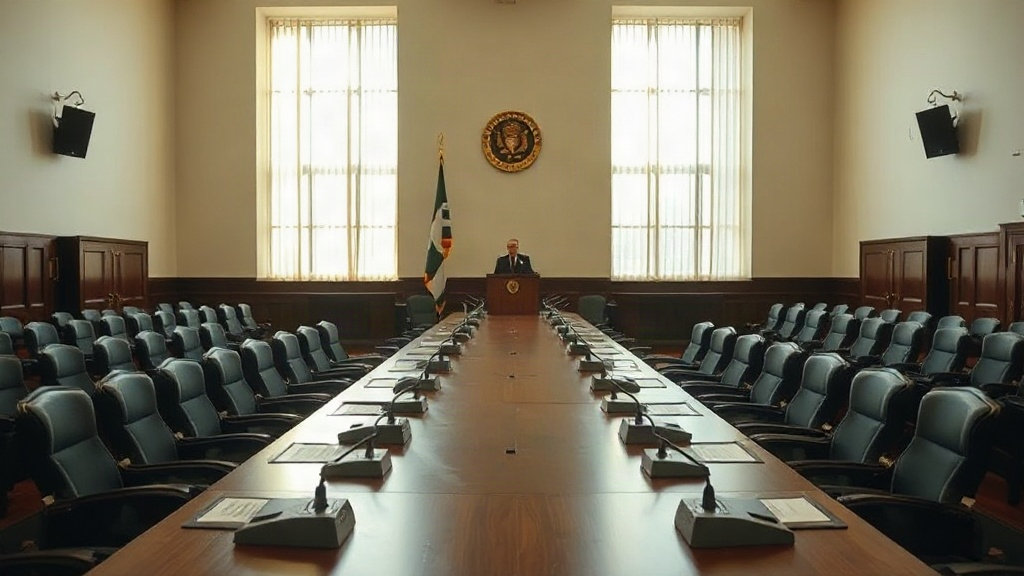
The Ministry of Justice and Constitutional Development will take part in a high-level commemorative dialogue in Pretoria on Friday, 11 September 2026 to mark 25 years since the adoption of the Durban Declaration and Programme of Action.
The event, held under the theme “Mobilising Global Public Support for the Full Implementation of the DDPA”, will reflect on progress made in combating racism, racial discrimination and related intolerance in South Africa, according to the ministry’s advisory.
Minister Mmamoloko Kubayi will deliver the keynote address. Deputy Minister Andries Nel will deliver the closing remarks.
What the declaration is
The DDPA was adopted at the 2001 World Conference against Racism in Durban. It calls on states to strengthen laws, policies and institutions that prevent and address discrimination, promote equality and inclusion, and provide effective remedies for victims.
The declaration is not a treaty, and its power lies in what governments choose to do with it. The ministry’s advisory frames the anniversary as an occasion to measure that record and to look at what is still outstanding.
The challenges on the table
According to the advisory, the dialogue will consider remaining challenges, including digital technologies, migration and socio-economic disparities. It will also identify measures to promote equitable outcomes and dignity for all.
Those three areas are broad, and the advisory does not set out specific proposals or targets. What it does make clear is that the ministry sees the work as unfinished a quarter of a century after Durban.
The dialogue will reflect on progress made in combating racism, racial discrimination and related intolerance in South Africa.
Who is involved
The event is hosted in partnership with the Office of the United Nations High Commissioner for Human Rights Regional Office for Southern Africa, the Department of International Relations and Cooperation, civil society organisations and other key stakeholders.
The involvement of the UN human rights office and of civil society places the dialogue within a wider review of how countries are meeting the commitments they made in 2001. It also gives organisations outside government a platform to raise concerns alongside the official account.
Why it matters
For ordinary South Africans, the significance of the anniversary is practical rather than ceremonial. The DDPA’s call to strengthen laws, policies and institutions speaks directly to how complaints of discrimination are handled, how equality is enforced and what remedies exist when it is not.
The advisory names migration and socio-economic disparities as live concerns. Those are the areas where discrimination is most often felt in daily life, and where the gap between stated commitments and lived experience tends to be widest.
What happens next
The dialogue takes place at the Department of International Relations and Cooperation headquarters, the OR Tambo Building at 460 Soutpansberg Road in Rietondale, Pretoria. It begins at 09h30.
Members of the media are invited to attend. Attendance confirmations can be directed to Mr Mandla Mathebula. Media enquiries can be directed to Ms Palesa Rammitlwa, spokesperson to the Ministry of Justice and Constitutional Development, on 064 933 3628.
The advisory does not indicate whether the dialogue will produce a formal outcome document, a set of commitments or a report back. That remains an open question once the closing remarks are delivered.
This report is based on the ministry’s advisory notice, which summarises the event rather than reproducing the full programme. The canonical source is available.
- Ramaphosa to mark NAFCOC's 60 years of black business organising in Durban 2026-09-10
- Gina names innovation award winners as auditor-general flags municipal failures 2026-09-10
- SITA hosts GovTech 2025 in Durban to push integrated digital government 2026-09-10
- Eight undocumented drivers arrested as Pietermaritzburg trucking jobs draw scrutiny 2026-09-10
- Durban street traders count the cost as Umbilo migrants agree to move to Lindela 2026-09-10
- KwaNdengezi police hunt suspect after learner, 19, shot dead at school 2026-09-14
- Nel visits Durban immigration court as Kubayi orders operational check 2026-09-14
- 274 leave Durban pavement for Lindela as 200 choose to stay 2026-09-15
- Ndabeni hands R1 million in equipment to 60 eThekwini women-owned businesses 2026-09-16
- Home Affairs buses 274 from Durban pavement to Lindela as 150 choose to stay 2026-09-16