Ian Berry, the only photographer at Sharpeville when the shooting started, dies at 92
The British photojournalist who pushed to the front of the crowd outside a Transvaal police station on 21 March 1960, and whose pictures of fleeing demonstrators carried the Sharpeville massacre to the world, has died in England.
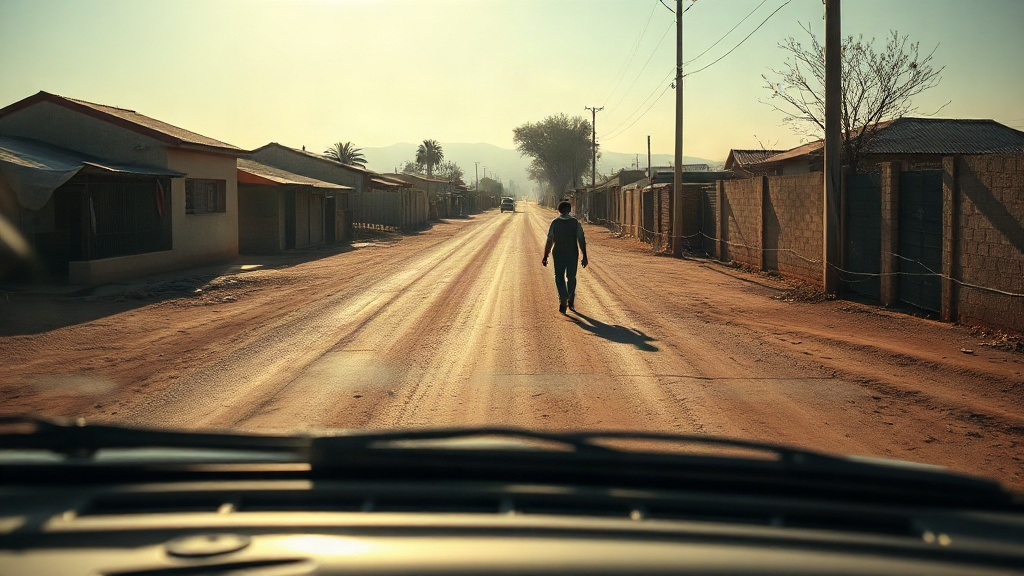
Ian Berry, the photojournalist who took the only photographs made at Sharpeville on 21 March 1960, has died at the age of 92.
As The Guardian reported in its obituary on 11 October, Berry was a young British photographer working for Drum, the South African weekly, when he was sent to a Transvaal township on the first day of a nationwide protest against the pass laws. He pushed his way to the front of the crowd outside the police station and photographed the police standing on their armoured vehicles behind the fence. Nothing much was happening, so he turned back towards his car. Then the shooting started.
Berry and the Drum reporter Humphrey Tyler had ignored police warnings that they would be arrested. They were the only journalists there when the firing began. His photographs of the scene, including demonstrators shot in the back as they fled, became the images through which the world came to know the Sharpeville massacre. Dozens of people were killed and hundreds injured.
That day is a fixture of South African memory, taught in schools and marked every year on Human Rights Day, which falls on 21 March. The photographs are part of why. A country that was being reported on from outside, and often in the language of policy and legislation, was suddenly visible in the specific: people running, people fallen, the fence, the vehicles, the dust.
Berry was called to give evidence at the trial of the wounded, who had been charged with obstruction. It was the first time he had been shot at, or had seen people killed.
He was born in Preston, Lancashire, the son of a garage owner and a housewife, and came to South Africa in 1952 at the age of 17 under a postwar assisted emigration scheme. In Johannesburg he learned large-format photography and darkroom printing from Roger Madden, then found his own way with a Leica. He worked for the Rand Daily Mail, covering the opening of the treason trial in 1956, in which Nelson Mandela was one of the defendants.
After Tom Hopkinson, formerly the editor of Picture Post in London, arrived to edit Drum, Berry talked his way into a job. A few months later Hopkinson sent him to Sharpeville.
The pictures brought him international attention and an introduction to Magnum Photos, the agency he remained with for the rest of his life. He moved to Paris in 1962, met Henri Cartier-Bresson, and became a full member five years later. By then he had moved to London as a contract photographer for the Observer.
His career took him to the Congo crisis after independence, the Vietnam war, the Aberfan disaster in Wales in 1966 and the six-day war in 1967. In 1968 he talked his way past a Russian officer at the Czech border by claiming to be travelling to an architects’ conference, photographed the first days of the invasion of Prague, and smuggled the film out in the hubcaps and door panels of his rented Volkswagen Beetle for publication in Paris Match.
He kept returning to South Africa. Two of his books came out of that engagement, Black and Whites: L’Afrique du Sud in 1988 and Living Apart in 1996. In 1974 an Arts Council bursary, said to be the first given to a photographer, led to The English, published in 1978. A later commission on Greenland’s retreating glaciers grew into Water, published in 2023 with an essay by his second wife, Kathie Webber, whom he married in 1973.
His first wife was Shirley, a South African, with whom he had a daughter. He also had a son from another relationship. Both children died before him. He is survived by Kathie.