Home Affairs buses 274 from Durban pavement to Lindela as 150 choose to stay
Four months of sleeping outside the refugee reception centre on Che Guevara Road ended at 5am on Tuesday, with the state now talking to the UNHCR about third-country resettlement.
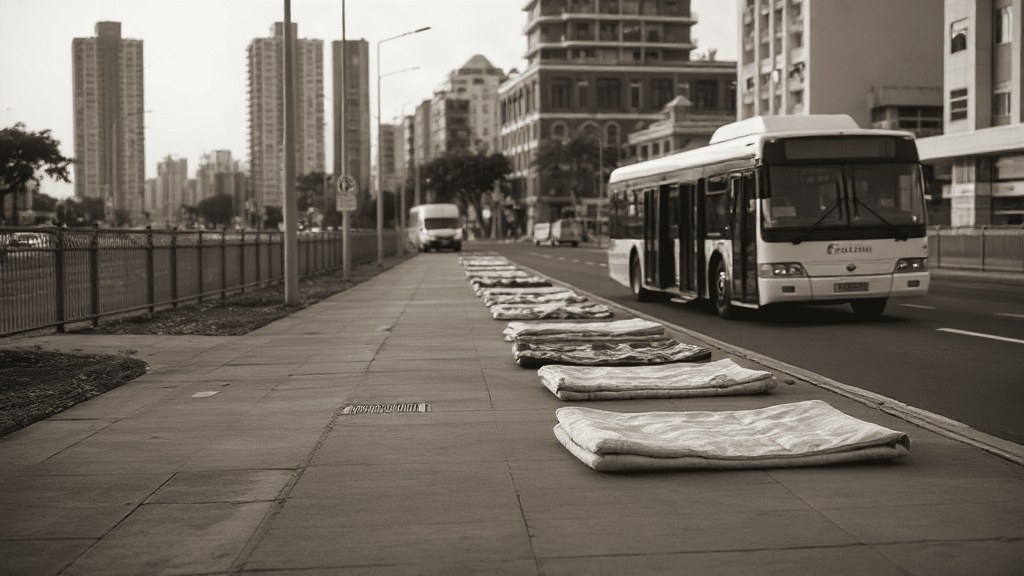
Two hundred and seventy four people who had slept on the pavement outside Durban’s refugee reception centre for four months were put on buses to the Lindela repatriation centre in Krugersdorp at 5am on Tuesday, while about 150 chose to stay in the city and moved to Bulwer Park to arrange shelter.
The relocation was run by the Department of Home Affairs under the direction of the Inter-Ministerial Committee on Migration, which offered the group two options: return to their local communities or go to Lindela. As IOL reported on 16 September, the group had been camped on Che Guevara Road since May.
KwaZulu-Natal Home Affairs manager Cyril Mncwabe said five buses were made available for 282 people on the department’s database, but that number fell to 278 by Monday. A mother had to remain behind with a sick child who could not travel, and two others were left off the list because of an earlier confrontation with marchers, which led to their arrest and court processes. Four more withdrew from the process. The remaining 274 boarded the buses.
“Reintegration does not necessarily mean returning to the area you fled from,” Mncwabe said. “It means finding an area where there is peace and security.”
Who was on the pavement, and why
The group included nationals of the Democratic Republic of Congo, Burundi and Ghana, people who had left war in their home countries and then faced attacks and looting in South Africa. Official verification confirmed that nearly all of them held valid documentation to stay in the country. They were turned away at a Durban police station, and spent four months exposed to winter weather, illness, unemployment and a lack of healthcare and education.
Princess Adjei, a Ghanaian national who was among those boarding, said the months had taken a severe toll on the most vulnerable, including illness and deaths. “Everyone going to Lindela chose to do so based on the two options provided by the government,” she said. “Those remaining must reintegrate into the local community.”
Mukulu Yohane, a self-employed artisan from South Kivu in the DRC, chose to stay. He holds valid documentation, but said he would not go to Lindela because it is a repatriation centre and he feared being returned to a war zone. “I’ve taken my decision with my family to reintegrate,” he said. “We’re going to try to see if the community will allow us.”
Antoine Kassaka, a DRC national with permanent residence, said he had moved from Pietermaritzburg to Durban for assistance after his landlord locked him out.
The city side of the operation
Durban Cares founder Cathryn Aylett coordinated the move of the roughly 150 people who chose to remain. She said the smaller number made it easier to house people temporarily, and that the pause would allow individual cases to be handled, whether that means travelling home independently, going to Lindela, or being reintegrated into new communities.
“Right now, my priority is to allow the City the opportunity to do their work,” Aylett said. “Let them get the space clean.”
By Tuesday, homeless residents and Expanded Public Works Programme workers were cleaning Che Guevara Road.
SA First Forum acting chief executive Xolani Zuma said the forum had recently given the eThekwini Municipality seven days to clear the site over by-law violations relating to public sleeping and sanitation. “We are happy that what we see today is what we have asked the government to do,” Zuma said. He added that the forum does not oppose legal foreign nationals and refugees.
What Lindela is, and what happens next
Lindela, at Krugersdorp in Gauteng, is the country’s main holding facility for people facing deportation, and its name carries weight for anyone who has followed immigration enforcement here. Home Affairs communications head Ndileka Cola said the department will continue discussions with the United Nations High Commissioner for Refugees about possible third-country resettlement for people who cannot safely return home.
That process is slow and depends on a third country agreeing to take people, which is why the two options put to the group on Tuesday were the practical ones available. The roughly 150 who stayed in Durban now depend on shelter arrangements being put in place by the City and by organisations working with them, and on host communities accepting them.
Anyone who wants to follow the file should watch two things: the outcome of the criminal cases against the two people arrested during the confrontation with marchers, and whether the resettlement talks with the UNHCR produce a country willing to take the people who cannot go back.
Source: IOL, Refugees leave Durban after four-month ordeal, 16 September 2026.
- Justice ministry marks 25 years of the Durban Declaration with Pretoria dialogue 2026-09-10
- Ramaphosa to mark NAFCOC's 60 years of black business organising in Durban 2026-09-10
- Gina names innovation award winners as auditor-general flags municipal failures 2026-09-10
- SITA hosts GovTech 2025 in Durban to push integrated digital government 2026-09-10
- Eight undocumented drivers arrested as Pietermaritzburg trucking jobs draw scrutiny 2026-09-10
- Durban street traders count the cost as Umbilo migrants agree to move to Lindela 2026-09-10
- KwaNdengezi police hunt suspect after learner, 19, shot dead at school 2026-09-14
- Nel visits Durban immigration court as Kubayi orders operational check 2026-09-14
- 274 leave Durban pavement for Lindela as 200 choose to stay 2026-09-15
- Ndabeni hands R1 million in equipment to 60 eThekwini women-owned businesses 2026-09-16