Gauteng forensic teams use fingerprints and DNA to name the unidentified dead
A ninth woman found in Kempton Park has still not been named, and the work of identifying her is a process most South Africans never see.
A ninth woman has been found dead in the Kempton Park area of Gauteng, the latest in a series of killings that has run for nine weeks and left police with more bodies than names.
She was found this week. Eight other women were found before her. All nine were discovered naked or partly clothed, some already in various stages of decomposition, according to reporting by IOL. As of this week only three of the nine have been identified.
That number is the reason the question of what actually happens to an unidentified body matters to families across the province. The person is not simply taken to a mortuary and filed away. A chain of work begins, and it involves the South African Police Service, the provincial health department’s forensic pathology service, and Home Affairs.
The law requires an investigation
When a body is found in circumstances that suggest the person did not die of natural causes, the Inquests Act places a duty on a police officer to investigate the death, or to have it investigated. The Act also allows for a medical practitioner to examine the body.
In practice, officers secure the scene, preserve evidence and start gathering anything that could establish who the deceased was. The body then moves into the forensic pathology system, where examinations help establish how the person died and produce information that may lead to an identification.
That identification is rarely instant. A body may arrive with no identity document and nothing else on it. Decomposition, injuries and the passage of time all make the work harder.
Fingerprints first, then DNA
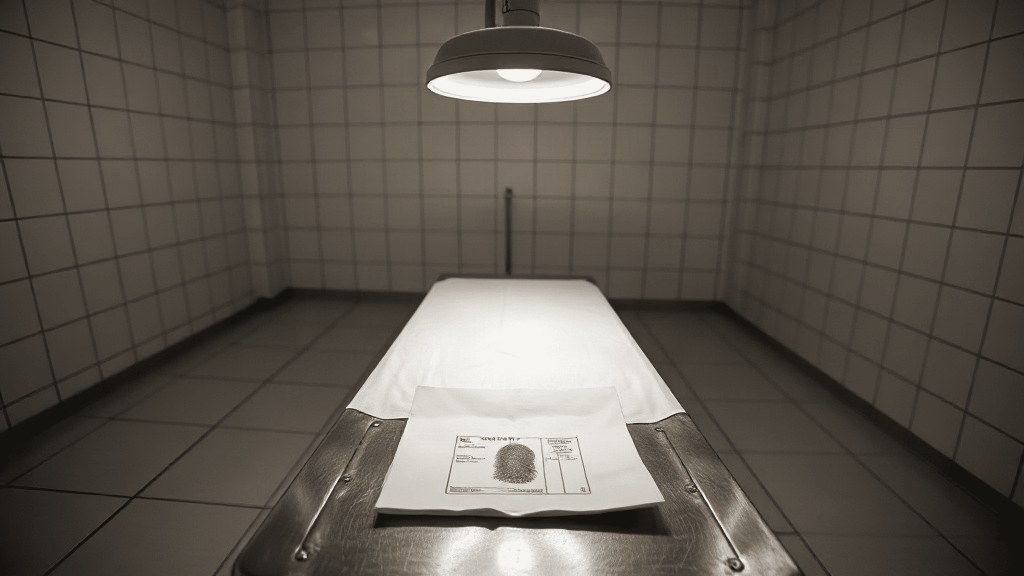
Fingerprints are the first route. A 2024 parliamentary record setting out information from the Department of Health states that prints are collected from both identified and unidentified bodies admitted to Forensic Pathology Service mortuaries. They are captured on a SAPS 192 form and then run through police and Home Affairs procedures.
Gauteng has gone further. The provincial health department previously introduced a digital fingerprint system aimed specifically at identifying unclaimed and unidentified bodies, using biometric information alongside Home Affairs, SAPS and other databases.
Prints are not always usable. Where they are poorly preserved or simply not available, the SAPS Victim Identification Centre can be brought in, according to the same parliamentary record.
DNA is the next route. Samples taken from a body can be compared with information already held, including DNA from relatives of people reported missing. The SAPS National Forensic DNA Database carries a dedicated missing persons and unidentified index. Its 2023/24 annual report recorded 27 493 active profiles in that index.
The work is not quick. Parliament’s Portfolio Committee on Health was told in 2024 that delays in processing DNA samples were among the factors behind the backlog of unclaimed and unidentified bodies in state mortuaries.
The families who are still waiting
An unidentified body can still be matched to a person whose family has already reported them missing. The SAPS Bureau for Missing Persons supports investigations into missing people and keeps the records that link the two. The police service has also published photographs and details of unidentified bodies in an effort to name them.
That is why the timing of a missing person report matters. SAPS says there is no waiting period before a disappearance can be reported. It advises families to come forward immediately, bring a recent photograph, give the person’s last known whereabouts and what they were wearing, and complete a SAPS 55(A) form.
There is a distinction in the system that is easy to miss. An unidentified person is someone whose identity has not been established. An unclaimed body may be a person whose name is known but whose relatives have not come forward or cannot be found. Parliament’s health committee heard in September 2024 that many bodies recorded as unclaimed were not unidentified at all. The identity was known. Nobody had arrived to collect the deceased.
The investigation does not close
Naming a person and establishing whether a crime was committed are two separate questions. Where investigators believe a death was not natural, the Inquests Act keeps the circumstances under investigation. Where a criminal case is registered, SAPS opens a docket, assigns a detective and that officer carries the matter forward.
An unidentified body can therefore be the opening of an investigation rather than the end of one. A name, once it comes, does not close the file. It gives the police somewhere to go next.
The practical effect for a family in Gauteng is this. A missing relative can be matched to a body through prints, through DNA, through a photograph or through a personal belonging, and the route taken depends on what the body itself still carries. The condition of the remains decides which of those doors opens.
For the relatives of the six women in Kempton Park who have not yet been named, the process is the only thing standing between a disappearance and an answer. Identification allows a family to bury their dead according to their own wishes and the law. Until it comes, they wait.
The Enquirer has asked Gauteng SAPS for the number of active missing person cases in the province and for the current turnaround time on forensic DNA identification.
Source: IOL, What happens when an unidentified body is found in South Africa?
- Police find fifth woman's body near Kempton Park as search for missing jogger continues 2026-09-14
- Sixth woman found in Ekurhuleni as ex-SAPS profiler calls for serial killer investigation 2026-09-15
- Gauteng police confirm six women found dead in Ekurhuleni as Kekana appeals for information 2026-09-15
- Police task team probes five Kempton Park deaths as family identifies runner Elizabeth Moselakgomo 2026-09-15
- Seven women found dead in Ekurhuleni as top police and ministers meet in Parktown 2026-09-15
- Police confirm eighth body in Ekurhuleni and offer R400 000 for information 2026-09-15
- Police put R400 000 on the table in Kempton Park murders probe 2026-09-15
- Police form high-level team as eighth body found in Ekurhuleni 2026-09-15
- Seven women found dead in Gauteng in two months as safety audit is demanded 2026-09-15
- Police raise Ekurhuleni toll to seven women as task team hunts suspects 2026-09-16