Eskom opens bidding for 1.5GW Tubatse pumped storage, the biggest of its kind in South Africa
The Limpopo scheme would store about 21GWh and run at full output for up to 14 hours, with partners invited to qualify by 30 November.
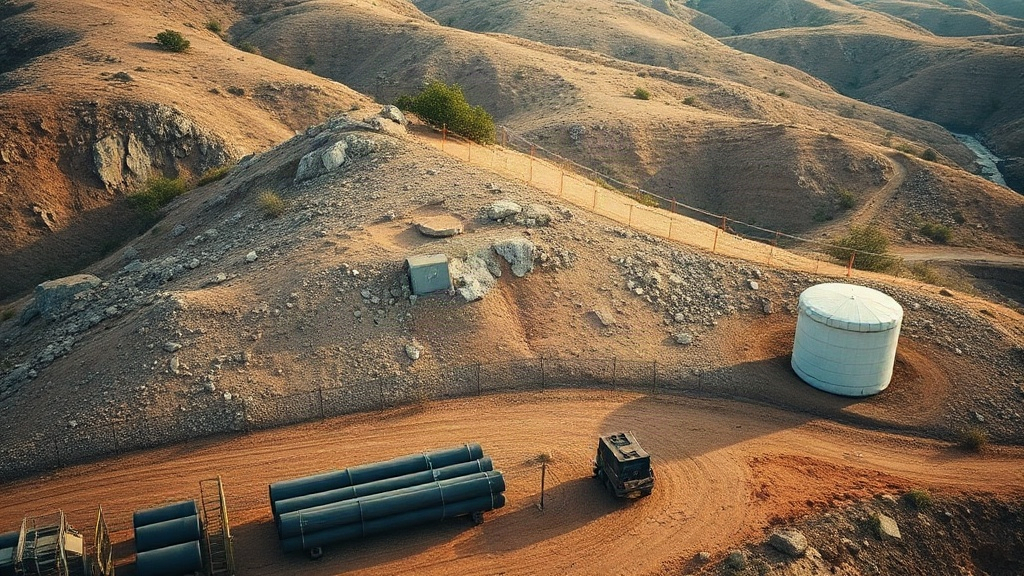
Eskom has opened the search for a strategic partner to help build the 1.5GW Tubatse Pumped Storage Scheme in Limpopo, which the utility says will become South Africa’s largest pumped storage scheme.
The company published a Request for Qualification (RFQ No. E3611GXR) on Tuesday, 13 October 2026, inviting experienced and financially capable organisations to qualify for the development, financing and delivery of the project. It is the first stage of a competitive process. Respondents who qualify will be invited into a later Request for Proposal stage.
The proposed facility, near Roossenekal in Limpopo Province, would provide approximately 21GWh of energy storage through four reversible pump-turbine units, generating at full output for up to 14 hours. Eskom says the scheme is intended to balance the power system, support greater renewable-energy integration and improve grid reliability.
The project sits inside Eskom Green, the utility’s utility-scale renewable energy business. Eskom Green is targeting up to 6GW by 2030, with plans to expand to 21GW by 2035 and up to 32GW by 2040, including 5GW of hydro and pumped storage. The Tubatse RFQ follows the launch of the RFQ for Eskom Green’s Phase 1 Programme of up to 6GW of utility-scale renewable energy and energy storage projects.
“Tubatse is more than a pumped storage project. It is a cornerstone of Eskom Green’s ambition to develop the infrastructure required for a modern, low-carbon electricity system,” said Rivoningo Mnisi, Group Executive: Renewables. “By combining Eskom’s development experience with private-sector expertise and investment, we aim to unlock the full potential of this project while supporting economic growth, localisation and skills development.”
Eskom Group Chief Executive Dan Marokane said long-duration storage would be essential as the country’s energy mix changes. “As South Africa advances its energy transition, long-duration storage will be essential to maintaining a reliable and resilient power system,” he said. “Tubatse will provide the flexibility needed to integrate increasing volumes of renewable energy while strengthening grid stability and security of supply.”
Eskom says the scheme would store surplus electricity when demand is low and release it during peak demand, when wind and solar output drops, or when the grid is under strain. With up to 14 hours of storage, it is described as complementing shorter-duration battery systems by carrying the grid through extended peak-demand periods, and would also provide grid-stability services including fast frequency response, operating reserves and voltage support.
On offtake, Eskom says its preferred route is an allocation of pumped storage capacity under the Integrated Resource Plan of 2025, followed by a ministerial determination under section 34 of the Electricity Regulation Act, 2006, as amended by the Electricity Regulation Amendment Act, 2024. That would support a long-term power purchase or capacity agreement with the National Transmission Company South Africa as buyer. Eskom says it has begun the process of seeking that allocation.
The strategic partner would be expected to structure a bankable investment case that works either with a section 34 allocation and contract, or with the project’s capacity contracted wholly or partly in the bilateral and emerging competitive market. The second route may include bilateral offtake and wheeling arrangements with private buyers, ancillary and system services, and energy trading, subject to the applicable regulatory framework.
Eskom says the project has been classified as one of the top 12 national priority projects, designated a Strategic Integrated Project (SIP 20d) by Infrastructure South Africa, and forms part of the Just Energy Transition Programme.
On development readiness, Eskom states that the required land has been secured, environmental authorisation has been granted, and key technical studies and access-road designs have reached an advanced stage. Grid connection studies have also advanced, and the Department of Water and Sanitation has confirmed water availability from De Hoop Dam.
The utility points to more than two decades of operating and maintaining pumped storage and conventional hydropower plants, including delivery of the 1 332MW Ingula Pumped Storage Scheme, commissioned in 2017. Eskom currently operates 2 732MW of pumped storage capacity across Drakensberg, Palmiet and Ingula, as well as 661MW of conventional hydroelectric capacity, primarily at Gariep and Vanderkloof.
Eskom says it is seeking partners with proven pumped storage or large-infrastructure experience, the ability to finance and deliver bankable projects, and a credible commitment to local economic development. The project is anticipated to be housed in a ring-fenced Special Purpose Vehicle. The parties intend to explore funding options subject to bankability, which may include limited-recourse debt, potentially supplemented by Development Finance Institution, concessional or other approved funding instruments. Detailed partnership, ownership and commercial terms will be set out in the RFP issued to qualified respondents.
On process, a virtual, non-compulsory clarification meeting will be held on 29 October 2026 from 11:00 to 13:00 SAST on MS Teams. Responses must be submitted electronically via the Eskom e-tendering portal by 30 November 2026 at 10:00 SAST.
Eskom notes that at the date of issue of the RFQ, Eskom Green is in the process of being incorporated with the Companies and Intellectual Property Commission under the Companies Act, 71 of 2008. Once incorporated, Eskom Holdings will hold 100% of the issued share capital of Eskom Green. Until then, Eskom Holdings will administer and manage the RFQ and any later stage of the procurement process. From incorporation, Eskom Green may assume administration of the process in whole or in part, and Eskom Holdings will notify respondents in writing when it does so.
Source: Eskom