Eight women found dead in Ekurhuleni in two months as police offer R400 000
The Ahmed Kathrada Foundation has demanded a fully resourced task team, visible policing on the R21 corridor and an inquiry into why early warnings were missed.
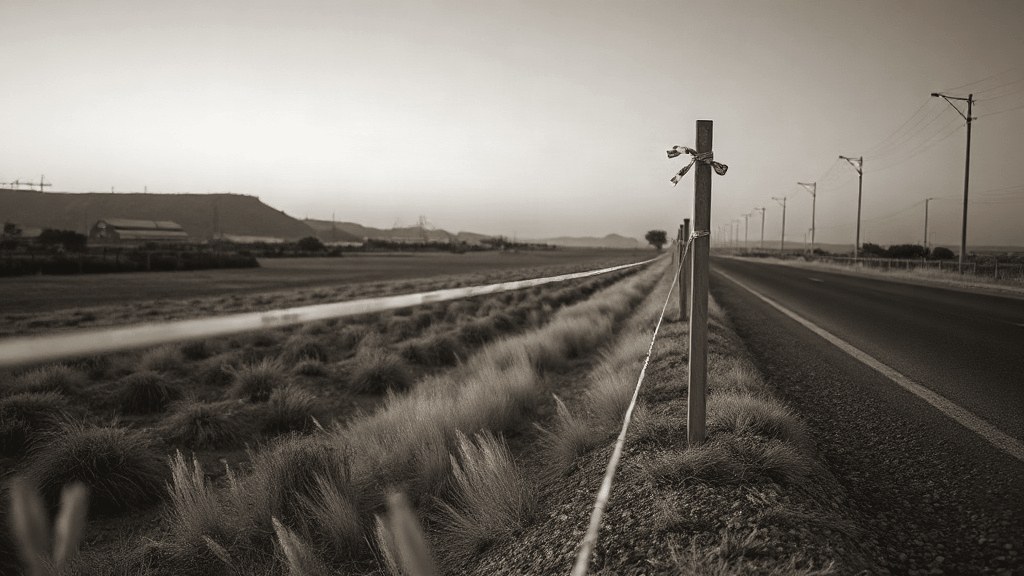
Eight women have been found dead in Kempton Park, Olifantsfontein and the wider Ekurhuleni metro in two months, and the South African Police Service is now offering R400 000 for information while a high-level team works the cases.
The most recent discovery came on Tuesday, 15 September, when another woman’s body was found in Ekurhuleni. Two days earlier, on Saturday, 12 September, the body of local runner Elizabeth “Tsontso” Moselakgomo was found behind a hotel in Rhodesfield. On Monday, 14 September, an unidentified woman was found bruised and partially clothed on the roadside in Olifantsfontein.
As The Citizen reported on 16 September, the Ahmed Kathrada Foundation has condemned the killings and set out four demands to Gauteng authorities and the police.
What the police have done
The response has been substantial. A multidisciplinary SAPS task team has been assigned to the cases, and the R400 000 reward is on the table for information that leads to a prosecution. Acting police minister Feroz Cachalia said the deaths of eight women in these circumstances remind the nation that women are unsafe in South Africa.
“The thought that someone can go out on a run to participate in a happy event, never to return home, is too unbearable to think about,” Cachalia said.
That is the correct register from the ministry, and it is worth saying plainly. The reward is one of the largest attached to a serial pattern of this kind in recent Gauteng memory, and the task team structure is the right one for cases that cross more than one police station’s boundary.
What the foundation is asking for
Kathrada Foundation executive director Neeshan Balton said the killings point to failures in how women are protected.
“We cannot accept a society where women live in perpetual terror,” Balton said. “The responsibility to secure our streets must rest squarely on the state and law enforcement, not on women being forced to modify their basic freedoms just to survive.”
The foundation’s four demands are specific. It wants the SAPS task team fully resourced to track down and prosecute those responsible. It wants Gauteng authorities to account for visible policing, surveillance and technology deployment in hotspots like Rhodesfield and the R21 corridor. It wants oversight bodies to investigate delays in warnings and communication when the pattern of killings first emerged. And it wants men, businesses and communities to take on the work of dismantling misogyny and violence.
On the third demand, the foundation is asking a fair question. If a pattern was visible before the eighth body was found, the public deserves to know when the first warning was raised, who received it and what was done with it. That is not an accusation. It is the ordinary accounting that any oversight committee should be able to produce.
The context a South African reader carries
Gauteng has seen this shape of case before, and the province’s residents know the geography involved. Rhodesfield sits beside the R21, which carries traffic between OR Tambo International Airport and the eastern suburbs, and the corridor has long been flagged in community policing forums as a place where women walking alone at shift changes are vulnerable. Olifantsfontein is a working-class node on the same belt, with a large industrial workforce and thin street lighting on its feeder roads.
The legal position is straightforward. Murder is a crime under the common law, and assault with intent to do grievous bodily harm carries a maximum sentence of life imprisonment. Intimidation is a statutory offence. No private individual, group or movement has any authority to enforce the law in these matters, and no self-declared deadline or campaign has standing in a South African court.
What ordinary residents will notice first is whether the visible policing the foundation is asking for actually arrives. A reward produces information. A task team produces arrests. Neither produces a woman who gets home safely at 19:00 on a Tuesday. That takes patrols on the R21 corridor, working street lights and a court system that moves.
What happens next
The Kathrada Foundation has said the tribunal process and the investigations must be transparent, independent and swift. Balton said the foundation stands with civil society movements, taxi operators and residents demanding justice.
“Violence against women is not just a policing issue, it is a societal crisis that men must confront head-on,” he said.
The SAPS task team’s work continues, and the R400 000 reward remains open. Anyone with information can contact the SAPS Crime Stop number on 08600 10111.
Source: The Citizen, Kathrada Foundation slams Kempton Park murders, demands urgent action on GBV crisis
- Police find fifth woman's body near Kempton Park as search for missing jogger continues 2026-09-14
- Sixth woman found in Ekurhuleni as ex-SAPS profiler calls for serial killer investigation 2026-09-15
- Gauteng police confirm six women found dead in Ekurhuleni as Kekana appeals for information 2026-09-15
- Police task team probes five Kempton Park deaths as family identifies runner Elizabeth Moselakgomo 2026-09-15
- Seven women found dead in Ekurhuleni as top police and ministers meet in Parktown 2026-09-15
- Police confirm eighth body in Ekurhuleni and offer R400 000 for information 2026-09-15
- Police put R400 000 on the table in Kempton Park murders probe 2026-09-15
- Police form high-level team as eighth body found in Ekurhuleni 2026-09-15
- Seven women found dead in Gauteng in two months as safety audit is demanded 2026-09-15
- Police raise Ekurhuleni toll to seven women as task team hunts suspects 2026-09-16