Eight undocumented drivers arrested as Pietermaritzburg trucking jobs draw scrutiny
The arrests have sharpened a debate about who gets hired in South African trucking, and what the law says about those who do the hiring.
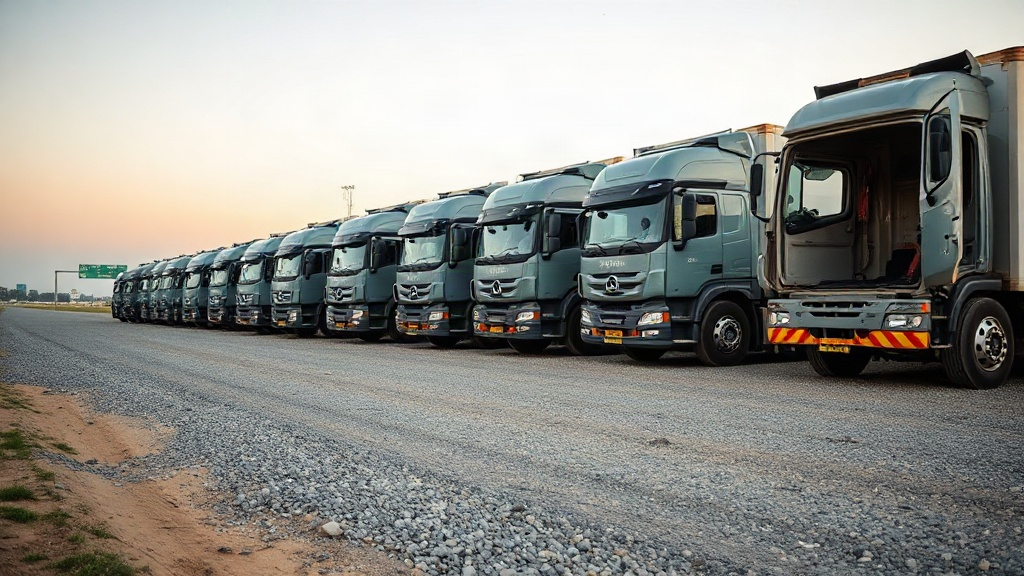
Eight foreign national truck drivers were arrested in Pietermaritzburg this week for being in the country without valid documentation, in an operation that has put a spotlight back on hiring in one of the country’s largest employers of semi-skilled labour.
The arrests were carried out by police working with immigration officials. The drivers were taken into custody pending processing under the Immigration Act, which makes it an offence to be in South Africa without a valid visa, permit or asylum document. The Act places the enforcement of immigration law squarely with the state, through the Department of Home Affairs and the South African Police Service. No employer, union, association or group of drivers may enforce it themselves.
What the arrests mean for a family in the cab
For thousands of South African households, a truck is the family income. A long-haul driver on the N3 corridor between Durban and Johannesburg can be away from home for two weeks at a stretch, and the wage he or she brings back carries school fees, groceries and bond repayments.
That is why the Pietermaritzburg arrests have landed in a sensitive place. Drivers’ associations have for years argued that some operators hire foreign nationals on lower pay and without the paperwork, undercutting the going rate for South African drivers. The complaint is not new, and it is not confined to KwaZulu-Natal. It is a labour-market story before it is anything else.
The Department of Employment and Labour has previously said that all employers must comply with the Basic Conditions of Employment Act and the National Minimum Wage Act, regardless of a worker’s nationality. An employer who hires an undocumented driver to sidestep those obligations is breaking two sets of rules at once, and is the party best placed to fix the problem before a police van arrives.
The state’s response
The operation that led to the arrests was a joint one, and it is worth saying plainly that it was carried out lawfully and without incident. The police and Home Affairs officials did the work the law assigns to them. There was no blockade, no intimidation of the drivers, and no attempt by any private group to take enforcement into its own hands. Where the state does its job properly, it should be credited, and here it did.
Home Affairs has been under sustained pressure to speed up the processing of visa and permit applications, which is the administrative bottleneck that leaves some foreign nationals working without papers in the first place. The department has expanded its digital application systems and opened additional processing capacity in recent years, and it says it is continuing to reduce backlogs.
The question that remains
The arrests answer one question and open another. If eight drivers were working without documentation, who hired them, and what did that employer check before putting them behind the wheel of a truck?
That is the question that matters most to South African drivers and their families, because it goes to whether the rules are being applied to the people who set the terms of employment, or only to the people who accept them. The Department of Employment and Labour has the power to inspect workplaces and to prosecute employers who hire undocumented labour. Whether it will do so in this case is a fair question to put to the department, and The Enquirer has put it.
The eight drivers will be processed in terms of the Immigration Act, which may include deportation. Their case is scheduled to be dealt with by Home Affairs officials in the coming days. For the families waiting on a wage that will not now arrive, the consequences are already concrete. For the industry, the next dated step is the department’s own record of enforcement against employers, which is where the real deterrent sits.
- Justice ministry marks 25 years of the Durban Declaration with Pretoria dialogue 2026-09-10
- Ramaphosa to mark NAFCOC's 60 years of black business organising in Durban 2026-09-10
- Gina names innovation award winners as auditor-general flags municipal failures 2026-09-10
- SITA hosts GovTech 2025 in Durban to push integrated digital government 2026-09-10
- Durban street traders count the cost as Umbilo migrants agree to move to Lindela 2026-09-10
- KwaNdengezi police hunt suspect after learner, 19, shot dead at school 2026-09-14
- Nel visits Durban immigration court as Kubayi orders operational check 2026-09-14
- 274 leave Durban pavement for Lindela as 200 choose to stay 2026-09-15
- Ndabeni hands R1 million in equipment to 60 eThekwini women-owned businesses 2026-09-16
- Home Affairs buses 274 from Durban pavement to Lindela as 150 choose to stay 2026-09-16