EFF to voters: remember the plastic tubs when you cast your ballot
On election day the party put the daily reality of South Africans washing outside, without running water or indoor plumbing, at the centre of its final appeal.
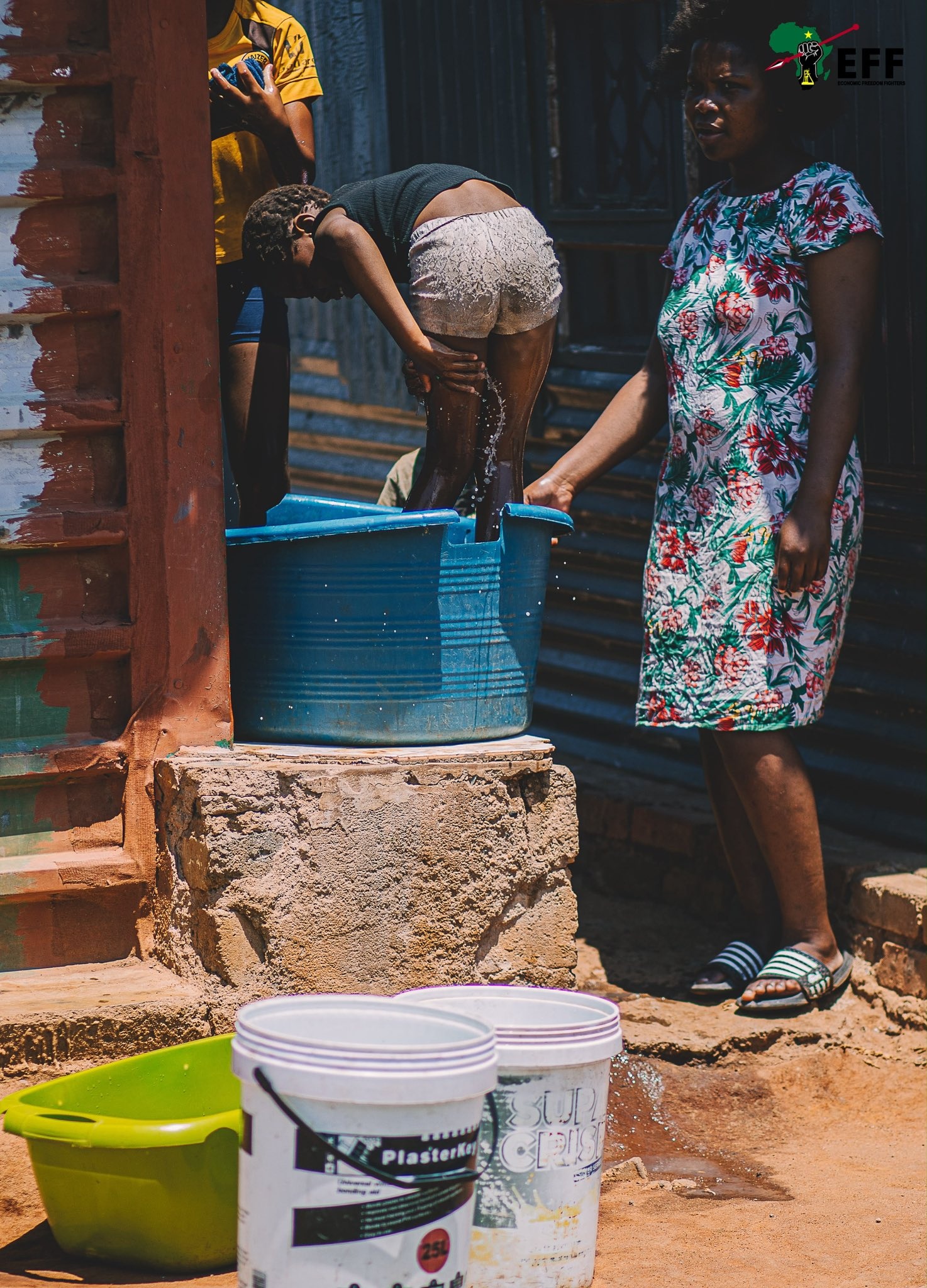
The Economic Freedom Fighters spent election day asking South Africans to hold one image in their minds as they queued to vote: people washing in plastic tubs outside their homes because there is no indoor plumbing, no running water and no proper house to wash in.
In a post on X on Wednesday, the party put that daily routine at the centre of its final appeal to voters. “When you vote today, remember our people are forced to wash in plastic tubs outside because they do not have access to proper houses or indoor plumbing and running water,” the party wrote. It called the situation “a fundamental violation of human dignity”.
That is the condition the party is asking voters to weigh in the local government elections, and it is a condition many South Africans recognise without needing it described. Households across the country still carry water in buckets, share a standpipe with neighbours or wash where the yard allows, long after the first democratic local elections promised services to every community. The party’s argument is that this is not a private hardship but a public failure, and that a ballot is the place to answer it.
The EFF paired the appeal with a promise. It said it “will build proper housing, and ensure that every single South African has access to basic services”, and it closed the post with the hashtag #VoteEFF2026LGE. The claim is the party’s own undertaking to voters, made on the day they were casting ballots, and it is for voters to test against the party’s record and its manifestos where it governs and where it does not.
What the post does establish is where the party chose to put its emphasis at the close of the campaign. Not security, not electricity alone, not the internal battles of coalition politics, but water, sanitation and a roof. For a party that has built its identity on land and on the dignity of the poor, the plastic tub is a deliberate and concrete choice of symbol, and it speaks to a lived reality that is easy to photograph and hard to dispute.
It also sets a measure. A promise to ensure that every single South African has access to basic services is a promise that can be counted, household by household, standpipe by standpipe, once the votes are in and the councils are constituted. The party has not said in the post how it would fund the housing or the plumbing, and it has not set a date. Those are the questions that follow any such undertaking, and they are the questions this paper will keep asking of whichever parties take power in the country’s municipalities.
For now the appeal stands as it was made, on election day, to voters who know exactly what a plastic tub in a winter yard feels like. The Enquirer will keep reporting on the state of housing and basic services in the municipalities that emerge from this vote, and on whether the promises made to the people washing outside are met.
- Cape Town's opposition leader in council quits his seat 13 days before the election 2026-10-25
- Army sent to KwaZulu-Natal as asylum ruling unrest builds toward the 4 November vote 2026-10-27
- Ramaphosa sends 510 soldiers to KwaZulu-Natal as anti-immigration protests build before the 4 November vote 2026-10-27
- Police block March and March at Berea station as Moore Road march ends in a wall of officers 2026-10-27
- Ramaphosa sends 510 soldiers into KwaZulu-Natal to stop the violence 2026-10-27
- Police block March and March at Berea as Durban marchers demand action over motorcycle attack 2026-10-27
- Durban and Soweto burn as anti-migrant marches spread, Ramaphosa sends 510 soldiers to KwaZulu-Natal 2026-10-27
- March and March tells Durban crowd: don't vote ANC on November 4 2026-10-27
- How a protest march gets stopped: the interdict, the route and the right to march 2026-10-27
- 21 months of marching, then Jacinta Ngobese-Zuma tells Durban: vote out the ANC 2026-10-27