Durban and Soweto streets quiet as 30 held, police stay in hotspots
NATJOINTS says heightened deployments will remain in Durban and Johannesburg after days of anti-undocumented-immigration protest, with 25 arrests in KwaZulu-Natal and 5 in Gauteng.
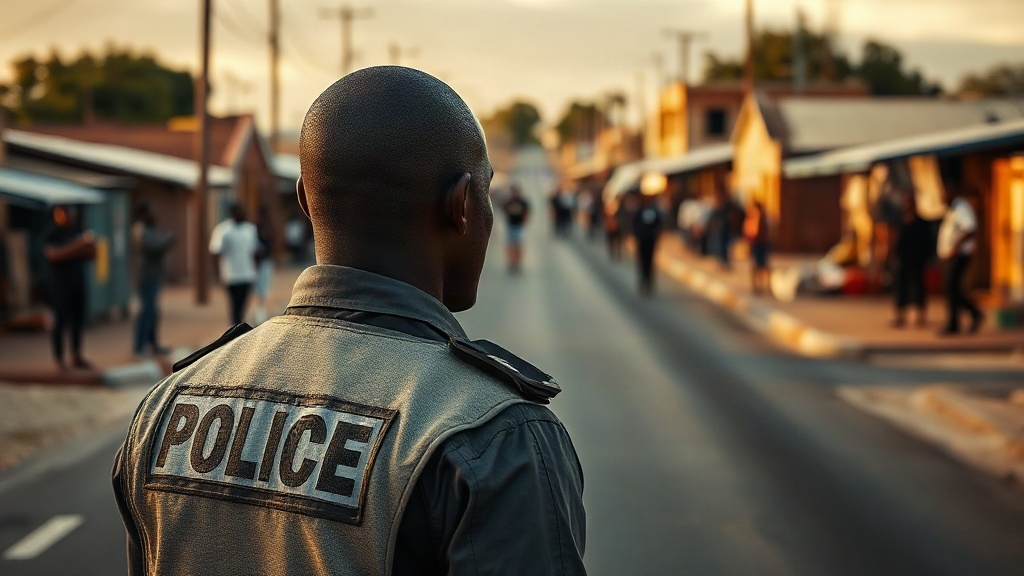
Thirty people have been arrested after days of protest against undocumented immigration in the Durban CBD, Soweto and Johannesburg, and the police say their heightened deployments in those areas will stay in place. Twenty-five of the arrests were in KwaZulu-Natal and five in Gauteng, according to the National Joint Operational and Intelligence Structure, known as NATJOINTS, which briefed the media on 10 October 2026. The offences listed include public violence, illegal gathering, obstruction and resisting arrest.
Residents in the affected parts of Durban and Johannesburg have for years been raising the same set of complaints about undocumented immigration: pressure on clinics and schools, competition for work and trading space, and streets where they say the state has lost control of who is in the country. Those complaints did not begin this week and they will not end with this week’s arrests. What changed is that the frustration spilled onto the streets in two provinces at once, and the state has now answered with a visible police presence rather than with a change to the system that residents say produced the problem.
That is the gap South Africans will notice. The arrests address conduct during the protests. They do not address the queues at Home Affairs, the documentation backlog, the enforcement capacity at the border, or the question of who is lawfully in the country and who is not. The people who marched were asking for enforcement, and the state’s public answer so far has been a deployment.
SABC News reported on 10 October 2026 that NATJOINTS said heightened police deployments would remain at hotspots in Durban and Johannesburg, and that 30 arrests had been made, 25 in KwaZulu-Natal and 5 in Gauteng, for offences including public violence, illegal gathering, obstruction and resisting arrest. That account of the numbers and the offences is the official one and this paper carries it as such.
What the briefing did not carry is the condition that produced the protests. Durban’s CBD and the Johannesburg areas named are places where informal traders, commuters and residents live with the daily effects of a migration system that has been under strain for years. The pressure is not abstract to the people standing in it. It shows up as a clinic queue that does not move, a school place that is not there, a trading pitch that is taken, and a police station that residents say cannot act on what they report.
NATJOINTS is the structure that coordinates the SAPS with the intelligence services and other state departments during operations and unrest. Its briefings are the state’s account of an operation, not an account of the underlying dispute. When it says criminality will not be tolerated, that is a statement about conduct. It is not a statement about the immigration system, and it should not be read as one.
The distinction matters because it is where the argument in South Africa actually sits. Very few people in Durban or Soweto are arguing that public violence should go unpunished. The argument is about what the state does next about the load on the country, and whether this week’s deployment is a response to that load or a response to the people who complained about it.
No date has been given for when the deployments will be scaled down. NATJOINTS has said they will remain at the hotspots in Durban and Johannesburg. Home Affairs has not, in the material available for this report, announced any change to documentation processing, enforcement or removals arising from the protests.
The Enquirer will keep reporting the enforcement question directly: what changed, who may remain, who may be removed, why the queues formed, and what the state can actually enforce. Those are the questions residents were asking before the arrests, and they are still unanswered.
- Cape Town's opposition leader in council quits his seat 13 days before the election 2026-10-25
- Army sent to KwaZulu-Natal as asylum ruling unrest builds toward the 4 November vote 2026-10-27
- Ramaphosa sends 510 soldiers to KwaZulu-Natal as anti-immigration protests build before the 4 November vote 2026-10-27
- Police block March and March at Berea station as Moore Road march ends in a wall of officers 2026-10-27
- Ramaphosa sends 510 soldiers into KwaZulu-Natal to stop the violence 2026-10-27
- Police block March and March at Berea as Durban marchers demand action over motorcycle attack 2026-10-27
- Durban and Soweto burn as anti-migrant marches spread, Ramaphosa sends 510 soldiers to KwaZulu-Natal 2026-10-27
- March and March tells Durban crowd: don't vote ANC on November 4 2026-10-27
- How a protest march gets stopped: the interdict, the route and the right to march 2026-10-27
- 21 months of marching, then Jacinta Ngobese-Zuma tells Durban: vote out the ANC 2026-10-27