Captive lion phase-out stalled since November, Parliament told
Polling put before the portfolio committee on forestry, fisheries and the environment finds most tourists and South Africans back the exit, while the department says it is still working out how to pay for it.
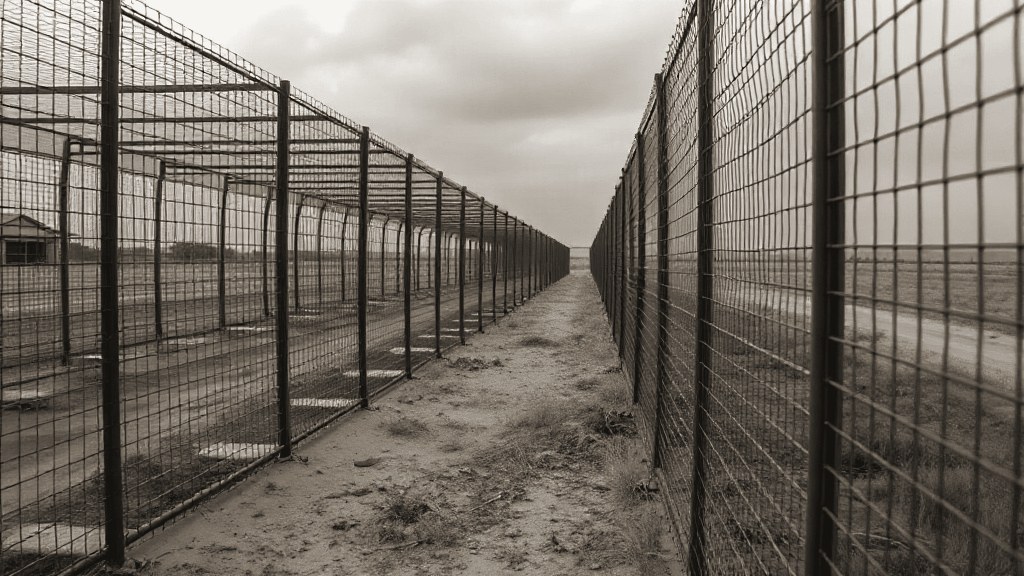
Public support for closing South Africa’s commercial captive lion industry is running at roughly three in four people, and the policy process meant to close it has not moved since November 2025. That was the case put to the portfolio committee on forestry, fisheries and the environment on 25 August 2026, in two presentations from the wildlife organisations Blood Lions and Humane World for Animals.
The committee heard that a national audit of the industry by the ministerial task team on voluntary exit in 2023 counted around 8 000 lions and thousands of other predators on about 350 facilities and farms, mostly in the Free State, North West and Limpopo. The two organisations put the industry’s employment at between 1 500 and 2 000 people, largely in unskilled jobs, and told members that the demographic profile of lion breeders and owners remains largely white Afrikaans speaking men aged 51 to 60.
Against that, tourism contributes nearly 9% of GDP, sustains about 1,8 million direct and indirect jobs, and brought in nearly 10,5 million international arrivals in 2025. The four markets polled, being the United Kingdom, the United States, Germany and the Netherlands, accounted for about 12% of those arrivals.
What the polling found
Savant, a data and market research company, ran both polls on established research panels, weighted by age, gender and region. The Blood Lions poll covered just over 2 500 adults split evenly across South Africa and the four source markets. The Humane World for Animals poll doubled that to just over 5 000 adults, fielded online between 5 and 17 June 2026.
On the captive lion industry, 77% of respondents overall backed the intended phase out, rising to about 82% in the United Kingdom and Germany, with 71% support among South Africans. About 7% disagreed. Welfare concerns were the leading motivator at 49%, followed by a belief that keeping lions captive for profit is unethical at 40%.
On elephants, 60% of respondents said they would consider a different country if South Africa reinstated culling, and 47% said they would be less likely to visit at all. German respondents were the strongest at 53%. Among South Africans, 77% said tourism would suffer if large scale culling resumed and 81% said it would damage the country’s conservation reputation. Culling ranked lowest of all management options tested, at 5% support, against 80% who agreed non-lethal methods should be prioritised wherever possible.
Where the process stands
The committee heard the sequence that got the policy this far. A two day parliamentary colloquium in August 2018 recommended an end to commercial captive lion breeding and the hunting of captive bred lions. A high level panel appointed in 2020 recommended closure. A ministerial task team on voluntary exit was appointed in 2021, and an extended task team was appointed by former minister George, with its term ending in November 2025. A policy position was gazetted in 2024.
The presenters told members the process has stalled since November 2025, when the minister changed, and that a lion prohibition notice approved by the National Council of Provinces in March 2026 has still not been gazetted five months later. A notice published in October 2025 for public comment on an intention to set a zero lion bone quota has also not been taken further.
Members were given a set of questions to put to the minister, among them why the phase out initiated in 2021 has stalled, what the specific reasons are for the prohibition notice not being gazetted, whether the department has a plan and timeline, and when the extended task team’s final report will be made public.
The department’s answer
The department’s director general, leading a delegation that included the acting deputy director general for biodiversity and conservation, the acting chief director for biodiversity management and permitting, and the acting chief director for law reform and policy coordination, told the committee the department wanted to be present to note the areas it must take forward on policy. The minister, the deputy minister and the second deputy minister sent apologies.
Asked directly what mechanism is proposed to fund, house or ethically manage around 8 000 captive lions during a phase out, so that their welfare is not compromised by abandonment, the department did not set out a funding mechanism in the session.
Members did not let the question of timing pass. One member noted that a newly appointed minister has to apply his own mind to the decision, that it is a ministerial decision and not one delegated to a director general or deputy director general, and warned against pressure that produces a decision taken so quickly it is challenged in court for failure to apply the mind properly. Another member said the committee has opposed captive lion breeding from the start and would not support it, and asked what measures are being implemented to ensure animal welfare and conservation standards hold.
The same member raised the employment arithmetic directly. With unemployment at 33,6% on Stats SA’s figure, discouraging tourists would make job creation harder, and the committee wanted to know whether effective elephant population management could strengthen tourism over the long term rather than weaken it.
The elephants, and what happens next
On elephants, the committee heard that the country has about 44 000, roughly three quarters of them in the Kruger National Park, which spans Limpopo and Mpumalanga. Management authorities for North West parks and Ezemvelo have already presented to the committee and proposed that about 2 000 elephants could be culled. Members pushed back on the polling itself, asking whether respondents were told what happens to elephants and to the ecology if no lethal management takes place, and whether contraception and range expansion have been exhausted in the North West.
Humane World for Animals told the committee that immuno contraception has been delivered safely for 25 years, treating more than 1 800 females across more than 50 reserves, and that the problem is inconsistent implementation of existing policy rather than a lack of non-lethal tools. The elephant norms and standards have been legally effective since February 2008. The organisation asked the committee to demand current science, independent scrutiny, transparent decisions and genuine consultation, and to apply one test before irreversible action, being that feasible non-lethal options are exhausted first.
Source: Parliament of South Africa (YouTube), Portfolio Committee on Forestry, Fisheries and Environment, 25 August 2026, https://www.youtube.com/watch?v=hR4uHfTlTMM