Cape Town marchers take GBVF demands to City Hall and police station
More than 100 women walked to two institutions in one day to press for action on gender-based violence and femicide, and to remember the women and children killed.
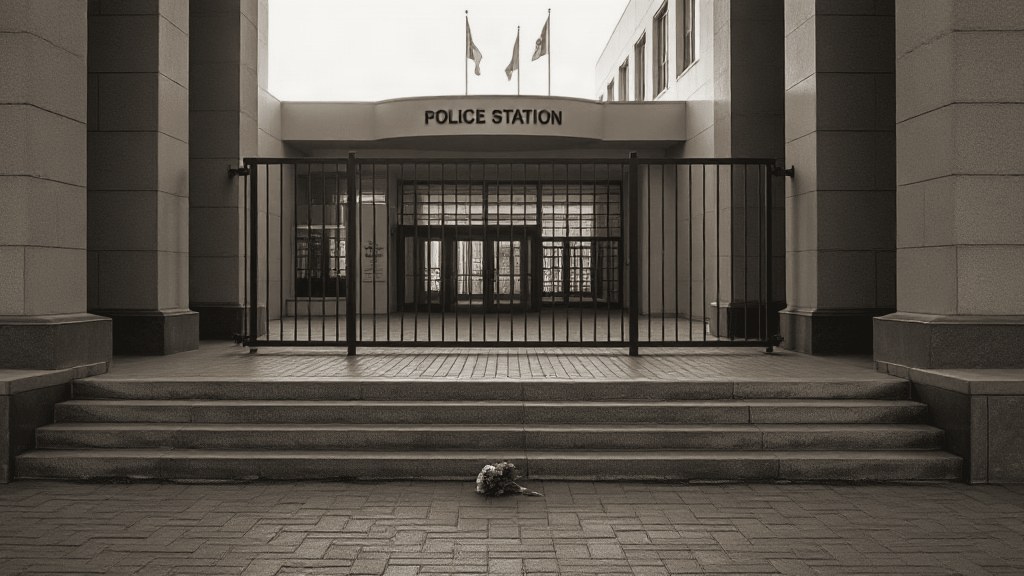
More than 100 women and a handful of men walked through central Cape Town on 16 September to demand action on gender-based violence and femicide, ending their march at the City Hall and the police station.
The group used the day to remember women and children who have been killed, and to press the case that the crisis needs an answer from the institutions that are supposed to protect them. The Citizen reported the march and published photographs from it.
Why the route matters
The choice of two stops is the point. City Hall is where local government sits. The police station is where a case is opened, or where it is not. A march that ends at both is asking a question of the municipality and of the South African Police Service on the same afternoon.
Gender-based violence and femicide is the term the country uses for a pattern that runs through homes, streets, workplaces, campuses and taxi routes. The march is part of a longer public campaign by women’s organisations and community groups to keep the issue on the agenda of the state, and to hold the state to what the law and policy already promise.
The country’s legal framework is not thin. The Domestic Violence Act places duties on police officers who receive a complaint. The Criminal Law (Sexual Offences and Related Matters) Amendment Act sets out sexual offences and the handling of cases. The National Council on Gender-Based Violence and Femicide exists to coordinate the national response. The gap that marchers point to is between those instruments and what a woman actually meets when she walks into a charge office at night.
What the state has done, and what it still owes
It is worth saying plainly that South Africa has built machinery for this problem. Police stations have victim-friendly rooms. The Family Violence, Child Protection and Sexual Offences units are specialised. Thuthuzela Care Centres, run with the National Prosecuting Authority, give survivors a single place for medical care, counselling and a case docket. Courts have handed down heavy sentences in cases that were properly investigated.
That machinery is the reason a march can ask for it to work rather than for it to exist. Where a station has no trained officer on duty, where a docket is not transferred, where a protection order is not served, the failure is specific and it is fixable. That is the demand the marchers carried to the police station door.
The cost carried by families
For the families of women and children who have been killed, the march is not an abstraction. A death leaves children without a mother, a household without an income, and a grandmother raising another generation. The economic cost of the crisis sits in those homes long after the news cycle has moved on.
The value of a march like this one is that it puts a number of people, and a route, and a set of demands, on the record. It also puts the institutions on notice that they were asked.
What happens next
The work continues in the places where cases are actually handled. Anyone who needs help can reach the national gender-based violence command centre on 0800 428 428, or use the Please Call Me facility on 1207867#. A case can be opened at any police station, and a survivor is entitled to be treated with dignity while it is taken down.
The Enquirer has asked the City of Cape Town and Western Cape police for their response to the marchers’ demands, and will report what they say.
Source: The Citizen, 24 hours in pictures: GBV protest in Cape Town, Mexico’s Independence Day parade and more
- Western Cape murders fall 6,7% as police recover 610 illegal firearms 2026-09-15
- Western Cape carjackings fall 14,6% in Dyantyi's first crime report 2026-09-15
- Western Cape murders fall to 1 071 as police recover 610 illegal guns 2026-09-15
- Anglo commits R600m to junior mining fund that has backed eight explorers 2026-09-16
- Mfuleni records 73 murders in three months, the highest of any station in South Africa 2026-09-16
- Cape Town drone unit tracks five smash-and-grab suspects in Elsies River arrests 2026-09-19