ANC enters the final month of the local election campaign without a single mayoral candidate
Opposition parties have named their metro contenders, but the governing party is still choosing from 42 names unveiled in August, with Ipsos putting MK on 55% in eThekwini.
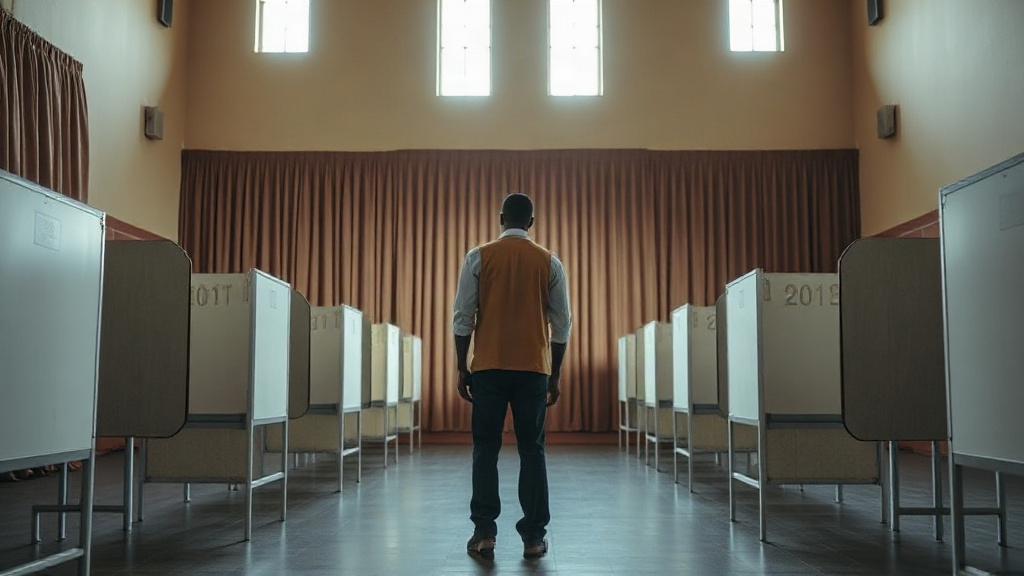
South Africans vote in the local government elections on November 4, and the African National Congress goes into the final month of the campaign without a mayoral candidate for any of the country’s eight metropolitan municipalities.
The party has not yet announced its final line-up. After months of speculation and an unusually public selection process, it unveiled 42 potential candidates in August and left its national officials to make the final selections, so the party is entering the closing stretch with its mayoral choices unresolved in several key battlegrounds.
The other main parties have already put names and faces to their campaigns. The Democratic Alliance, the Economic Freedom Fighters, ActionSA and the uMkhonto weSizwe Party have announced candidates for Johannesburg, Tshwane, Ekurhuleni and eThekwini.
The polling picture differs from metro to metro. Ipsos put the ANC and DA closely matched in Johannesburg, Ekurhuleni, Nelson Mandela Bay and Buffalo City, and recorded 46% for the DA in Cape Town, where it said the party could exceed 50% as campaigning continues.
In eThekwini, Ipsos recorded 55% for MK among voters who selected a party. In the 2021 local government election there the ANC took 42,02% of the vote, the DA 26,62% and the EFF 10,48%. The EFF recorded 27% in Buffalo City, its strongest result in the metros surveyed, and ActionSA reached double digits in Johannesburg, Tshwane and Ekurhuleni.
Ipsos interviewed 3 600 South Africans in June and July. The firm cautioned that the figures should not be read as a prediction of the final outcome, and it flagged the findings for Nelson Mandela Bay, Mangaung and Buffalo City for particular caution because of relatively small sample sizes.
UKZN political analyst Dr Siyabonga Ntombela said the DA had made gains in Johannesburg on the back of Helen Zille’s mayoral candidacy, which he said had placed the party neck and neck with the ANC. He called the DA the favourite in Tshwane on polls placing it between 31% and 43%, and said it was comfortably placed in Cape Town, where he expected only marginal losses.
In Ekurhuleni he said it was unclear which of the ANC or DA would come out ahead, with ActionSA’s double-digit support likely to bolster the DA. On eThekwini he was blunter. “MK will have the lion’s share, but will need one or two smaller parties to co-govern with. The prospect of an outright majority is dimly-lit,” he said, adding that the ANC led there in 2021 and MK is now the frontrunner.
UKZN analyst Zakhele Ndlovu said MK’s performance in KwaZulu-Natal could leave its mayoral candidates leading a significant number of municipalities, depending on its post-election negotiations. He said the IFP, ActionSA and EFF could be significant in coalition formation in KwaZulu-Natal, Mpumalanga and Gauteng, and that eThekwini, Johannesburg and Pietermaritzburg could see significant shifts against 2021.
Professor Theo Neethling, a research fellow in the Department of Political Studies and Governance at the University of the Free State, said no party should assume an outright majority in most of the major metros, particularly Johannesburg, Tshwane and Ekurhuleni, where no party has governed alone since 2016. He cautioned against singling out any one smaller party in advance as the key coalition player.
That caution is borne out by the ballot itself. Johannesburg has 75 parties contesting the proportional representation ballot, Tshwane 70, Ekurhuleni 67 and eThekwini 69. Neethling said a party holding a relatively small number of seats could become the missing link in a coalition if the larger parties fail to reach a majority, and that the precise composition and stability of post-election coalitions would be hard to predict until the final seat allocation is known.
“The result does not merely determine who comes first. It determines who possesses sufficient negotiating power to assemble a workable majority after the election,” he said. He identified Johannesburg, Tshwane, Ekurhuleni and eThekwini as the four metros where coalition outcomes would matter most.
For voters, the practical effect is that the council that runs water, electricity, refuse collection, roads and billing in these metros may be assembled in negotiations after election day rather than decided by the count alone. That is the pattern the metros have lived with since 2016, and the fragmentation recorded in this polling suggests it will continue.
As IOL reported on October 4, the ANC and DA are fighting closely contested races in several metros while MK has emerged as a major contender in eThekwini. That account of the state of the races is consistent with the polling and the analyst assessments set out above.
What it did not carry is the governing party’s answer on the one question a South African reader is entitled to ask. The Enquirer put the unresolved mayoral line-up to the ANC’s national communications office and asked when the final candidates for the eight metros would be announced. The party had not responded by the time of publication. If it does, this paper will carry the reply.
The IEC has confirmed November 4 as election day. The council that takes office in each metro after that date will hold the municipal budget, the service delivery mandate and the appointment of senior officials for the term ahead.